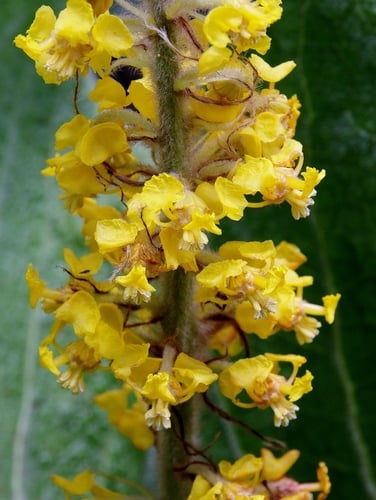
Byrsonima coccolobifolia
Kunth
iNaturalist· cc-by-nc-sa
(c) Mauricio Mercadante, some rights reserved (CC BY-NC-SA)
iNaturalist· cc-by-nc
(c) Guillaume Léotard, some rights reserved (CC BY-NC)
Summary
Source: WikipediaByrsonima coccolobifolia is a species of plant in the Malpighiaceae family. It is found in Bolivia, Brazil, Guyana, and Venezuela.
Description
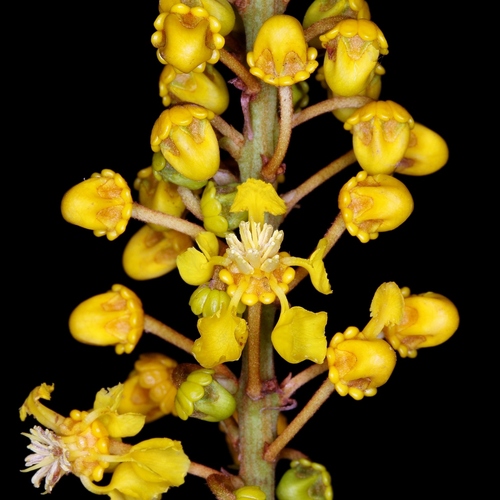
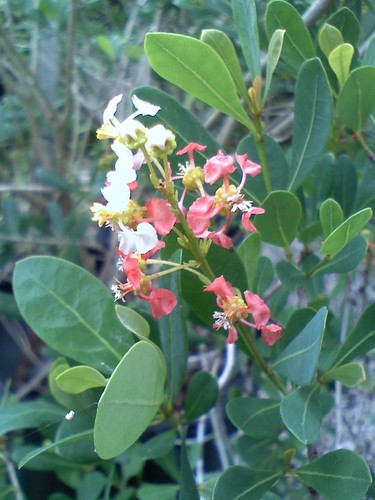
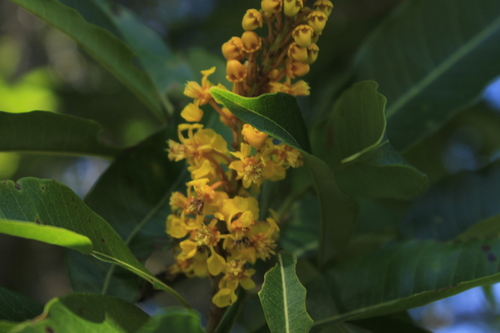
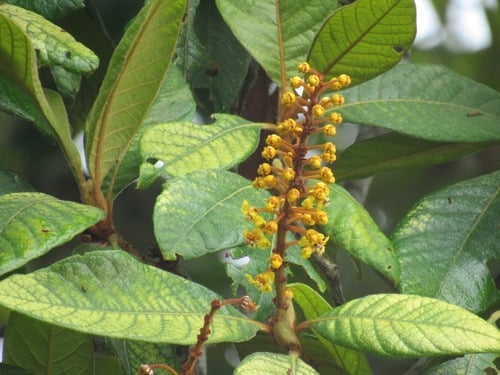
A small tree. It grows 4-6 m high. The crown is small and round. The trunk is twisted and 15-25 cm across. The leaves are simple and opposite. They do not have leaf stalks. They are papery and have easy to see veins. Leaves are 7-10 cm long by 5-7 cm wide. The flowers are in groups at the ends of branches. These are 5-10 cm long. The flower stalks are 2-3 cm long. The flowers are pink. The fruit are 1-2 cm wide and round and fleshy. They have one round seed.
Edible Uses
The fruit is eaten fresh; ripe fruit are traditionally softened in a plastic bag to ease seed removal before consumption.
Distribution
It is a tropical plant. It grows in sandy and well drained soils in Brazil.
Where It Grows
Bolivia, Brazil, Colombia, Cuba, Guiana, Guianas, Guyana, Paraguay, South America, Suriname, Venezuela, West Indies,
Cultivation
Plants are grown from seed. The ripe fruit are harvested and put in a plastic bag to allow them to soften to make it easier to remove the seed. The seeds are washed out in running water. Fresh seed are planted and germinate in 5-8 weeks.
Propagation
Seed - best sown as soon as ripe in a nursery seedbed in a sunny position. Germination rates are normally low, with the seed sprouting within 5 - 8 weeks. Seedlings grow away slowly and will take 9 months or more before being ready to plant out.
Other Uses
The wood is fine-textured, straight-grained, moderately heavy, soft, with poor mechanical properties and very subject to rot when exposed to the elements. It is easy to work but, because of its small dimensions, is only used for general carpentry, rustic furniture etc. The wood is used for fuel and to make charcoal.
Production
Plants grow slowly. They reach 1.5 m high in 2 years.
Notes
There are 127 Byrsonima species. They grow in tropical America.
Synonyms
Also Known As
Canjiqueira, Chaparro-mantega, Huria, Manteco merey, Murici-do-cerrado, Murici-rosa, Muriye, Semanera, Somanera, Sumanera
References (8)
- Bircher, A. G. & Bircher, W. H., 2000, Encyclopedia of Fruit Trees and Edible Flowering Plants in Egypt and the Subtropics. AUC Press. p 71
- Bortolotto, I. M., et al, 2018, Lista preliminar das plantas alimenticias nativas de Mato Grosso do Sul, Brasil. Iheringia, Serie Botanica, Porto Alegre, 73 (supl.):101-116
- Grandtner, M. M. & Chevrette, J., 2013, Dictionary of Trees, Volume 2: South America: Nomenclature, Taxonomy and Ecology. Academic Press p 83
- Lorenzi, H., 2002, Brazilian Trees. A Guide to the Identification and Cultivation of Brazilian Native Trees. Vol. 02 Nova Odessa, SP, Instituto Plantarum p 239
- F. W. H. A. von Humboldt et al., Nov. gen. sp. 5:114[folio]; 5:148[quarto]. 1822 "coccolobaefolia"
Show all 8 references Hide references
- Peres, M. K., 2011, Diasporos do Cerrado Atrativos para Fauna: Chave Interativa Caracterizacao Visual e Relacoes Ecologicas. Masters thesis. Universidade de Brasilia.
- Roa, J. A. G. & Boada, D. S. G., 2018, Fundación para el Fortalecimiento de la Fruticultura y Plantas Alimenticias no Convencionales en Colombia.
- www.colecionandofrutas.org