Bunchosia armeniaca
(Cavanilles) DC.
Bunchosia, Green plum, Peanut-butter plant
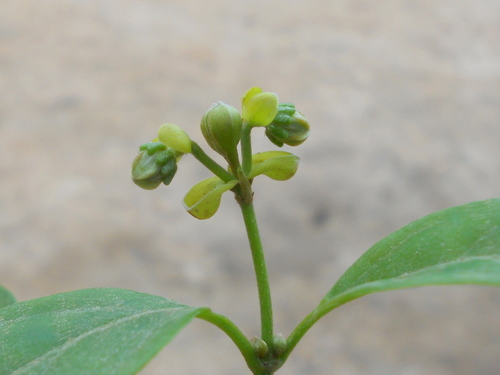
iNaturalist· cc-by-nc
(c) Anderson Mesa C, some rights reserved (CC BY-NC), uploaded by Anderson Mesa C
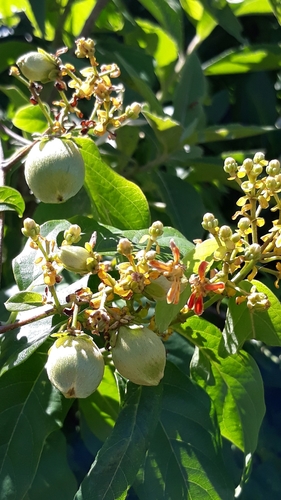
iNaturalist· cc-by-nc
(c) saki_alawwa, some rights reserved (CC BY-NC)
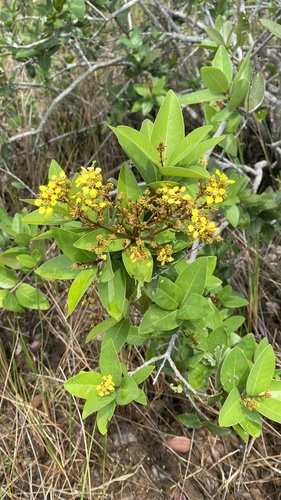
iNaturalist· cc-by-nc
(c) Rafly Firmansyah, some rights reserved (CC BY-NC)
Summary
Source: WikipediaBunchosia armeniaca is a species in the family Malpighiaceae native to northwestern South America (Colombia, Ecuador, Bolivia, Venezuela, Brazil, and Peru). Common names include cansaboca, cirhuela de frayle, ciruela de fraile (friar's plum), guáimaro, indano, and mamey de tierra fría (cold-earth mamey). Its Kichwa name is usuma. Bunchosia armeniaca can attain a height of 20 meters, but it commonly grows to 5 meters. It can be found between 100–2600 m of elevation in a wide range of ecological habitats. Bunchosia armeniaca yields a fruit that is very sweet and with cloying red pulp, which adheres strongly to the seeds, hence the Spanish etymology cansaboca (tired mouth). The two seeds in each berry were said to be poisonous by Joseph Dombey. Due to rapid spoilage on the tree, the fruit are often harvested while still a creamy-green and ripened to a red colour indoors.
Description
An evergreen shrub or tree. It grows 4-10 m high. The leaves are thick and not very wavy. They are 22.5 cm long by 10 cm wide. The flowers are in compact erect racemes. The petals have fringed edges. The fruit are broadly oval. They are 2.5 cm across and dark red. The thin skin is covered with white down. The fruit pulp is dark red and sweet. There are 2 large seeds.
Edible Uses
Fruit - raw or cooked. The round, light green to orange fruits have a cream-coloured flesh that is very sweet and rather cloying. The flesh is sweet but thin and rather dry. The fruit, which is 25 - 40mm in diameter, is produced in clusters of 8 - 10. Usually eaten out of hand, they are also made into preserves.
Traditional Uses
The fruit has a sticky sweet pulp. It has a taste a little like peanut-butter. The fruit are eaten fresh or used in preserves. They are chewy.
This uses section is brief — help expand it
Medicinal Uses
None known
Distribution
A tropical plant. It is native to South America. It grows naturally in Andes countries between 1500-2400 m altitude. It grows in lowland humid and dry forests. It can tolerate flooding for brief periods. It suits hardiness zones 9-12.
Where It Grows
Amazon, Andes, Australia, Bolivia, Brazil, Colombia, Cuba, Ecuador, Hawaii, Pacific, Peru*, SE Asia, Singapore, South America, USA, Venezuela, West Indies,
Cultivation
Plants are grown from seed.
Propagation
Seed - Cuttings of semi-ripe wood. Greenwood cuttings.
Other Uses
None known Special Uses
Production
Plants produce fruit 2 years after planting. There are several crops of fruit per year.
Other Information
It is a cultivated fruit tree.
Notes
There are 68 Bunchosia species.
Synonyms
Also Known As
Bunchoise des Andes, Caferana, Cansaboca, Cereja, Cerezo, Chico Mamey, Ciruela de fraile, Ciruela silvestre, Ciruela verde, Ciruelo, Indano
References (23)
- Barwick, M., 2004, Tropical and Subtropical Trees. A Worldwide Encyclopedic Guide. Thames and Hudson p 71
- Bircher, A. G. & Bircher, W. H., 2000, Encyclopedia of Fruit Trees and Edible Flowering Plants in Egypt and the Subtropics. AUC Press. p 69
- Facciola, S., 1998, Cornucopia 2: a Source Book of Edible Plants. Kampong Publications, p 146
- Grandtner, M. M. & Chevrette, J., 2013, Dictionary of Trees, Volume 2: South America: Nomenclature, Taxonomy and Ecology. Academic Press p 80
- Hermandez Bermejo, J.E., and Leon, J. (Eds.), 1994, Neglected Crops. 1492 from a different perspective. FAO Plant Production and Protection Series No 26. FAO, Rome. p15
Show all 23 references Hide references
- Kermath, B. M., et al, 2014, Food Plants in the Americas: A survey of the domesticated, cultivated and wild plants used for Human food in North, Central and South America and the Caribbean. On line draft. p 151
- Lamont, S.R., et al, 1999, Species composition, and use of Homegardens among three Amazonian Villages. Economic Botany 53(3) pp 312-326
- Llamas, K.A., 2003, Tropical Flowering Plants. Timber Press. p 251
- Lopez-Diago, D. & Garcia, N., 2021, Wild edible fruits of Colombia. Biota ColomBiana 22 (2) p 40
- Lorenzi, H., Bacher, L., Lacerda, M. & Sartori, S., 2006, Brazilian Fruits & Cultivated Exotics. Sao Paulo, Instituto Plantarum de Estuados da Flora Ltda. p 428
- Martin, F. W., et al, 1987, Perennial Edible Fruits of the Tropics. USDA Handbook 642 p 35
- Miguel, E., et al, 1989, A checklist of the cultivated plants of Cuba. Kulturpflanze 37. 1989, 211-357
- Paz, F. S., et al, 2021, Edible Fruit Plant Species in the Amazon Forest Rely Mostly on Bees and Beetles as Pollinators. Journal of Economic Entomology, XX(XX), 2021, 1–13
- Popenoe,
- Prodr. 1:582. 1824
- Roa, J. A. G. & Boada, D. S. G., 2018, Fundación para el Fortalecimiento de la Fruticultura y Plantas Alimenticias no Convencionales en Colombia.
- Smith, N., et al, 2007, Amazon River Fruits. Flavors for Conservation. Missouri Botanical Gardens Press. p 146
- Staples, G.W. and Herbst, D.R., 2005, A tropical Garden Flora. Bishop Museum Press, Honolulu, Hawaii. p 382
- Torre, de la, L., et al, 2008, Enciclopedia de las Plantas Útiles del Ecuador. Herbario QCA. Pontificia Universidad Católica del Ecuador. p 410
- USDA, ARS, National Genetic Resources Program. Germplasm Resources Information Network - (GRIN). [Online Database] National Germplasm Resources Laboratory, Beltsville, Maryland. Available: www.ars-grin.gov/cgi-bin/npgs/html/econ.pl (10 April 2000)
- Vasquez, R. and Gentry, A. H., 1989, Use and Misuse of Forest-harvested Fruits in the Iquitos Area. Conservation Biology 3(4): 350f
- Wiersema, J. H. & Leon, B., 2013, World Economic Plants. A Standard Reference CRC Press. 2nd Ed. p 123
- World Checklist of Useful Plant Species 2020. Royal Botanic Gardens, Kew