Nashia inaguensis
Millsp.
Moujean tea
iNaturalist· cc-by-nc
(c) scott.zona, some rights reserved (CC BY-NC)
iNaturalist· cc0
no rights reserved
iNaturalist· cc-by-nc
(c) Octavio Rivera Hernández, some rights reserved (CC BY-NC)
Summary
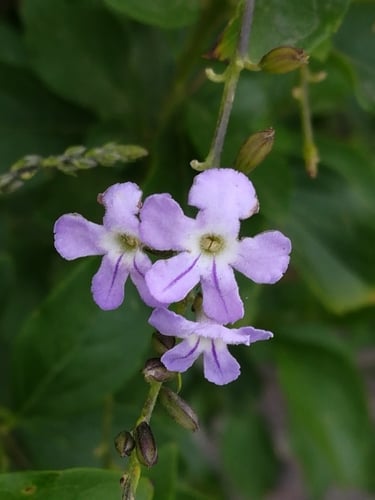
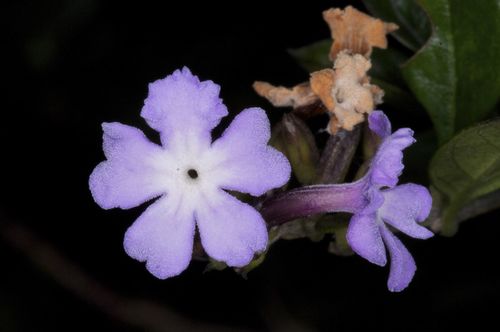
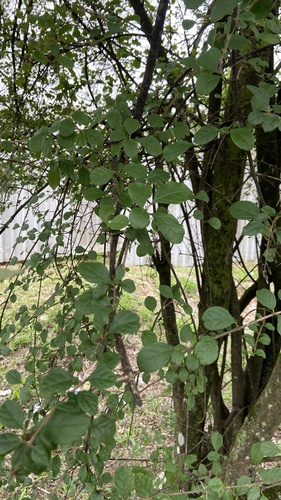
Source: WikipediaNashia inaguensis is an evergreen shrub, commonly referred to as Moujean tea, Bahamas berry, or pineapple verbena. It is native to the east Caribbean islands, in particular the island of Inagua in the Bahamas, after which the species is named. In its native environment, the plant crawls along sunny, rocky outcroppings, semi-protected from steady high winds. It is a loose, spreading shrub with many branches up to 2 m high, with mature trunks of 5–10 cm diameter. The leaves are aromatic, simple, opposite (or fascicled), elliptic to obovate or spatulate, 5–10 mm long, with revolute margins. The flowerheads are axillary, sessile, few-flowered, with a strigose calyx; the corolla is whitish, about 2 mm long, four-lobed, and with four stamens. The fragrant foliage and tiny white flowers are highly attractive to pollinators, in particular the Atala butterfly.
Description
A small shrub. The leaves are small and shiny. The leaves have a lemon scent. Flowers are very small. The fruit are very small and red or orange.
This description is brief — help expand it
Edible Uses
The leaves are used for tea, which has a vanilla flavour.
Traditional Uses
The leaves are used for tea. They have a vanilla flavour.
This uses section is brief — help expand it
Distribution
A tropical plant. At ECHO.
Where It Grows
Bahamas, Central America, North America, USA,
Other Information
It is a cultivated food plant.
Synonyms
Also Known As
Pineapple verbena
References (1)
- Facciola, S., 1998, Cornucopia 2: a Source Book of Edible Plants. Kampong Publications, p 244