Jasminum grandiflorum
L.
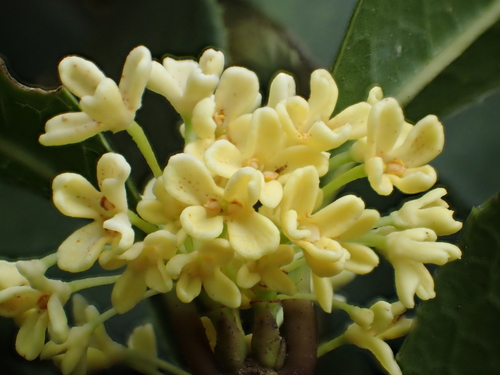
White fragrant flower, Spanish jasmine
iNaturalist· cc-by-nc
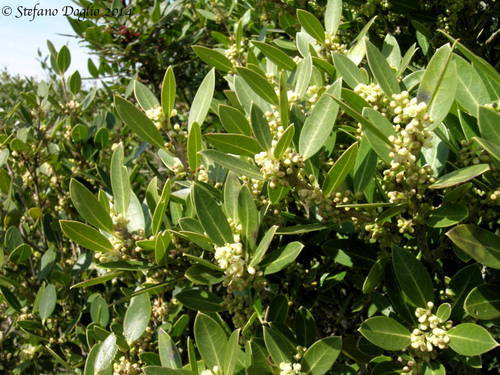
(c) Lara Lowis, some rights reserved (CC BY-NC), uploaded by Lara Lowis
iNaturalist· cc-by-nc
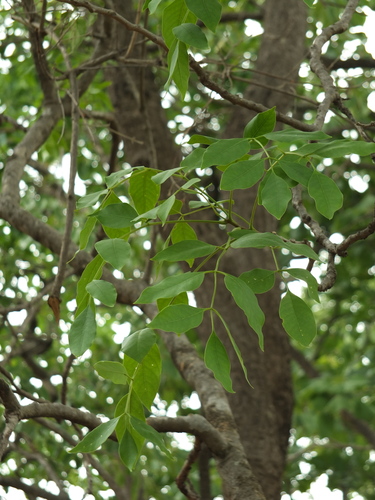
(c) Subhadra, some rights reserved (CC BY-NC)
Summary
Source: WikipediaJasminum grandiflorum, also known variously as the Spanish jasmine, Royal jasmine, Catalan jasmine, Sicilian jasmine, is a species of jasmine native to South Asia, the Arabian peninsula, East and Northeast Africa and the Yunnan and Sichuan regions of China. The species is widely cultivated and is reportedly naturalized in Guinea, the Maldive Islands, Mauritius, Réunion, Java, the Cook Islands, Chiapas, Central America, and the Caribbean. It is closely related to, and sometimes treated as merely a form of, Jasminum officinale.
Description
A vigorous plant. It is a scrambling plant. The leaves are opposite and are compound. They have an odd number of leaflets along the stalk. There are usually about 7 leaflets and they are broadly oval. They are 1-3 cm long by 3-12 mm wide. They only have very short leaf stalks. The flowers can be 4 cm across. They can have pink on the outside. They occur in groups at the ends of branches.
Edible Uses
The flowers of Jasminum grandiflorum are widely used to flavour tea, particularly in China and India. Jasmine absolute (the essential oil) and concrete (the waxy solid containing the essential oil) are both used as additives in food and tobacco.
Traditional Uses
The flowers are used to scent tea. The dried leaves are used to scent Chinese tea leaf.
This uses section is brief — help expand it
Medicinal Uses
Jasmine oil or essence is used medicinally as an aphrodisiac and muscle relaxant, said to work by warming and softening nerves and tendons. An infusion of the flowers is used to relieve coughs, treat headaches, weak eyes, and scorpion stings. Applied externally, a flower infusion treats skin diseases. The leaves are chewed to remedy ulcers or eruptions in the mouth. Fresh plant juice is applied to corns, and when mixed with oil, is poured into the ears as a treatment for otorrhoea.
Distribution
It is a subtropical plant. It grows well in sunny dry locations. It needs a temperature above 7°C. In Pakistan it grows between 500-1,500 m altitude. In Sichuan and Yunnan.
Where It Grows
Arabia*, Asia, Australia, Bangladesh, Belize, Bolivia, Central America, China, Costa Rica, Cuba, Djibouti, Dominican Republic, El Salvador, Eritrea, Ethiopia, Europe, Fiji, France, Guatemala, Guinea, Haiti, Hawaii, Himalayas, Honduras, India, Indonesia, Jamaica, Kenya, Maldives, Marianas, Marquesas, Mauritius, Mediterranean, Mexico, Middle East, Myanmar, Nepal, Nicaragua, Niue, Oman, Pacific, Pakistan, Panama, Puerto Rico, Reunion, Rwanda, Saudi Arabia, SE Asia, Somalia, Spain, Sri Lanka, Sudan, Trinidad-Tobago, Uganda, USA, West Indies, Windward Is.,
Cultivation
Jasminum grandiflorum can be grown from the warm temperate to the tropical zones. When grown commercially, plantations are usually below elevations of 500 metres. The plant is day-neutral, and floral initiation is promoted by high day and low night temperatures. Some cultivars can resist at least some frost. Grows best in a sunny position, growth and flowering being depressed by shade. Preferring warm sunny conditions with adequate soil moisture, the plant can withstand short periods of very high temperatures. Growth and flowering are depressed by low daytime temperatures and cool wet conditions. Some cultivars are fairly drought tolerant, although flowering is strongly reduced by moisture stress. Almost any well-drained soil is suitable, but sandy clays or loams with a pH between 6 - 8 are preferred. Marshy, waterlogged or very stony soils should be avoided, as should saline soils. The plant grows slowly for the first 2 years after planting, but first flowering starts at the age of 6 months. In the 3rd and following years flowering is profuse. Mature plants flower for 7 - 9 months per year in warm regions, 4 - 6 months in temperate regions. Seed set is usually very low and pollen sterility frequently above 75%. Flowers open early in the morning and oil content decreases considerably after 10 a.m. In Europe, flowers contain substantially more essential oil in August and September than in July and October. Jasmine plantations usually remain productive for 10 - 15 years but perhaps much longer if well-managed. Jasminum grandiflorum is a complex species with wild and cultivated populations. Jasmine flowers are picked manually between dawn and 10 a.m., during the hot season in India even between 3 - 8 a.m. Preferably only half-opened and fresh fully opened flowers must be picked, not buds or old (yellowish) flowers, as these will depress the quality of the essential oil. Although rain makes the flowers almost useless, picking flowers in the rain should continue, to promote further flowering. An experienced picker can harvest 0.5 kg flowers per hour, but the pickers are usually young women and children, who achieve 2 kg in 5 hours. Annual flower yield of jasmine varies from 5.5 - 12.5 t/ha, on average 5 - 8 t/ha. Modern commercial plantations average 8 - 10 t/ha. In Java, production is highest during the rainy season (30 kg/ha per day), and lowest during the dry season (4 kg/ha per day). Concrete yield is about 0.1%; up to 0.3% is reported from India. As an approximate guide, 1000 kg flowers yield 1 kg concrete when solvent extracted, half of this as absolute. Jasmine flowers must be quickly processed, since delay substantially reduces essential oil content. Flowers should be kept shaded and cool between picking and processing and the processing facility should be close to the plantation. Freshly picked flowers can be stored in polythene bags at 15°c without loss of yield, quality or odour. Jasmine oil can be obtained from flowers by steam distillation but the yield is very low. Jasmine concrete is obtained from flowers, formerly by enfleurage, currently by solvent extraction. In solvent extraction, flowers are washed up to 3 times with petroleum ether or, preferably, with hydrocarbon-free food-grade hexane; the extract is then distilled to remove the solvent, resulting in the concrete. Concrete is usually produced at the plantation, but absolute is produced where convenient, often in another country.
Propagation
Although Jasminum grandiflorum can be propagated from seed, seed production is usually low, viability rarely exceeds 50%, and seed remains viable for only six months. Cuttings 12–20 cm long taken from terminal shoots give better results than semi-ripe cuttings; treatment with a root stimulator improves the strike rate. Cuttings are typically treated with a fungicide, placed in prepared planting holes, and watered. For layering in the field, one-year-old shoots are used: a slanting cut is made approximately halfway through the shoot about 50 cm from the end, and the cut section is buried 10–15 cm deep with the tip left above ground. After 4–6 months, rooted layers can be separated from the parent plant and transplanted. In warm temperate areas, the plant is grafted onto 2–3-year-old rootstocks of Jasminum officinale to provide frost protection; in warmer regions, grafting is unnecessary.
Other Uses
Jasmine concrete, the major traded jasmine product, is obtained by solvent extraction (using petroleum ether, hexane, or liquid carbon dioxide) of fresh flowers. It is normally a yellowish to reddish orange-brown waxy solid, only partially soluble in 95% alcohol, with a jasmine-like odour. Jasmine absolute is a dark orange-brown viscous liquid that darkens with age to red-brown or deep red. Its odour is intense, floral, warm, and richly diffusive, with a waxy-herbaceous, oily-fruity, tea-like undertone. Light can degrade its quality, particularly the benzyl acetate and benzyl benzoate it contains. Major components from Egyptian jasmine absolute include benzyl acetate, benzyl benzoate, isophytol, phytol, phytol acetate, linalool, and methyl jasmonate. Composition varies according to cultivar, time of day flowers were picked, flower age, weather, season, time between picking and extraction, extraction method, and solvent used. Jasmine absolute has a powerful, tenacious odour and is widely used in perfumery. Attar of jasmine (East Indian jasmine oil) is prepared by water distillation of the flowers, with the distillate collected in a base oil such as sandalwood oil. Perfumed oils are produced by extracting the flowers with hot sesame or groundnut oil, or by mixing flowers with boiled sesame seed and expressing the oil. The wax residue remaining after essential oil extraction can be used in soaps and is an excellent perfume fixative. For agroforestry, jasmine requires support structures ranging from individual stakes and trellises to post-and-wire systems. Intercropping during the first two years is a common practice to reduce establishment costs, as done in India. In southern Italy, intercropping is carried out in bergamot orange plantations, which begin producing after 10–15 years.
Other Information
It is cultivated.
Notes
There are between 200 and 500 Jasminum species. It is the national flower of Pakistan.
Synonyms
Also Known As
Chameli, Poet's jasmine, Royal jasmine, Saman pichcha, Suxinhua
References (17)
- Ambasta, S.P. (Ed.), 2000, The Useful Plants of India. CSIR India. p 301
- Avinash, B. K., Kumar, R., et al, 2013, Ethnoboptany of Tharus of Dudhwa National Park, India. Mintage journal of Pharmaceutical & Medical Science 6-11
- Blamey, M and Grey-Wilson, C., 2005, Wild flowers of the Mediterranean. A & C Black London. p 174
- Brown, D., 2002, The Royal Horticultural Society encyclopedia of Herbs and their uses. DK Books. p 245
- Facciola, S., 1998, Cornucopia 2: a Source Book of Edible Plants. Kampong Publications, p 163 (As Jasminum officinale)
Show all 17 references Hide references
- Flora of Pakistan. www.eFloras.org
- Kew Plants of the World Online
- Plants of Haiti Smithsonian Institute http://botany.si.edu/antilles/West Indies
- PROSEA handbook Volume 13 Spices. p 277
- Smith, A.C., 1988, Flora Vitiensis Nova, Lawaii, Kuai, Hawaii, Volume 4 p 126
- Sp. pl. ed. 2, 1:9. 1762
- Staples, G.W. and Herbst, D.R., 2005, A tropical Garden Flora. Bishop Museum Press, Honolulu, Hawaii. p 439
- Valder, P., 1999, The Garden Plants of China. Florilegium. p 193
- Wiersema, J. H. & Leon, B., 2013, World Economic Plants. A Standard Reference CRC Press. 2nd Ed. p 373
- Wild edible plants of Himachal Pradesh
- World Checklist of Useful Plant Species 2020. Royal Botanic Gardens, Kew
- Zeven, A. C. & de West, J. M. J., 1982, Dictionary of cultivated plants and their regions of diversity. Wageningen. p 78