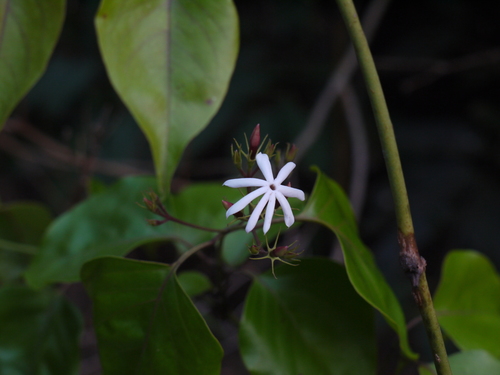
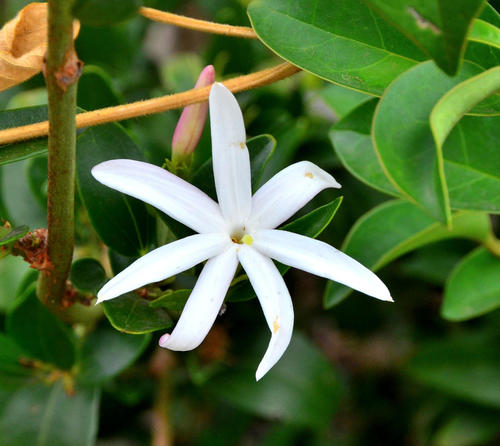
Fraxinus angustifolia
Vahl
Narrow-leaf ash
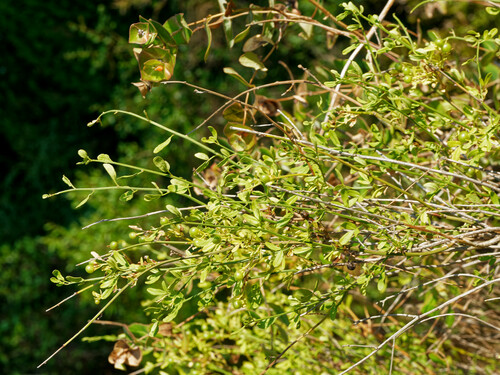
iNaturalist· cc-by-nc
(c) lucapassalacqua, some rights reserved (CC BY-NC)
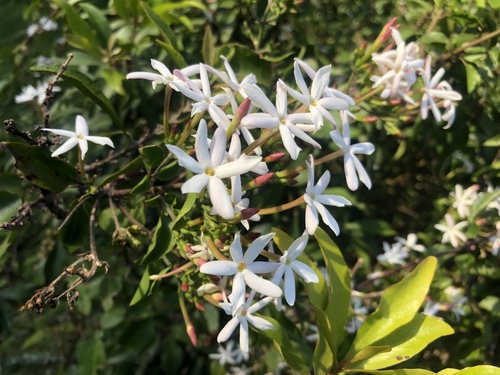
iNaturalist· cc-by-nc
(c) Montserrat Díaz, some rights reserved (CC BY-NC), uploaded by Montserrat Díaz
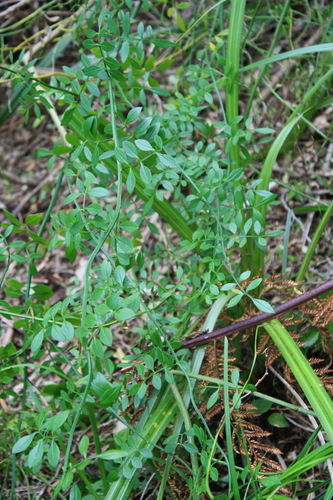
iNaturalist· cc-by-nc
(c) joseronchel, some rights reserved (CC BY-NC)
Summary
Source: WikipediaFraxinus angustifolia, the narrow-leaved ash, is a species of Fraxinus native to Central Europe and Southern Europe, Northwest Africa, and Southwest Asia.
Description
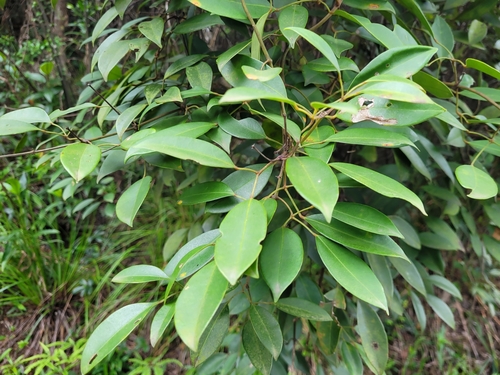
A medium sized tree. It grows 20-30 m tall. The trunk us 1.5 m across. It loses its leaves during the year. The bark is smooth and grey. It becomes cracked on old trees. The buds are pale brown. The leaves are in opposite pairs and are 15-25 cm long. There are 3-13 leaflets along the stalk. These are 3-8 cm long by 1.1.5 cm wide. The fruit is 3-4 cm long. The seed is 2 cm long. It has pale brown wings.
Edible Uses
The fruit is used as a condiment.
Traditional Uses
The fruit are used in a spice mixture.
This uses section is brief — help expand it
Medicinal Uses
None known.
Distribution
It is a Mediterranean climate plant. Hobart Botanical Gardens. Arboretum Tasmania.
Where It Grows
Africa, Algeria, Australia, Caucasus, Georgia, Mediterranean, Morocco, North Africa, Tasmania,
Cultivation
Prefers a deep loamy soil, even if it is on the heavy side. Most members of this genus are gross feeders and require a rich soil. Plants succeed when growing in exposed positions and also in alkaline soils. They tolerate atmospheric pollution. Quite cold-hardy when dormant, the young growth in spring, even on mature plants, is frost-tender and so it is best to grow the plants in a position sheltered from the early morning sun. This species is closely related to F. excelsior. A very ornamental tree, there are several named forms, selected for their ornamental value. This species might be dioecious, in which case male and female plants must be grown if seed is required.
Propagation
Seed is best harvested green — as soon as fully developed but before fully dried on the tree — and sown immediately in a cold frame, where it usually germinates in spring. Stored seed requires cold stratification and should be sown as soon as possible in a cold frame. Prick seedlings into individual pots when large enough and grow on in a cold frame through their first winter. Plant out into permanent positions or a nursery bed in late spring or early summer the following year. Where sufficient seed is available, sow directly into an outdoor seedbed, preferably in autumn, and grow on for 2 years before transplanting.
Other Uses
None known.
Notes
There are about 70 Fraxinus species. It has become a weed in some parts of Australia.
Synonyms
Also Known As
Lissan ettir
References (5)
- Enum. pl. 1:52. 1804, nom. cons.
- Facciola, S., 1998, Cornucopia 2: a Source Book of Edible Plants. Kampong Publications, p 162
- Pasta, S., et al, 2020, An Updated Checklist of the Sicilian Native Edible Plants: Preserving the Traditional Ecological Knowledge of Century-Old Agro-Pastoral Landscapes. Frontiers in Plant Science. Volume 11|Article 388
- Postman, J. D., et al, 2012, Recent NPGS Coordinated Expeditions in the Trans-Caucasus Region to Collect Wild Relatives of Temperate Fruit and Nut Crops. In Acta Horticulturae Number 948 p 191-198 (var. oxycarpa)
- Uphof,