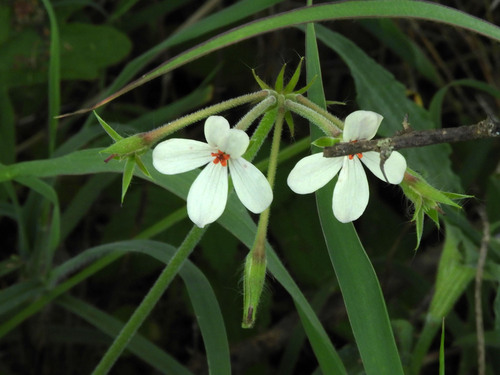
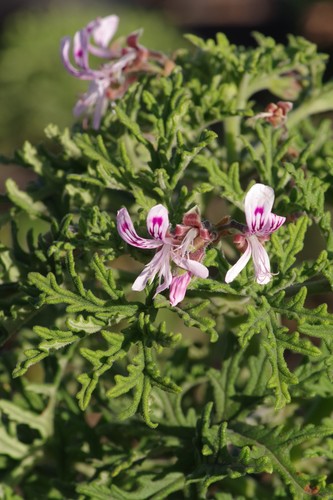
Pelargonium exstipulatum
(Cav.) L'Her.
Pennyroyal geranium
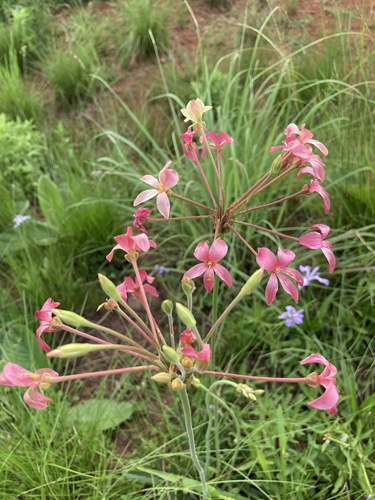
iNaturalist· cc-by-nc
(c) Solly Modimola, some rights reserved (CC BY-NC), uploaded by Solly Modimola
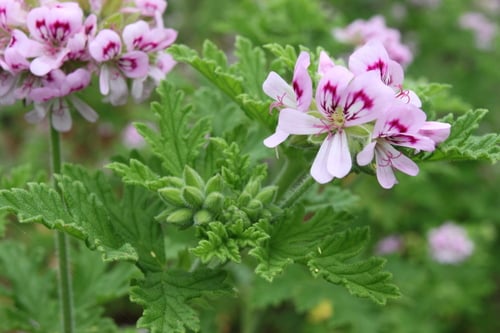
iNaturalist· cc-by-sa
(c) Nicola van Berkel, some rights reserved (CC BY-SA), uploaded by Nicola van Berkel
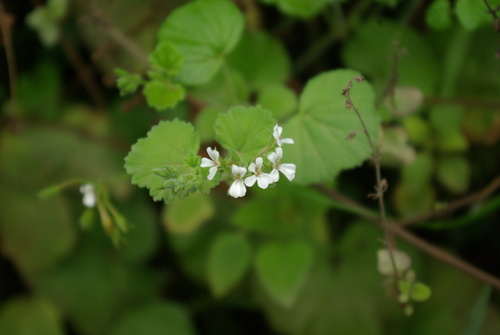
iNaturalist· cc-by-sa
(c) Nicola van Berkel, some rights reserved (CC BY-SA), uploaded by Nicola van Berkel
Summary
Source: WikipediaPelargonium exstipulatum is a pelargonium species native to South Africa. It is in the subgenus Reniforme along with Pelargonium odoratissimum and Pelargonium sidoides.
Description
An evergreen shrub reaching 1 m tall, hardy to UK zone 9 and frost-tender. Maintains foliage year-round. Prefers light sandy or medium loamy, well-drained soils in mildly acid to basic pH ranges. Requires full sun and tolerates both dry and moist conditions.
Edible Uses
The crushed leaves are used as a flavouring in jellies, cakes, and fruit dishes.
Traditional Uses
The leaves are used to flavour jellies, cakes and desserts.
This uses section is brief — help expand it
Medicinal Uses
All parts of the plant are astringent. It can be harvested as needed and used fresh.
Distribution
It is a subtropical plant.
Where It Grows
Africa, South Africa, Southern Africa,
Propagation
Sow seed as soon as it is ripe in a greenhouse, or in early spring if using stored seed. A minimum germination temperature of 13°C is recommended; seeds usually sprout within 2 weeks, though germination can sometimes take several months. Prick seedlings out into individual pots when large enough to handle and overwinter them under glass for at least their first year. If planting outdoors, do so in early summer and consider extra winter protection. Cuttings can be taken at almost any point during the growing season and root easily, though early summer is ideal to allow the new plant to establish before winter.
Other Uses
An essential oil is obtained from the plant, with a pennyroyal fragrance.
References (3)
- W. Aiton, Hort. kew. 2:431. 1789
- Facciola, S., 1998, Cornucopia 2: a Source Book of Edible Plants. Kampong Publications, p 118
- Morton,