Pelargonium crispum
(P. J. Bergius) L'Her.
Lemon geranium, Crisped-leaf pelargonium
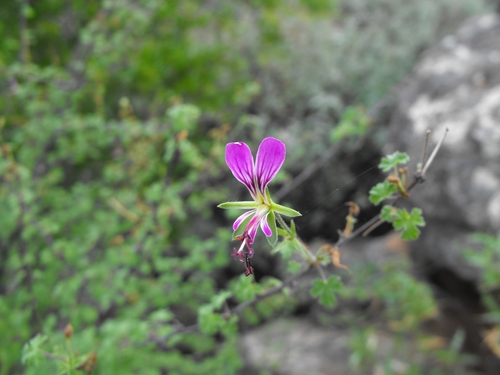
iNaturalist· cc-by-nc
(c) Marion Maclean, some rights reserved (CC BY-NC), uploaded by Marion Maclean
iNaturalist· cc-by-nc
(c) Andrew Massyn, some rights reserved (CC BY-NC), uploaded by Andrew Massyn
iNaturalist· cc-by-nc
(c) Marion Maclean, some rights reserved (CC BY-NC), uploaded by Marion Maclean
Summary
Source: WikipediaPelargonium crispum (the "crisped-leaf pelargonium") is a Pelargonium species native to the Western Cape Province, South Africa. It is in the subgenus Pelargonium along with Pelargonium graveolens and Pelargonium capitatum and Pelargonium tomentosum.
Description
A shrub. It grows 70 cm tall. The young stems are soft and become woody as they get older. The leaves have a lemon scent. The leaves are arranged one above the other in 2 opposite rows. There are several named cultivated varieties. The flowers can be as 2 or 3 together on short stalks. They are white with dark pink markings.
Edible Uses
The leaves have a pleasant lemon aroma and are crushed to flavour soups, fruit dishes, jellies, sorbets, ice cream, and cakes. Cake pans can be lined with the leaves so that the pastry absorbs their essence. An infusion of the leaves also makes a pleasant tea.
Traditional Uses
The crushed leaves are used to flavour soups, poultry, sauces, fruit dishes and vinegar.
This uses section is brief — help expand it
Medicinal Uses
All parts of the plant are astringent. It can be harvested as needed and used fresh.
Distribution
It is a subtropical plant.
Where It Grows
Africa, Canada, Madagascar, North America, South Africa, Southern Africa,
Propagation
Sow seed as soon as it is ripe in a greenhouse, or in early spring if using stored seed. A minimum germination temperature of 13°C is recommended; seeds usually sprout within 2 weeks, though germination can sometimes take several months. Prick seedlings out into individual pots when large enough to handle and overwinter them under glass for at least their first year. If planting outdoors, do so in early summer and consider extra winter protection. Cuttings can be taken at almost any point during the growing season, though early summer is ideal to allow the new plant to establish before winter.
Other Uses
An essential oil extracted from the leaves and young shoots carries a strawberry and citral scent, and is used in perfumery and soap making. The leaves are also dried for pot-pourri and herb pillows.
Other Information
It is cultivated.
References (5)
- W. Aiton, Hort. kew. 2:430. 1789
- Facciola, S., 1998, Cornucopia 2: a Source Book of Edible Plants. Kampong Publications, p 118
- Plantz Africa
- Wiersema, J. H. & Leon, B., 2013, World Economic Plants. A Standard Reference CRC Press. 2nd Ed. p 503
- World Checklist of Useful Plant Species 2020. Royal Botanic Gardens, Kew
More from Geraniaceae
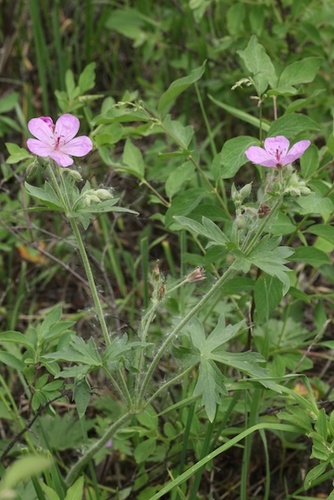
Geranium viscosissimum
Sticky geranium, Sticky purple cranesbill
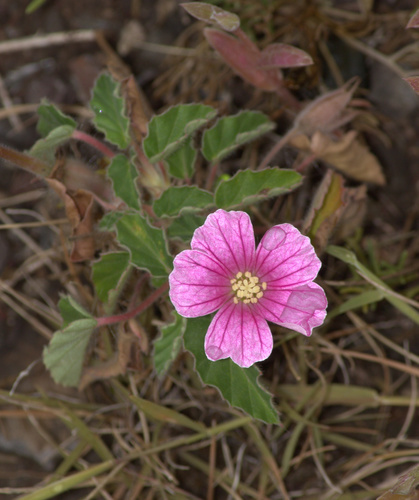
Monsonia senegalensis
Annual dysentery-flower
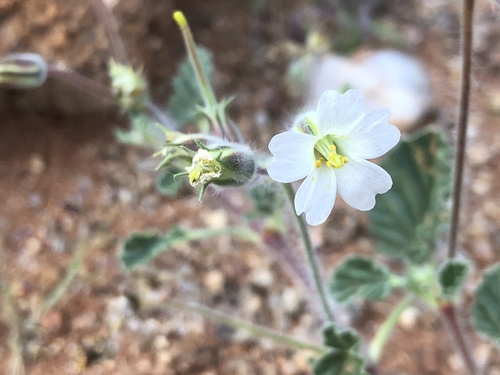
Monsonia umbellata
Bush tea
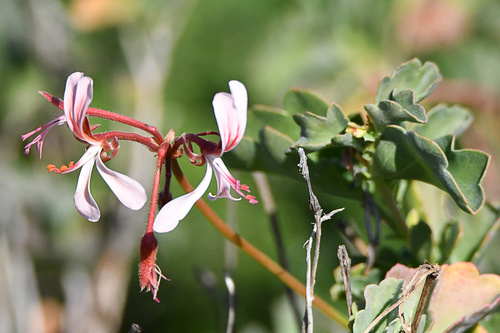
Pelargonium acetosum
Sorrel Geranium, Sorrel-leaved stork's bill
Pelargonium antidysentericum
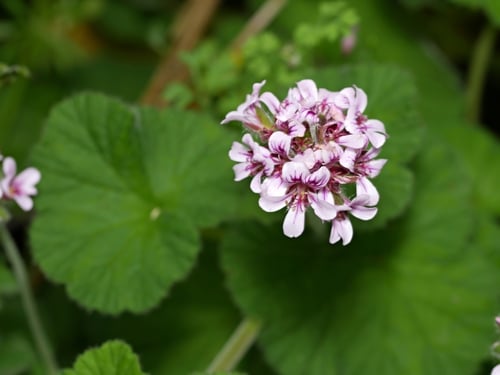
Pelargonium australe
Austral Stalk’s Bill, Austral Storksbill, Native Storksbill, Native Pelargonium, Southern storksbill