Pelargonium incrassatum
(Andrews) Sims
Namaqualand beauty
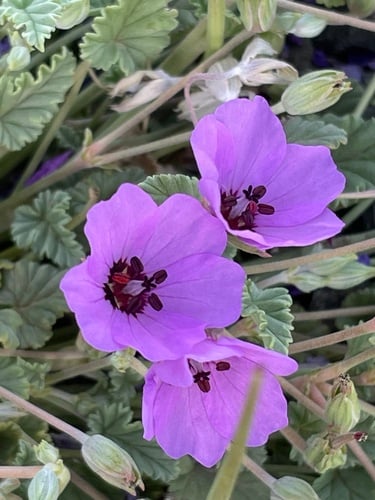
iNaturalist· cc-by-nc
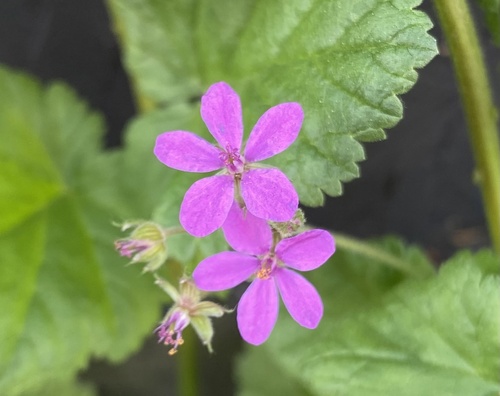
(c) damionjp, some rights reserved (CC BY-NC), uploaded by damionjp
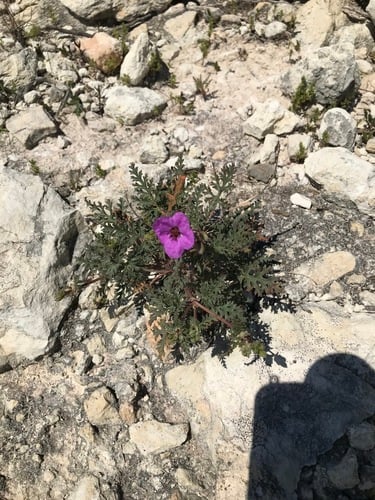
iNaturalist· cc-by-nc
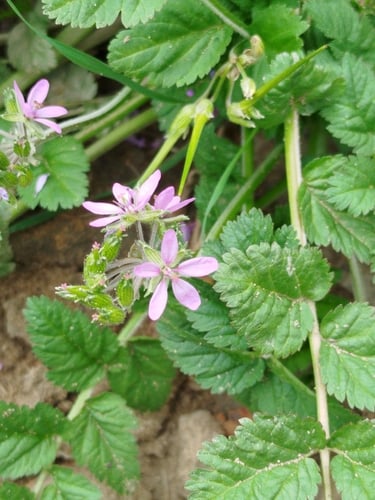
(c) Alan Horstmann, some rights reserved (CC BY-NC), uploaded by Alan Horstmann
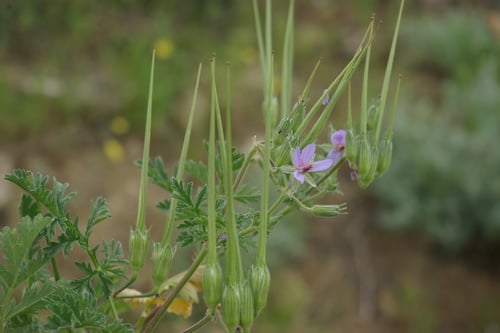
iNaturalist· cc-by-nc
(c) copper, some rights reserved (CC BY-NC), uploaded by copper
Summary
Source: WikipediaAn evergreen perennial reaching 0.3 m tall with a compact form. Remains in leaf year-round with flowers not specified. Hardy to UK zone 9 and frost tender. Grows in light sandy to medium loamy, well-drained soils with mildly acid to basic pH. Requires full sun and tolerates both dry and moist conditions.
Description
A small shrub which keeps growing from year to year. It grows 30 cm high. It forms tubers and is dormant in the summer or dry season. The tuber is turnip shaped. The leaves at the base are in rings and have long stems. They have silver hairs. The leaves are 5 cm long and have leaflets along the stalk. The stems can have 10-20 or more flowers. These are deep pink. They are 18 mm across. The lower petals are much reduced.
Edible Uses
None known.
Traditional Uses
The peeled tubers are eaten raw, cooked in milk or baked in hot ashes. They are a staple food.
This uses section is brief — help expand it
Medicinal Uses
All parts of the plant are astringent.
Distribution
It is a Mediterranean plant. It can grow in hot arid places with a marked dry season. The dry season can be 6-11 months. It grows in stony soil. It grows between 650-1,500 m above sea level. It can grow in arid places. It suits hardiness zones 9-11.
Where It Grows
Africa, Australia, Namibia, South Africa, Southern Africa,
Propagation
Sow seed as soon as it is ripe in a greenhouse, or in early spring if using stored seed. A minimum germination temperature of 13°C is recommended; seeds usually sprout within 2 weeks, though germination can sometimes take several months. Prick seedlings out into individual pots when large enough to handle and overwinter them under glass for at least their first year. If planting outdoors, do so in early summer and consider extra winter protection. Cuttings can be taken at almost any point during the growing season, though early summer is ideal to allow the new plant to establish before winter. Tubers can also be divided at almost any time of year; pot the divisions and grow them on under glass until established.
Other Uses
An essential oil is obtained from the plant.
Other Information
They are an important seasonal food.
Notes
There are about 230 Pelargonium species.
Nutrition
| Part | Moisture | kJ | kcal | Protein | Vit A | Vit C | Iron | Zinc |
|---|---|---|---|---|---|---|---|---|
| Bulb | 57.8 | 665 | 159 | 3.5 | — | 68.3 | 0.7 | 0.8 |
Synonyms
Also Known As
'nytjie
References (8)
- Bot. Mag. 20:761. 1804
- Cundall, P., (ed.), 2004, Gardening Australia: flora: the gardener's bible. ABC Books. p 996
- Royal Botanic Gardens, Kew (1999). Survey of Economic Plants for Arid and Semi-Arid Lands (SEPASAL) database. Published on the Internet; http://www.rbgkew.org.uk/ceb/sepasal/internet [Accessed 16th April 2011]
- Ruiters-Welcome, A. K., 2019, Food plants of southern Africa. Ph.D. thesis. Univ. of Johannesburg p 64
- van Wyk, Ba., 2000, A Photographic Guide to Wild Flowers of South Africa. Struik Nature. p 81
Show all 8 references Hide references
- van Wyk, Be., & Gericke, N., 2007, People's plants. A Guide to Useful Plants of Southern Africa. Briza. p 92
- Wehmeyer, A. S, 1986, Edible Wild Plants of Southern Africa. Data on the Nutrient Contents of over 300 species
- Welcome, A. K. & Van Wyk, B.-E., 2019, An inventory and analysis of the food plants of southern Africa. South African Journal of Botany 122 (2019) 136–179