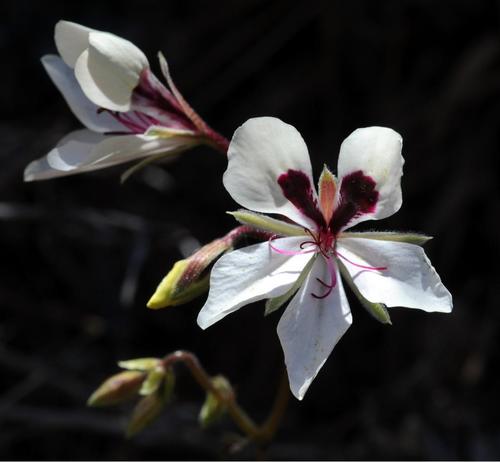
Pelargonium lobatum
(Burm. f.) L'Herit.
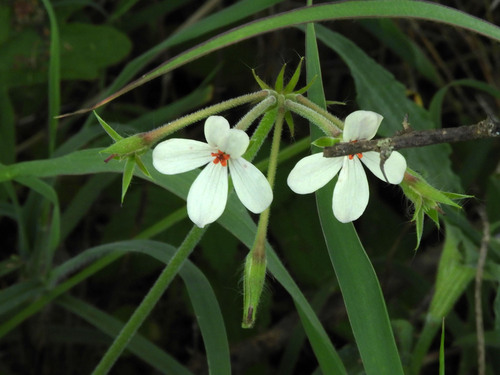
iNaturalist· cc-by-sa
(c) Chris Vynbos, some rights reserved (CC BY-SA), uploaded by Chris Vynbos
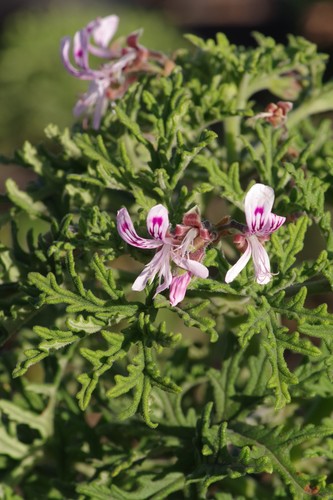
iNaturalist· cc-by-sa
(c) Tony Rebelo, some rights reserved (CC BY-SA), uploaded by Tony Rebelo
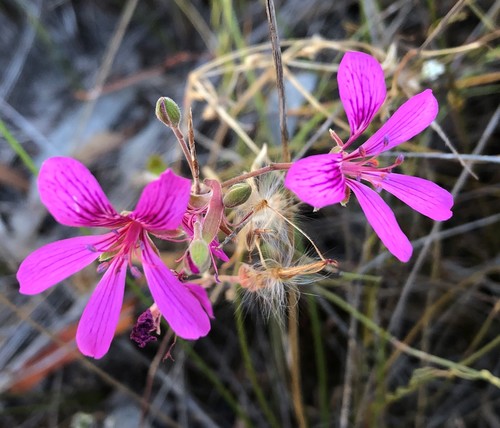
iNaturalist· cc-by-sa
(c) Chris Vynbos, some rights reserved (CC BY-SA), uploaded by Chris Vynbos
Description
A herb. It is erect. It has underground stems or rhizomes. It keeps growing from year to year.
This description is brief — help expand it
Edible Uses
The leaves and flowers are eaten as a snack and used for flavouring.
Traditional Uses
The leaves and flowers are eaten as a snack and used for flavouring.
This uses section is brief — help expand it
Medicinal Uses
In herbal medicine, Pelargonium has been used for intestinal problems, wounds and respiratory ailments, but Pelargonium species have also been used for fevers, kidney complaints and other conditions. Geranium (Pelargonium) oil is considered a relaxant in aromatherapy, and in recent years, respiratory/cold remedies made from P. sidoides and P. reniforme have been sold in Europe and the US. P. sidoides along with Echinacea is used for bronchitis. P. odoratissimum is used for its astringent, tonic and antiseptic effects. It is used internally for debility, gastroenteritis, and hemorrhage and externally for skin complaints, injuries, and neuralgia and throat infections. The essential oil is used in aromatherapy.
Distribution
It is a Mediterranean plant. It can grow in dry soils. It can grow in arid places.
Where It Grows
Africa, South Africa*, Southern Africa,
Synonyms
References (5)
- Fox, F. W. & Young, M. E. N., 1982, Food from the Veld. Delta Books. p 236
- Royal Botanic Gardens, Kew (1999). Survey of Economic Plants for Arid and Semi-Arid Lands (SEPASAL) database. Published on the Internet; http://www.rbgkew.org.uk/ceb/sepasal/internet [Accessed 16th April 2011]
- Ruiters-Welcome, A. K., 2019, Food plants of southern Africa. Ph.D. thesis. Univ. of Johannesburg p 64
- Welcome, A. K. & Van Wyk, B.-E., 2019, An inventory and analysis of the food plants of southern Africa. South African Journal of Botany 122 (2019) 136–179
- World Checklist of Useful Plant Species 2020. Royal Botanic Gardens, Kew