Vaccinium cereum
G. Forst. or Walp.
Ohelo berry
iNaturalist· cc-by-nc
(c) brucedc, some rights reserved (CC BY-NC), uploaded by brucedc
iNaturalist· cc-by-nc
(c) brucedc, some rights reserved (CC BY-NC)
Summary
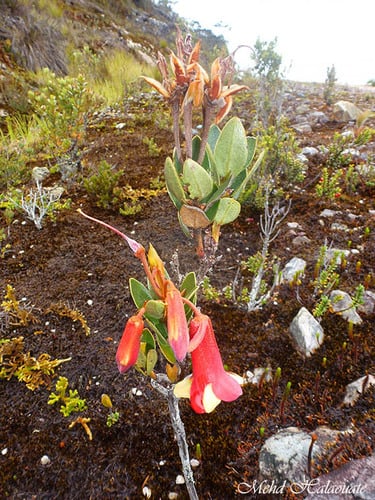
Source: WikipediaVaccinium cereum is a species of flowering plant in the heath family, Ericaceae. It is a shrub native to the Cook Islands, Marquesas Islands, and Society Islands in the South Pacific. In the Marquesas Islands it inhabits dry and windswept mountaintops above 1,200 m, where it is a characteristic shrub in heathland growing up to one meter tall, together Metrosideros collina, Styphelia tameiameiae, and Bidens spp., and interspersed with grasses and ferns. On Tahiti it grows on windswept razor-back ridges from 800 to 1400 meters elevation. Three subdivisions are accepted: Vaccinium cereum subsp. cereum – Society Islands (Tahiti) and Marquesas Islands Vaccinium cereum subsp. cheesemanii Skottsb. – Cook Islands (Rarotonga) Vaccinium cereum var. raiateense (J.W.Moore) M.L.Grant – Society Islands (Raiatea) Vaccinium cereum is the type species of Vaccinium section Macropelma, but its phylogenetic relationships to other Vaccinium species isn't fully clear. It differs from the Hawaiian species of section Macropelma in having a pseudo-ten-locular ovary as well as a determinate floral axis with flowers in all of the leaf axils. It is similar overall to Vaccinium macgillivrayi from Vanuatu and New Caledonia, and may be more closely related to the Asiatic section Bracteata than to the Hawaiian species, and/or may be of hybrid origin.
Description
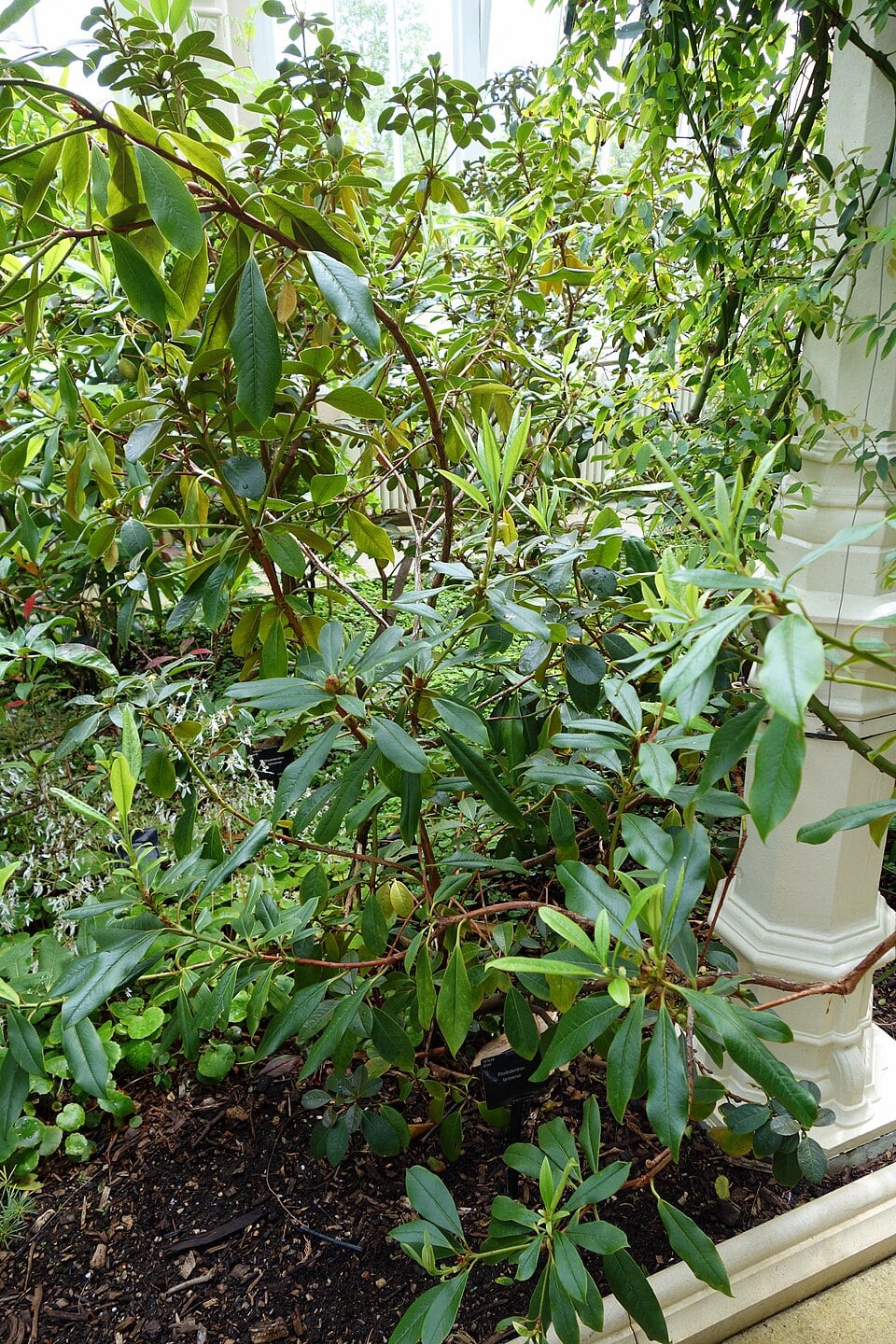
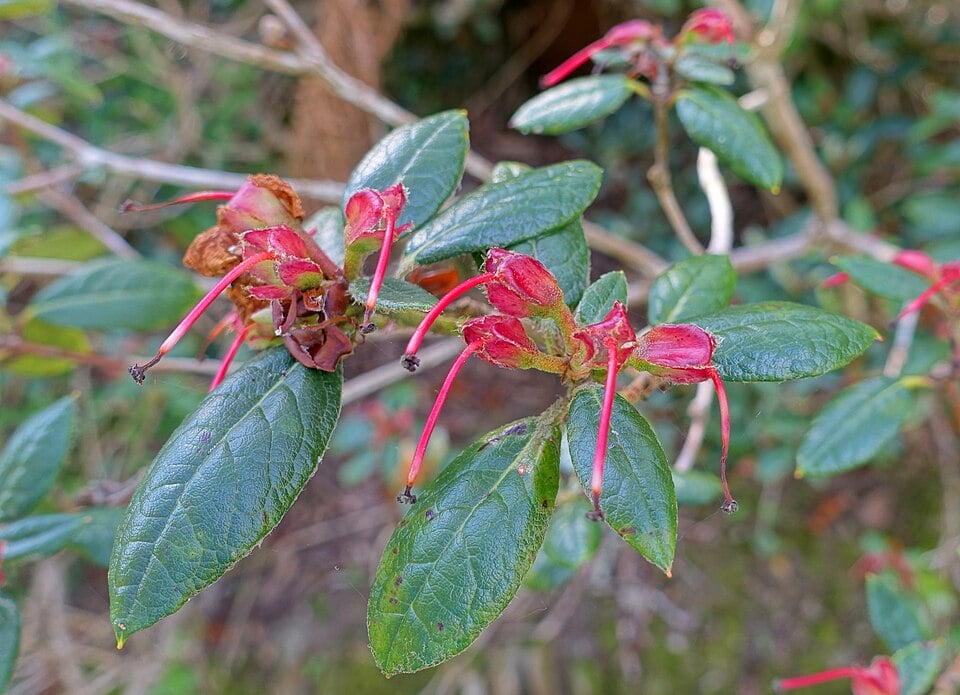
A shrub. It grows about 60 cm high. The leaves are leathery. They can be oblong or nearly round. They are about 2.5 cm long. The leaves are often a bluish or greyish colour. The flowers are usually red. The berries can be red, orange or yellow. These are about 10 mm across. The fruit are edible.
Edible Uses
The fruit can be eaten raw, cooked in pies, or made into sauces.
Traditional Uses
The fruit can be eaten raw. They are also cooked in pies and sauces.
This uses section is brief — help expand it
Distribution
A tropical plant.
Where It Grows
Asia, Hawaii, Marquesas, Pacific, Tahiti, USA,
Notes
Unresolved name with two different authorities.
Dangerous Lookalikes
This plant can be confused with the following toxic species. Always verify identification carefully before consuming any wild plant.
Deadly Nightshade
Atropa belladonna
Joan Simon from Barcelona, España
Ohelo berry
Vaccinium cereum
(c) brucedc, some rights reserved (CC BY-NC), uploaded by brucedc
Deadly Nightshade: Tall herbaceous plant (1-2m), single shiny black cherry-sized berries, star-shaped calyx, large oval leaves, sweet but dangerous taste.
Ohelo berry: Low woody shrub, berries in clusters with crown/remnant calyx ring, sweet taste.
Nutrition
| Part | Moisture | kJ | kcal | Protein | Vit A | Vit C | Iron | Zinc |
|---|---|---|---|---|---|---|---|---|
| Fruit | 90.1 | — | 36 | 0.4 | — | — | 0.1 | — |
Synonyms
References (5)
- Degener,
- Facciola, S., 1998, Cornucopia 2: a Source Book of Edible Plants. Kampong Publications, p 97
- Food Composition Tables for use in East Asia FAO http://www.fao.org/infoods/directory No. 927 (As Vaccinium reticulatum)
- In USDA Food Composition tables. sr13fg09.pdf (As Vaccinium reticulatum)
- Lamoureux, C.H., 1976, Trailside Plants of Hawaii's National Parks. Hawaii Natural History Association. p 57 (As Vaccinium reticulatum)