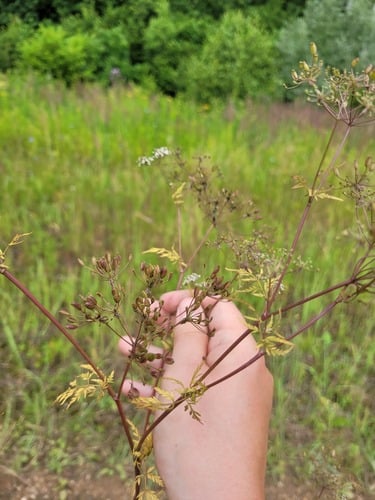
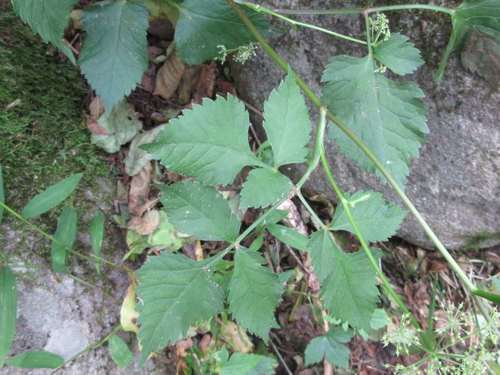
Annesorhiza nuda
(Aiton) B. L. Burtt
Anyswortel
iNaturalist· cc-by-nc
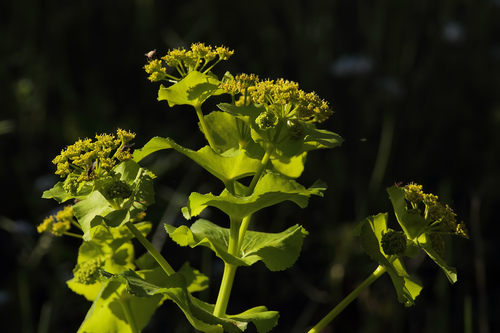
(c) Nick Helme, some rights reserved (CC BY-NC), uploaded by Nick Helme
iNaturalist· cc-by-sa
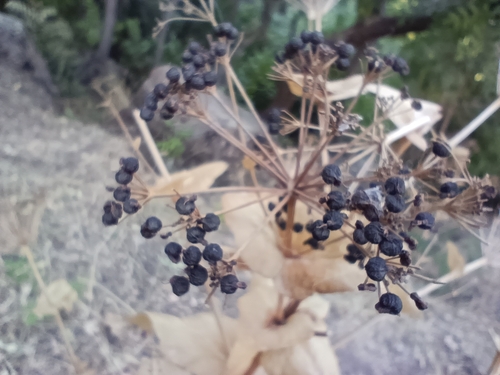
(c) Tony Rebelo, some rights reserved (CC BY-SA), uploaded by Tony Rebelo
iNaturalist· cc-by-nc
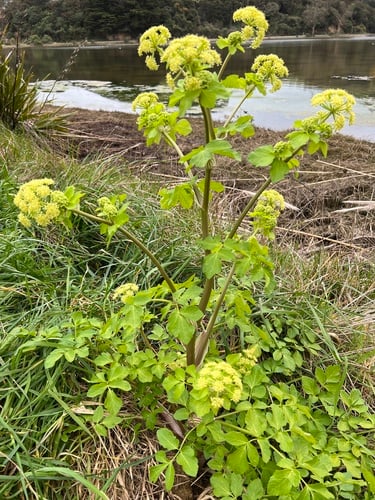
(c) Antonio Tonin, some rights reserved (CC BY-NC), uploaded by Antonio Tonin
Description
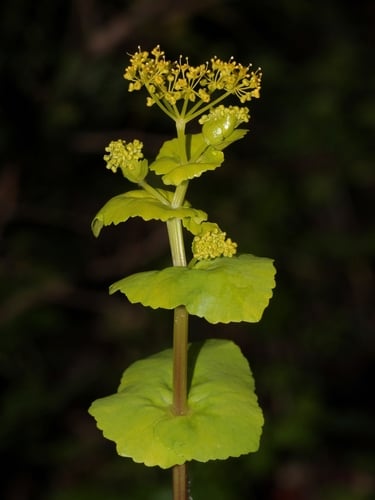
A herb. It takes 2 years to complete its life cycle. It has spindle shaped fleshy roots. It grows 50 cm tall. The stems are slender with lines along them and are yellow-green. The leaves have deep lobes and each lobe is deeply divided. They are spreading and sword shaped. They are light green with a purple tinge. The flowers have 3-8 rays in a flat topped group 3-4 cm long. The flowers are small and white with a dark stripe along them. The fruit are oblong and pale yellow.
Edible Uses
The fleshy roots are eaten roasted in ashes, boiled in milk, or added to stews; the roots are sold as a vegetable and taste less acrid when cultivated. The leaves are chewed for their liquorice-like flavor.
Traditional Uses
The root is eaten. It can be roasted in ashes, boiled in milk or added to stews. The leaves are chewed for the liquorice taste.
This uses section is brief — help expand it
Distribution
It is a subtropical plant.
Where It Grows
Africa, South Africa, Southern Africa,
Other Information
It is improved by cultivation being less acrid. The roots are sold as a vegetable.
Nutrition
| Part | Moisture | kJ | kcal | Protein | Vit A | Vit C | Iron | Zinc |
|---|---|---|---|---|---|---|---|---|
| Tubers | 77.2 | 340 | 81 | 0.3 | — | 13.1 | 1.9 | 1.2 |
| Root | — | — | — | — | — | — | — | — |
Synonyms
References (11)
- Bircher, A. G. & Bircher, W. H., 2000, Encyclopedia of Fruit Trees and Edible Flowering Plants in Egypt and the Subtropics. AUC Press. p 29 (As Annesorhiza capensis and Annesorhiza montana)
- De Vynk, J. C., et al, 2016, Indigenous edible plant use by contemporary Khoe-San descendants of South Africa's Cape South Coast. South African Journal of Botany. 102 (2016) 60-69
- Fox, F. W. & Young, M. E. N., 1982, Food from the Veld. Delta Books. p 85 (As Annesorhiza capensis)
- Hedrick, U.P., 1919, (Ed.), Sturtevant's edible plants of the world. p 56 (As Annesorhiza capensis and Annesorhiza montana)
- Jardin, C., 1970, List of Foods Used In Africa, FAO Nutrition Information Document Series No 2.p 55 (As Annesorhiza montana)
Show all 11 references Hide references
- onecommunityglobal.org
- Plowes, N. J. & Taylor, F. W., 1997, The Processing of Indigenous Fruits and other Wildfoods of Southern Africa. in Smartt, L. & Haq. (Eds) Domestication, Production and Utilization of New Crops. ICUC p 185 (As Annesorhiza capensis)
- Ruiters-Welcome, A. K., 2019, Food plants of southern Africa. Ph.D. thesis. Univ. of Johannesburg p 18
- van Wyk, Be., & Gericke, N., 2007, People's plants. A Guide to Useful Plants of Southern Africa. Briza. p 81
- van Wyk, B-E., 2011, The potential of South African plants in the development of new food and beverage products. South African Journal of Botany 77 (2011) 857–868
- Wehmeyer, A. S, 1986, Edible Wild Plants of Southern Africa. Data on the Nutrient Contents of over 300 species. (As Annesorhiza capensis)