Anthriscus caucalis
M. Bieb.
Bur chervil
iNaturalist· cc-by-nc-sa
(c) 2008 Keir Morse, some rights reserved (CC BY-NC-SA)
iNaturalist· cc-by-nc
(c) Brian Starzomski, some rights reserved (CC BY-NC), uploaded by Brian Starzomski
iNaturalist· cc-by-nc
(c) Patrick Robinson, some rights reserved (CC BY-NC), uploaded by Patrick Robinson
Summary
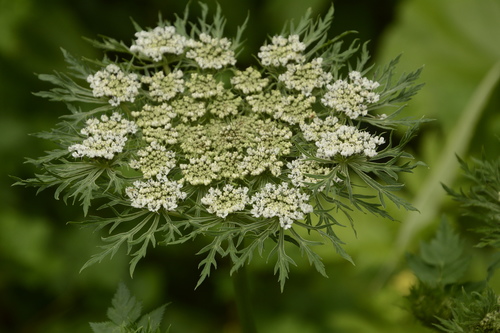
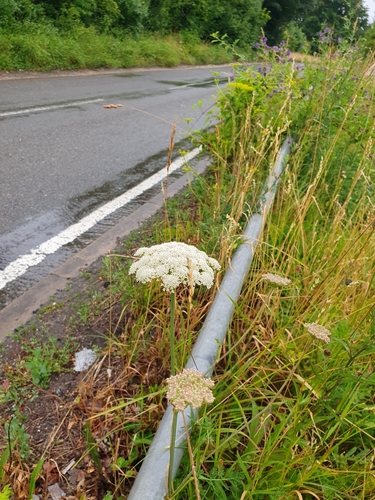
Source: WikipediaAnthriscus caucalis, also burr chervil or bur-chervil, a plant in the family Apiaceae. It is similar in appearance to chervil, the common cooking herb from the same genus. It sends up thin, hollow stems and bears umbels of white flowers. The light green leaves are triangular and made up of many leaflets. The tiny hard fruits, each about 3 millimeters long, are covered in hooked spines. The plant is native to and common in parts of Europe and Asia, and has been introduced elsewhere such as North America.
Description
An herb that grows each year from seed. It grows 60 cm tall. The stems are hollow and pale green. The leaves are divided 3 times and a fine. They have white hairs underneath. The crushed leaves have a sweet smell. The flowers are in white flat topped groups.
Edible Uses
Young leaves are eaten raw in salads and cooked in sauces.
Traditional Uses
The young leaves are used in salads and sauces.
This uses section is brief — help expand it
Distribution
It is a temperate plant. In Argentina it grows from sea level to 1,900 m above sea level.
Where It Grows
Argentina, Australia, Britain, Central Asia, Chile, Europe, Ireland, Korea, Luxembourg, South America, Tajikistan, Tasmania,
Synonyms
References (1)
- Irving, M., 2009, The Forager Handbook, A Guide to the Edible Plants of Britain. Ebury Press p 111