Anthriscus sylvestris
(L.) Hoffm.
Cow Parsley, Woodland chervil
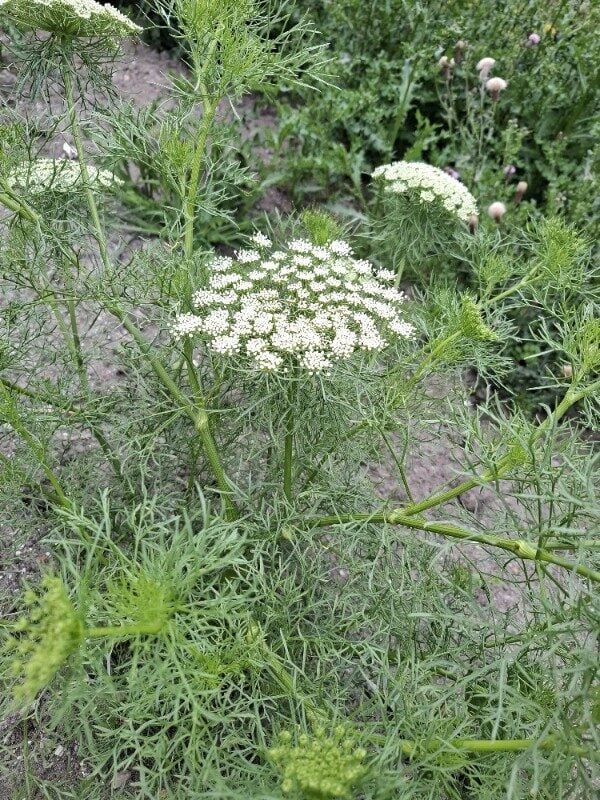
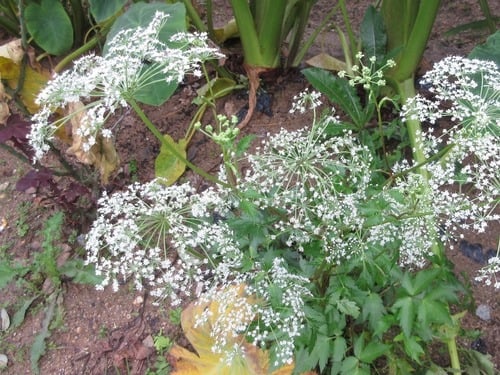
iNaturalist· cc-by-nc
(c) elizabethompson, some rights reserved (CC BY-NC)
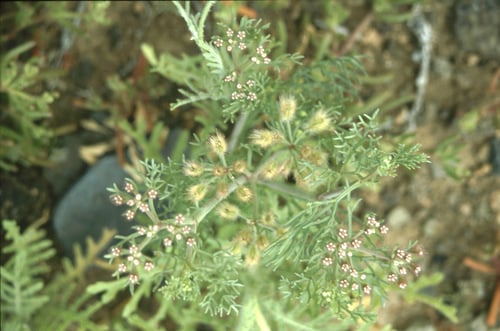
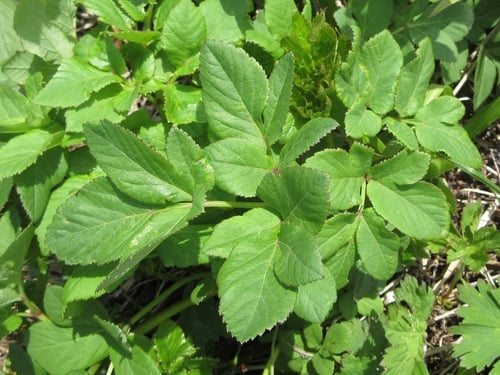
iNaturalist· cc-by-nc
(c) Lukáš Blecha, some rights reserved (CC BY-NC), uploaded by Lukáš Blecha
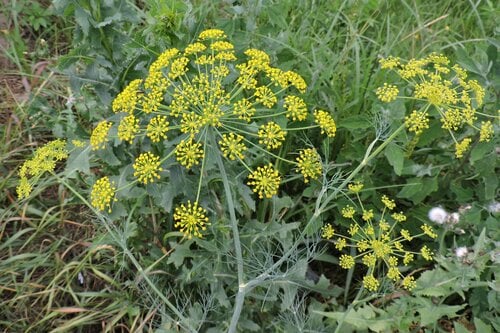
iNaturalist· cc-by-nc
(c) Leonard Rüdenberg, some rights reserved (CC BY-NC), uploaded by Leonard Rüdenberg
Summary
Source: WikipediaAnthriscus sylvestris, known as cow parsley, wild chervil, wild beaked parsley, Queen Anne's lace or keck, is a herbaceous biennial or short-lived perennial plant in the family Apiaceae (Umbelliferae). It is also sometimes called mother-die (especially in the UK), a name that is also applied to the common hawthorn. It is native to Europe, western Asia and northwestern Africa. It is related to other diverse members of Apiaceae, such as parsley, carrot, hemlock and hogweed. It is often confused with Daucus carota, another member of the Apiaceae also known as "Queen Anne's lace" or "wild carrot".
Description
A small plant. It grows 60-150 cm high. It spreads 40-60 cm wide. It forms clumps. The leaves are fine and feather like. They are divided 3 times. The leaves are 15-30 cm long. They are deep green. The flowers are white. Caution: Don't mistake this plant for the poisonous hemlock Conium maculatum.
Edible Uses
Edible Parts: Leaves Root Edible Uses: The leaves are eaten raw, cooked as a potherb or used as a flavouring. They taste somewhat less than wonderful. Root - cooked.
Traditional Uses
CAUTION: It is reported to cause abortions. The young leaves are eaten as a pot herb. It is also dried and stored for later use. Small quantities are used for seasoning. The stalks are also peeled and used. They are also pickled. The shoots are used as a spice in cheese. The roots are eaten.
Medicinal Uses
Tonic The root is soaked for several days in rice washings and then cooked with other foods as a tonic for general weakness.
Known Hazards
All above-ground parts of the cow parsley plant are edible, with a flavour sharper than garden chervil and described as grassy parsley, with a hint of licorice or aniseed. However, it is suspected of being mildly toxic according to some sources. The plant is an invasive species in many places outside of its native range. It spreads easily along roads and the edges of woods and fields, so it is not cultivated but instead foraged in the wild. In the UK it is foraged from February to November. However extreme caution is advised when foraging cow parsley because it is easily confused with other species of the Apiaceae family, such as the deadly poison hemlock, hemlock water-dropwort and fool's parsley. Because the plant's flavour is considered unremarkable and the risk is great, foraging cow parsley in the wild is usually strongly discouraged.
Distribution
It is a temperate plant. In China it grows from sea level to 4,500 m above sea level. It suits hardiness zones 4-9. In Sichuan and Yunnan.
Where It Grows
Africa, Albania, Asia, Australia, Balkans, Britain, Bulgaria, Caucasus, China, Estonia, Europe, Falklands, Finland, Georgia, Himalayas, Hungary, India, Ireland, Japan, Korea, Luxembourg, Nepal, North Africa, North America, Norway, Pakistan, Russia, Scandinavia, Siberia, Slovenia, Sweden, Switzerland, Tasmania, Tibet, Turkey, Türkiye,
Cultivation
It is grown from fresh seeds.
Propagation
Seed - sow as soon as ripe (June/July) in situ. The seed can also be sown April/May in situ. It usually germinates in 1 - 3 months at 20°c.
Other Uses
Dye A beautiful green dye is obtained from the leaves and stem but it is not very permanent. Special Uses
Other Information
It is foraged and supplied to restaurants in Sweden.
Notes
There are about 12 Anthriscus species. It has anticancer properties.
Dangerous Lookalikes
This plant can be confused with the following toxic species. Always verify identification carefully before consuming any wild plant.
Poison Hemlock
Conium maculatum
MPF
Cow Parsley
Anthriscus sylvestris
(c) elizabethompson, some rights reserved (CC BY-NC)
Poison Hemlock: Smooth round stems with purple/red blotches, foul musty smell, larger plant.
Cow Parsley: Hairy triangular stems, sometimes with pink hue, pleasant smell.
Synonyms
Also Known As
Dudki, Gimi, Hundekjeks, Jeonho, Jeonhonamul, Keck, Limi, Mendi, Peniputsk, Putski, Wild beaked parsley
References (32)
- Ambasta S.P. (Ed.), 2000, The Useful Plants of India. CSIR India. p 44
- Brickell, C. (Ed.), 1999, The Royal Horticultural Society A-Z Encyclopedia of Garden Plants. Convent Garden Books. p 123
- Bussman, R. W., et al, 2016, A comparative ethnobotany of Khevsureti, Samtskhe-Javakheti, Tusheti, Svaneti, and Racha-Lechkhumi, Republic of Georgia (Sakartvelo), Caucasus. Journal of Ethnobiology and Ethnomedicine (2016) 12:43
- Bussman, R. W. et al, 2017, Ethnobotany of Samtskhe-Javakheti, Sakartvelo (Republic of Georgia), Caucasus. Indian Journal of Traditional Knowledge Vol. 16(1) pp 7-24
- Bussman, R. W., et al, 2021, Unity in diversity—food plants and fungi of Sakartvelo (Republic of Georgia), Caucasus. Journal of Ethnobiology and Ethnomedicine (2021) 17:72 p 5
Show all 32 references Hide references
- Cakir, E. A., 2017, Traditional knowledge of wild edible plants of Iğdır Province (East Anatolia, Turkey). Acta Soc Bot Pol. 2017;86(4):3568.
- Cerne, M., 1992, Wild Plants from Slovenia used as Vegetables. Acta Horticulturae 318
- Chen, B. & Qiu, Z., Consumer's Attitudes towards Edible Wild Plants, Ishikawa Prefecture, Japan. p 22 www.hindawi.com/journals/ijfr/aip/872413.pdf
- Denes, A., et al, 2012, Wild plants used for food by Hungarian ethnic groups living in the Carpathian Basin. Acta Societatis Botanicorum Poloniae 81 (4): 381-396
- Dogan, A., et al, 2014, A review of edible plants on the Turkish Apiaceae species. J. Fac. Pharm. Istanbul, 44(2) pp 251-262
- Ertug, F, Yenen Bitkiler. Resimli Türkiye Florası -I- Flora of Turkey - Ethnobotany supplement
- Facciola, S., 1998, Cornucopia 2: a Source Book of Edible Plants. Kampong Publications, p 15 (As Anthriscus nemorosa)
- Gen. pl. umbell. 40. 1814
- Girard, N. J., 2020, Sustainable Foraging of Wild Edible Plants in Norway. A Bioculutral Approach. M. Sc. thesis Norwegian University. p 127
- Hedrick, U.P., 1919, (Ed.), Sturtevant's edible plants of the world. p 170 (As Carum sylvestre)
- Hibbert, M., 2002, The Aussie Plant Finder 2002, Florilegium. p 30
- http://nordicfood lab/org/blog/2102/9/wild-edible-plants-an-overview
- Irving, M., 2009, The Forager Handbook, A Guide to the Edible Plants of Britain. Ebury Press p 111
- Kalle, R. & Soukand, R., 2012, Historical ethnobotanical review of wild edible plants of Estonia (1770s-1960s) Acta Societatis Botanicorum Poloniae 81(4):271-281
- Kintzios, S. E., 2006, Terrestrial Plant-Derived Anticancer Agents and Plant Species Used in Anticancer research Critical Reviews in Plant Sciences. 25: pp 79-113
- Kolosova, V., et al, 2020, Foraging in Boreal Forest: Wild Food Plants of the Republic of Karelia, NW Russia. Foods 2020, 9, 1015; p 8
- Lazarides, M. & Hince, B., 1993, Handbook of Economic Plants of Australia, CSIRO. p 22
- Lim, T. K., 2015, Edible Medicinal and Non Medicinal Plants. Volume 9, Modified Stems, Roots, Bulbs. Springer p 9
- Luczaj, L. et al, 2012, Wild food plant use in 21st century Europe: the disappearance of old traditions and the search for new cuisines involving wild edibles. Acta Soc Bot Pol 81(4):359–370
- Mabey, R., 1973, Food for Free. A Guide to the edible wild plants of Britain, Collins. p 124
- Nedelcheva A., 2013, An ethnobotanical study of wild edible plants in Bulgaria. EurAsian Journal of BioSciences 7, 77-94
- Ong, H. G., et al, 2015, Ethnobotany of the wild edible plants gathered in Ulleung Island, South Korea. Genet Resourc Crop Evol. Springer
- Plants for a Future database, The Field, Penpol, Lostwithiel, Cornwall, PL22 0NG, UK. http://www.scs.leeds.ac.uk/pfaf/
- Seidemann J., 2005, World Spice Plants. Economic Usage, Botany, Taxonomy. Springer. p 45
- Upson, R., & Lewis R., 2014, Updated Vascular Plant Checklist and Atlas for the Falkland Islands. Falklands Conservation and Kew.
- Woo, Y., et al, 2017, Antioxidant Potential of Selected Korean Edible Plant Extracts. Hindawi BioMed Research International Volume 2017, Article ID 7695606
- World Checklist of Useful Plant Species 2020. Royal Botanic Gardens, Kew