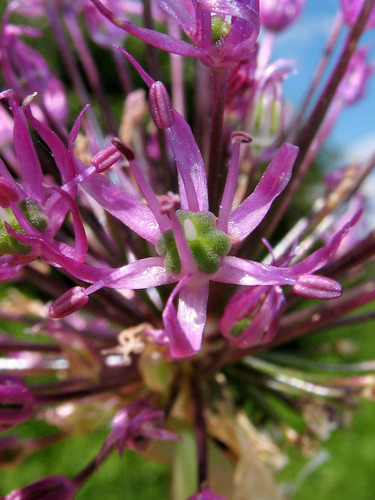
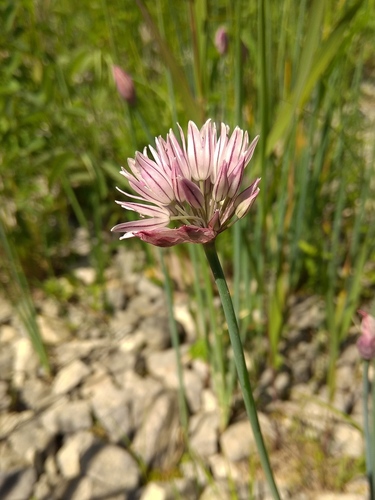
Tulbaghia alliacea
L. f.
Wild garlic
iNaturalist· cc-by-nc
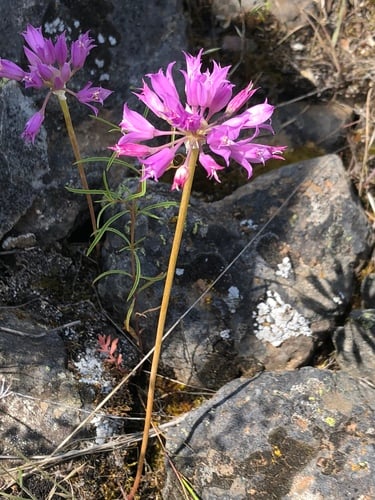
(c) Richard Adcock, some rights reserved (CC BY-NC), uploaded by Richard Adcock
iNaturalist· cc-by-nc
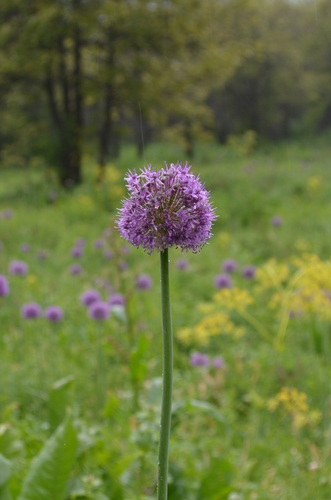
(c) Johan October, some rights reserved (CC BY-NC)
iNaturalist· cc-by-nc
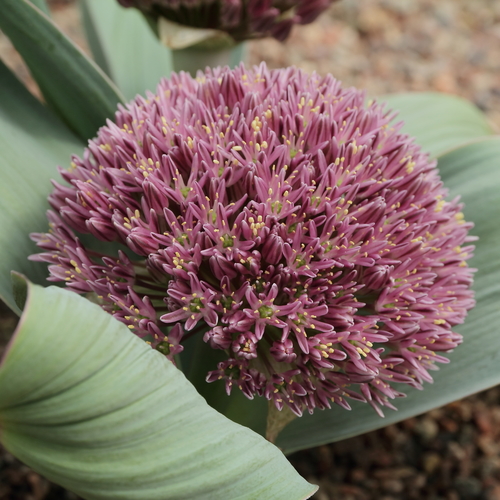
(c) Johan October, some rights reserved (CC BY-NC)
Summary
Source: WikipediaTulbaghia alliacea is a geophyte belonging to the Amaryllidaceae family. The species is native to Botswana, South Africa, Zambia and Zimbabwe.
Description
An onion family plant. It is a herb and forms clumps. It has a swollen rhizome up to 10 cm long and keeps growing from year to year. It grows up to 45 cm tall. The leaves are like straps. They form a ring at the base. They are 15-20 cm long and 1 cm wide. The flowers are in groups of 10-20. The flowers are olive green. They have an orange centre. The fruit is a capsule. it is 8 mm long. The seeds are triangle shaped and flat. They are black.
Edible Uses
The bulb is edible cooked. Leaves and stems can be cooked like spinach or chopped finely and used as a relish. The flowers are regarded as a delicacy by native Zulu women.
Traditional Uses
The leaves and stems and cooked and eaten. They are also finely chopped and seasoned with salt and used as a relish. The young leave are added to soups, stews and pickles. The bulbs are cooked and eaten. The flowers are eaten.
Medicinal Uses
None known
Distribution
It is a tropical and subtropical plant. It can grow in most soils.
Where It Grows
Africa, Australia, Botswana, East Africa, Eswatini, Lesotho, Malawi, Mozambique, South Africa*, Southern Africa, Swaziland, Zambia, Zimbabwe,
Cultivation
Requires a well-drained soil in a sunny sheltered position. This species is hardy in the mildest areas of Britain, tolerating temperatures down to about -5°c. However, it is in leaf during the winter and so is best grown with some protection such as a cold greenhouse or conservatory. Plants grow from a cluster of small bulbs attached to a basal plate that is sometimes regarded as a rhizome. The flowers are very fragrant at night. Another report says that they have an unpleasant smell. The whole plant has a powerful aroma of garlic.
Propagation
Seed is best sown as soon as it is ripe in the greenhouse. Stored seed should be sown in early spring in the greenhouse. Prick seedlings into individual pots once large enough to handle and grow on in the greenhouse for at least their first winter. If planting outdoors, this is best done in late summer when the plants are dormant. Dormant plants can also be divided in late summer.
Other Uses
None known Special Uses Scented Plants
Other Information
It is a minor vegetable used as a relish.
Notes
There are 22 Tulbaghia species. They are tropical from southern Africa. Also put in the families Alliaceae and Liliaceae.
Synonyms
Also Known As
Inisili, Isikhwa, Isikwa, Moelela, Negoje, Sikwa, Wilde knoflook
References (13)
- Facciola, S., 1998, Cornucopia 2: a Source Book of Edible Plants. Kampong Publications, p 7
- Fowler, D. G., 2007, Zambian Plants: Their Vernacular Names and Uses. Kew. p 85
- Fox, F. W. & Young, M. E. N., 1982, Food from the Veld. Delta Books. p 254
- Grubben, G. J. H. and Denton, O. A. (eds), 2004, Plant Resources of Tropical Africa 2. Vegetables. PROTA, Wageningen, Netherlands. p 537
- Long, C., 2005, Swaziland's Flora - siSwati names and Uses http://www.sntc.org.sz/flora/
Show all 13 references Hide references
- Peters, C. R., O'Brien, E. M., and Drummond, R.B., 1992, Edible Wild plants of Sub-saharan Africa. Kew. p 8
- Ruiters-Welcome, A. K., 2019, Food plants of southern Africa. Ph.D. thesis. Univ. of Johannesburg p 9
- Ryan, S., 2008, Dicksonia. Rare Plants Manual. Hyland House. p 117
- Swaziland's Flora Database http://www.sntc.org.sz/flora
- van Wyk, Be., & Gericke, N., 2007, People's plants. A Guide to Useful Plants of Southern Africa. Briza. p 63
- van Wyk, B-E., 2011, The potential of South African plants in the development of new food and beverage products. South African Journal of Botany 77 (2011) 857–868
- Welcome, A. K. & Van Wyk, B.-E., 2019, An inventory and analysis of the food plants of southern Africa. South African Journal of Botany 122 (2019) 136–179
- World Checklist of Useful Plant Species 2020. Royal Botanic Gardens, Kew