Acer circinatum
Pursh
Vine maple
iNaturalist· cc-by
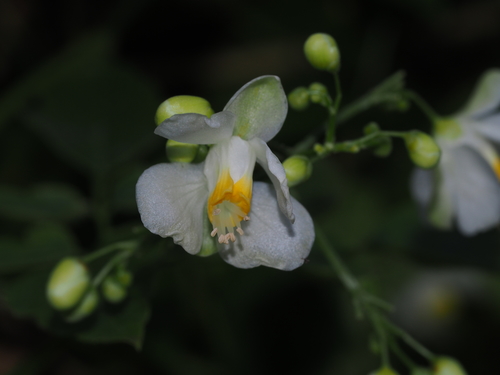
(c) Harry Podschwit, some rights reserved (CC BY), uploaded by Harry Podschwit
iNaturalist· cc-by-nc
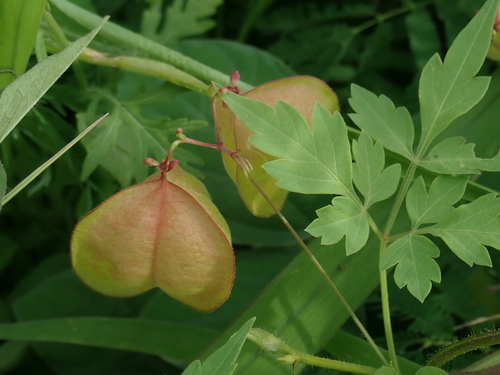
(c) blkvulture, some rights reserved (CC BY-NC), uploaded by blkvulture
iNaturalist· cc-by-nc
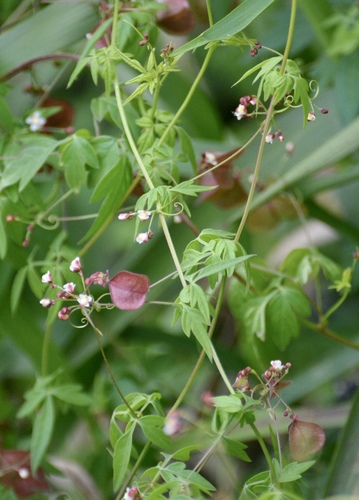
(c) Megan Wyatt, some rights reserved (CC BY-NC), uploaded by Megan Wyatt
Summary
Source: WikipediaAcer circinatum, or vine maple, is a species of maple native to northwestern North America. Vine maple typically grows as a low-elevation coastal tree in temperate areas of high precipitation such as the west coast of Oregon and northern California, as well as the temperate rainforests of Washington and British Columbia. Vine maples play an important role in conserving the biodiversity of lowland ecosystems by enriching upper soil layers and providing habitat for other organisms.
Description
A shrub or small tree. It grows 5 m tall. There are prickles along the stem. The leaves are twice divided and there are 8-18 pairs of pinnae. There are up to 50 pairs of pinnules on each pinnae. The flowers are yellow. They are in large clusters at the ends of branches. The pods are flattened.
Edible Uses
The sap contains sugar and can be drunk fresh or boiled down into a syrup used as a sweetener on many foods, though the sugar concentration is considerably lower than in sugar maples (A. saccharum). The trunk is tapped in early spring, with the best flow on warm sunny days following a frost; cold-winter areas with continental climates produce the best yields.
Traditional Uses
The sap is made into sugar or maple syrup.
This uses section is brief — help expand it
Medicinal Uses
The wood was burnt to charcoal, then mixed with water and brown sugar and used in the treatment of dysentery and polio.
Distribution
It is a temperate plant. It is a hardy plant suited to full sun. It needs well drained soil. It cannot tolerate drought. It suits hardiness zones 4-8. Arboretum Tasmania.
Where It Grows
Alaska, Australia, Canada, North America*, Tasmania, USA,
Cultivation
Prefers a sunny position but tolerates some shade. Grows well in heavy clay soils. Plants are hardy to about -20°c. Chlorosis can sometimes develop as a result of iron deficiency when the plants are grown in alkaline soils, but in general maples are not fussy as to soil pH. A very ornamental tree, a number of varieties are in cultivation. The branches tend to coil around other trees in much the same way as vines. (A strange report because vines do not coil but climb by means of tendrils formed in the leaf axils.) The tree sends out long slender arching branches in the wild. These form roots when they touch the ground and the plant thereby forms large impenetrable thickets often several hectares in extent. Most maples are bad companion plants, inhibiting the growth of nearby plants.
Propagation
Seed produced in gardens is usually of good quality. Sow as soon as ripe in a cold frame; germination typically occurs the following spring. Stored seed should be pre-soaked for 24 hours, then stratified for 2–4 months at 1–8°C. Dried seed can be slow or very poor to germinate. Seed can also be harvested green — fully developed but before drying and germination inhibitors form — and sown immediately for late-winter germination. Seed harvested too early produces very weak or no plants. Prick seedlings into individual pots once large enough to handle and grow on to 20cm or more before planting out permanently. This tree often self-layers and can be propagated by that method. Take cuttings of young shoots in June or July with 2–3 pairs of leaves plus one pair of buds at the base; remove a thin slice of bark at the base and use a rooting hormone for best results. Rooted cuttings must show new growth during summer before potting, otherwise they are unlikely to survive winter. Cultivars can be grafted onto A. palmatum, which makes a better rootstock than this species.
Other Uses
Leaves packed around apples, root crops, and similar produce help preserve them. Young shoots are quite pliable and can be used in basket making, including open-work baskets from straight shoots. Charcoal made from the wood can be mixed with oil and used as a black paint. The wood is hard, heavy, durable, and close-grained, though reports differ on its strength. Too small for commercial use, it has been made into cart shafts, tool handles, and small boxes. It was also reportedly pliable enough for bows and snowshoe frames, and young saplings were used as swings for baby cradles. Green wood is almost impossible to burn and has served as a cauldron hook over a fire.
Notes
There are about 120-150 Acer species.
References (5)
- Bodkin, F., 1991, Encyclopedia Botanica. Cornstalk publishing, p 40
- Cundall, P., (ed.), 2004, Gardening Australia: flora: the gardener's bible. ABC Books. p 84
- Facciola, S., 1998, Cornucopia 2: a Source Book of Edible Plants. Kampong Publications. p 1
- Fl. Amer. sept. 1:267. 1813-1814
- MacKinnon, A., et al, 2009, Edible & Medicinal Plants of Canada. Lone Pine. p 66