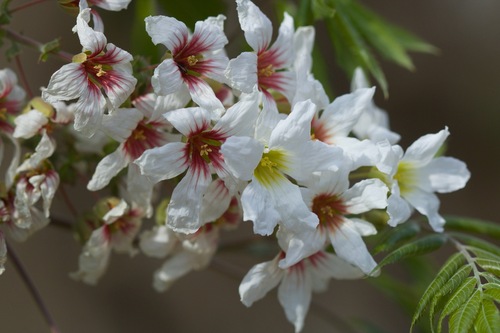
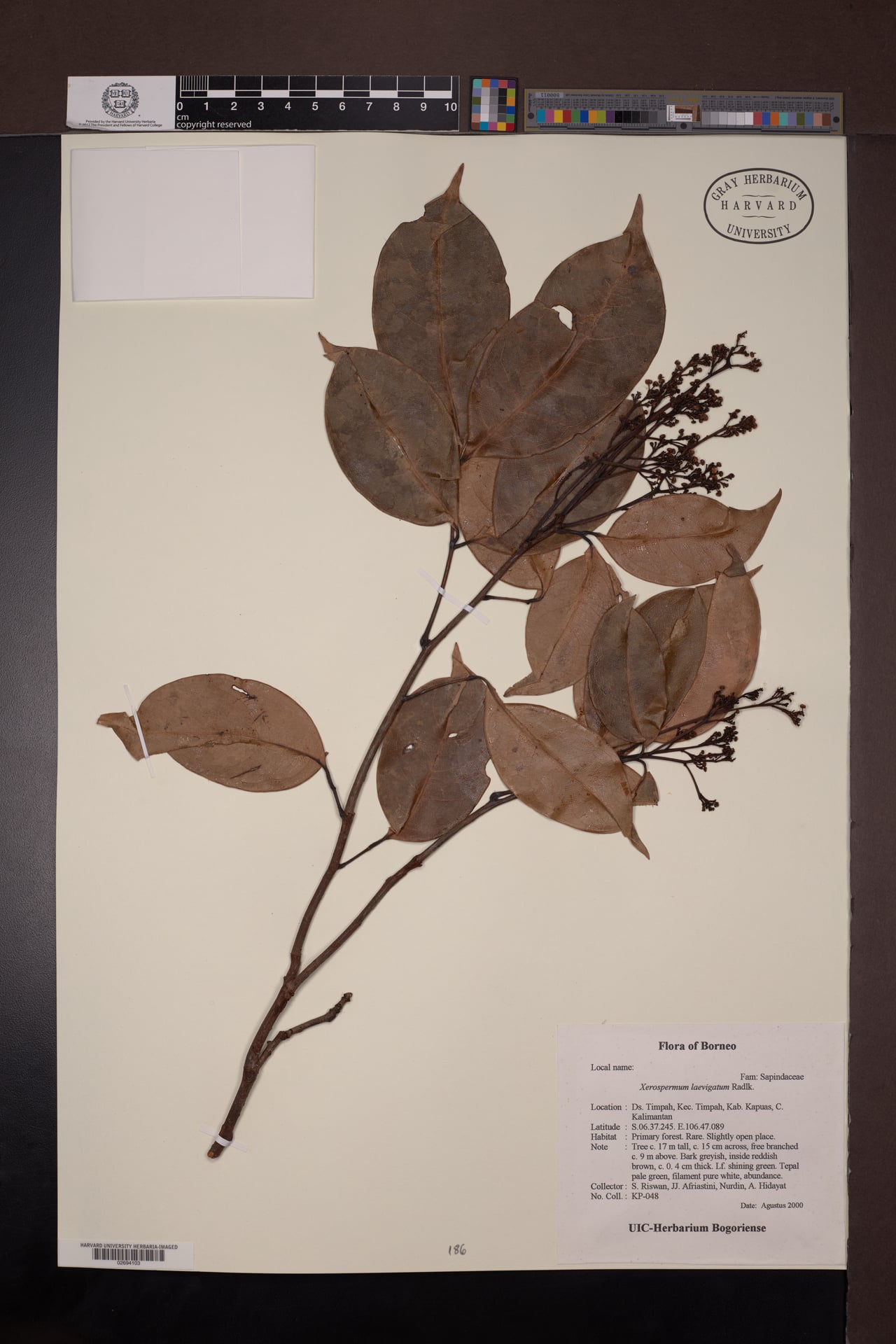
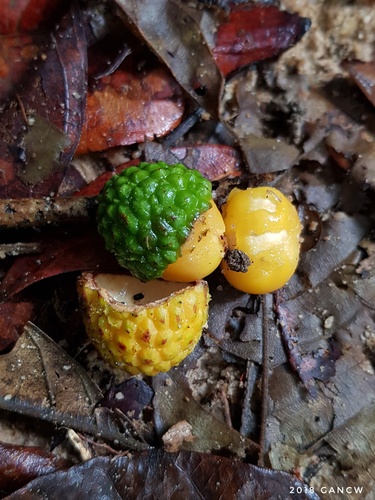
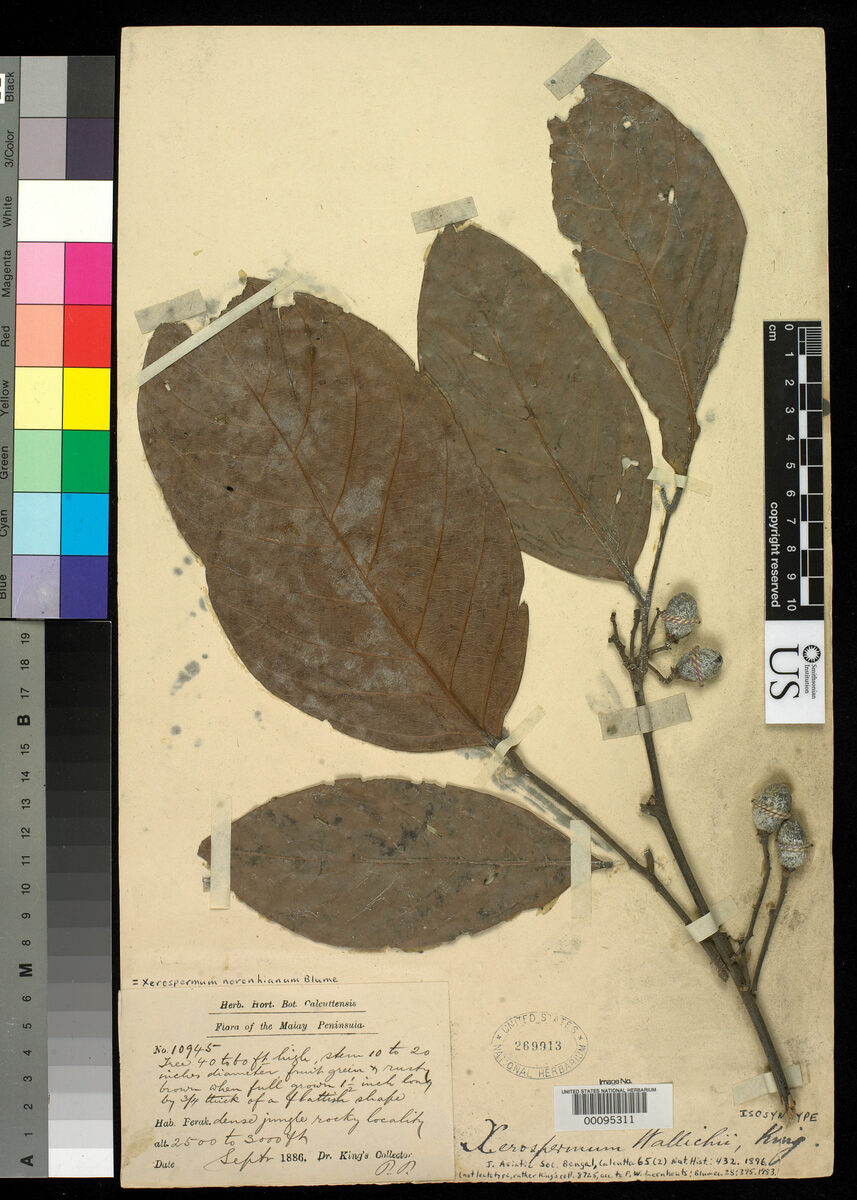
Allophylus rubifolius
(Hochst. ex A. Rich) Engl.
Lowveld false-currant
iNaturalist· cc-by-nc
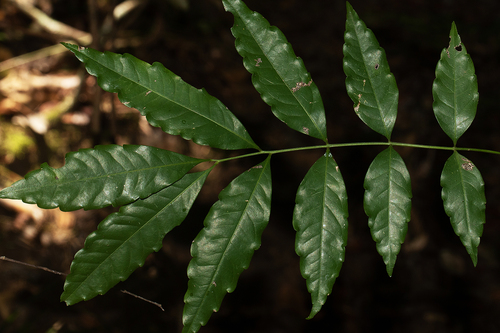
(c) Graeme White, some rights reserved (CC BY-NC), uploaded by Graeme White
iNaturalist· cc-by-nc
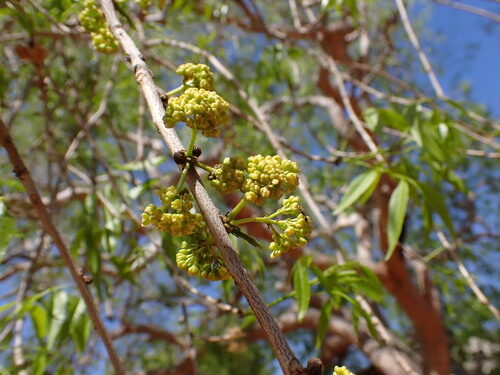
(c) Graeme White, some rights reserved (CC BY-NC), uploaded by Graeme White
iNaturalist· cc-by-nc
(c) Bart Wursten, some rights reserved (CC BY-NC)
Summary
Source: WikipediaAllophyllus rubifolius is a species of flowering plant in the family Sapindaceae. It is a shrub or tree native to eastern, east-central, and southeastern Africa, ranging from Eritrea to Democratic Republic of the Congo and Kwazulu-Natal, and to the Arabian Peninsula.
Description
A shrub. It grows about 5 m tall. The small branches are usually pale coloured. They can be hairy. The leaves have 3 leaflets. The leaf stalks is 5 cm long. The leaflet at the end is usually longer than the others. The end leaflet can be 5-9 cm long by 3-5 cm wide. They are narrowly oval. They are papery and hairy on both surfaces. The flowers are small and yellowish-green. The fruit is oval and fleshy. It turns orange-red to black when ripe.
Edible Uses
The fruit is eaten despite being bitter. The leaves are also edible.
Traditional Uses
The fruit are bitter but are eaten.
This uses section is brief — help expand it
Distribution
It is a tropical plant. It grows in woodland. It is often on termite mounds.
Where It Grows
Africa, Central Africa, Congo, East Africa, Ethiopia, Kenya, Malawi, Middle East, Mozambique, Oman, Southern Africa, Tanzania, Uganda, Zambia, Zimbabwe,
Nutrition
| Part | Moisture | kJ | kcal | Protein | Vit A | Vit C | Iron | Zinc |
|---|---|---|---|---|---|---|---|---|
| Fruit | 67.7 | 398 | 85 | 7.6 | — | — | — | — |
Synonyms
Also Known As
Kafupaka-cimbwi, Lala, Msempelele, Mututachikwi, Nabkwe, Napera, Nhamatubo, Nhapsipsi, Tarnia
References (12)
- Flora Zambesiaca. http://apps.kew.org/efloras
- Fowler, D. G., 2007, Zambian Plants: Their Vernacular Names and Uses. Kew. p 59
- Jardin, C., 1970, List of Foods Used In Africa, FAO Nutrition Information Document Series No 2.p 53 (As Allophylus alnifolius)
- Luoga, E. J., et al, 2000, Differential Utilization and Ethnobotany of Trees in Kitulanghalo Forest Reserve and Surrounding Communal Lands, Eastern Tanzania. Economic Botany, Vol. 54, No. 3, pp. 328-343
- Malaisse, F., 1997, Se nourrir en floret claire africaine. Approche ecologique et nutritionnelle. CTA., p 57
Show all 12 references Hide references
- Malaisse, F., 2010, How to live and survive in Zambezian open forest (Miombo Ecoregion). Les Presses Agronomiques de Gembloux.
- Martin, F.W. & Ruberte, R.M., 1979, Edible Leaves of the Tropics. Antillian College Press, Mayaguez, Puerto Rico. p 218 (As Allophylus alnifolius)
- Marwah, R. G., et al, 2006, Antioxidant capacity of some edible and wound healing plants in Oman. Journal of Food Chemistry.
- Miller, A. G., Morris, M. & Stuart-Smith, S., 1988, Plants of Dhofar. The Southern Region of Oman, Traditional, Economic and Medicinal Uses. Sultanate of Oman. p 256
- Mutie, F. M., et al, 2023, Important Medicinal and Food Taxa (Orders and Families) in Kenya, Based on Three Quantitative Approaches. Plants 2023, 12, 1145
- Ojelel, S., et al, 2019, Wild edible plants used by communities in and around selected forest reserves of Teso-Karamoja region, Uganda. Journal of Ethnobiology and Ethnomedicine (2019) 15:3
- Okigbo, B.N., Vegetables in Tropical Africa, in Opena, R.T. & Kyomo, M.L., 1990, Vegetable Research and development in SADCC countries. Asian Vegetable Research and development Centre. Taiwan. p 45 (As Allophylus alnifolius)