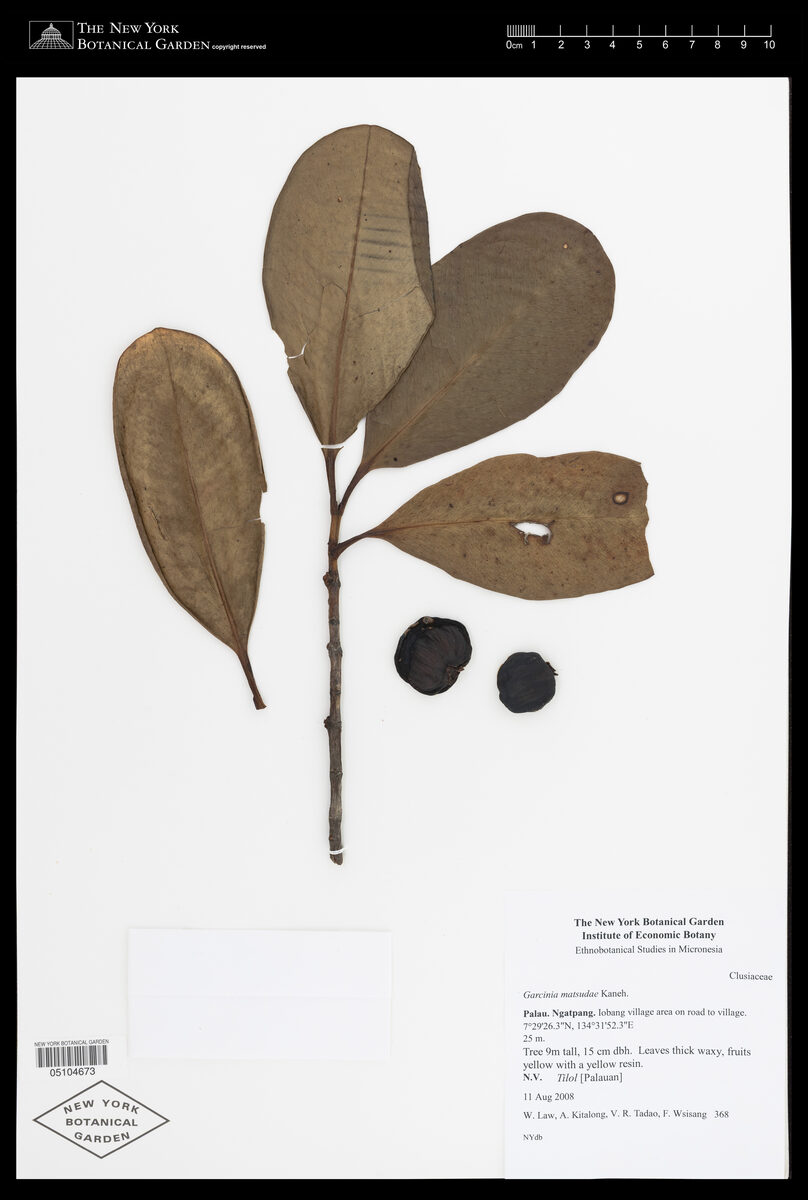
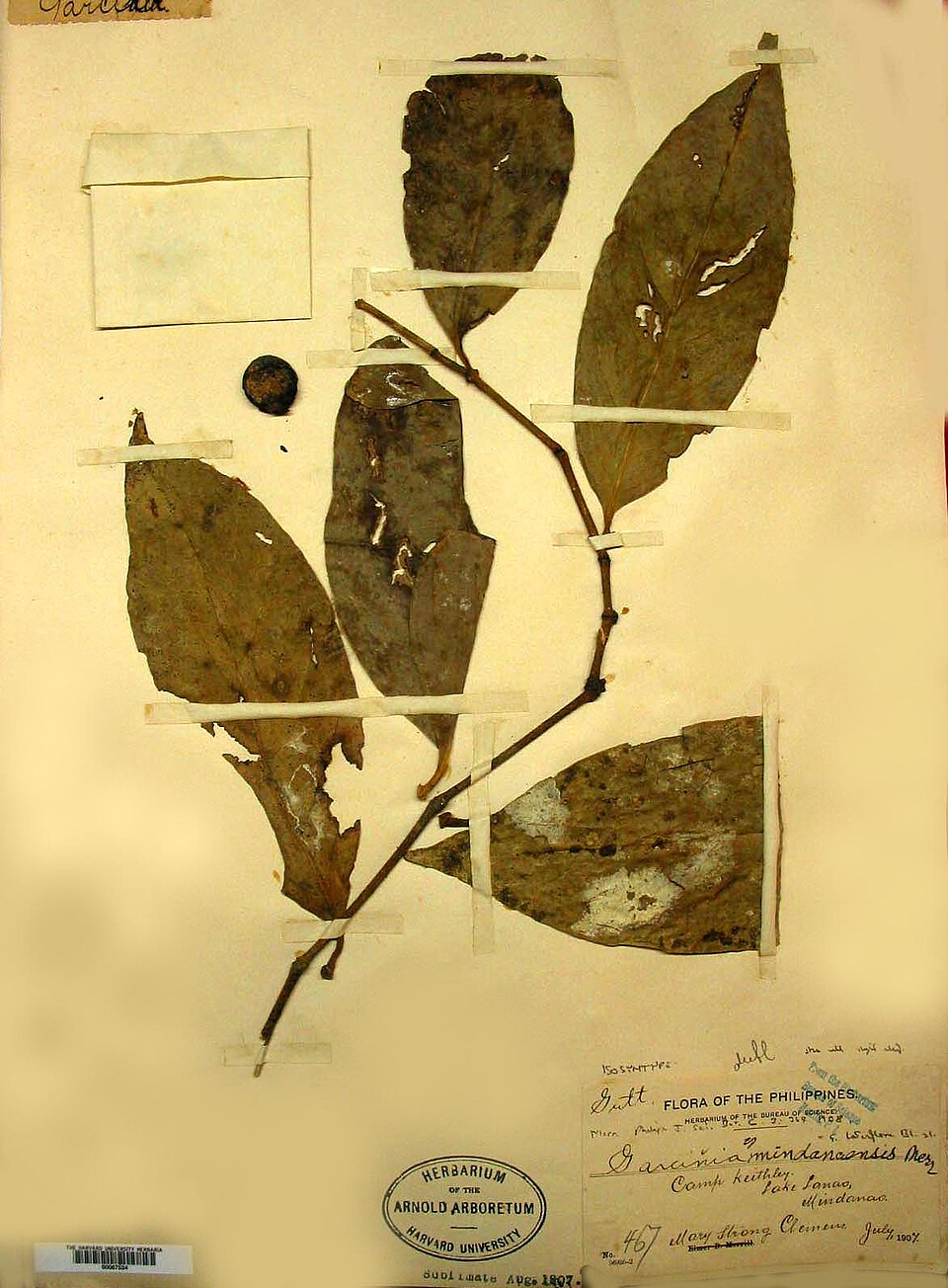
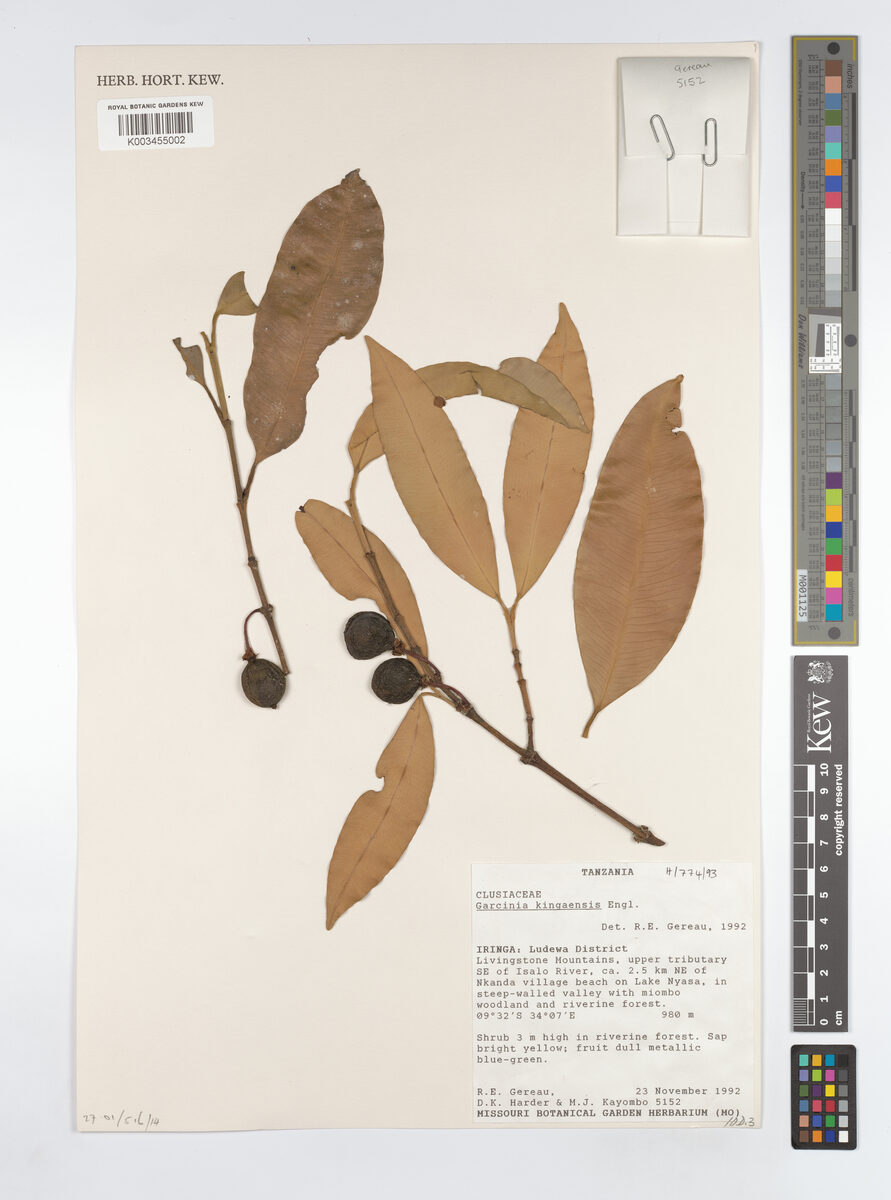
Garcinia kydia
Roxb.
Kydia, Tabyang
Clusiaceae Edible: Fruit
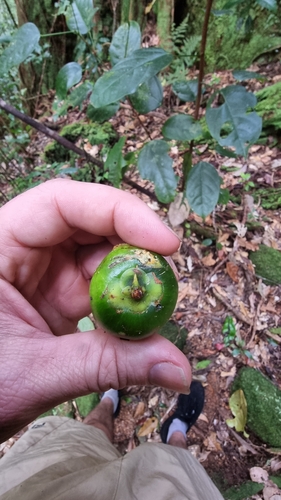
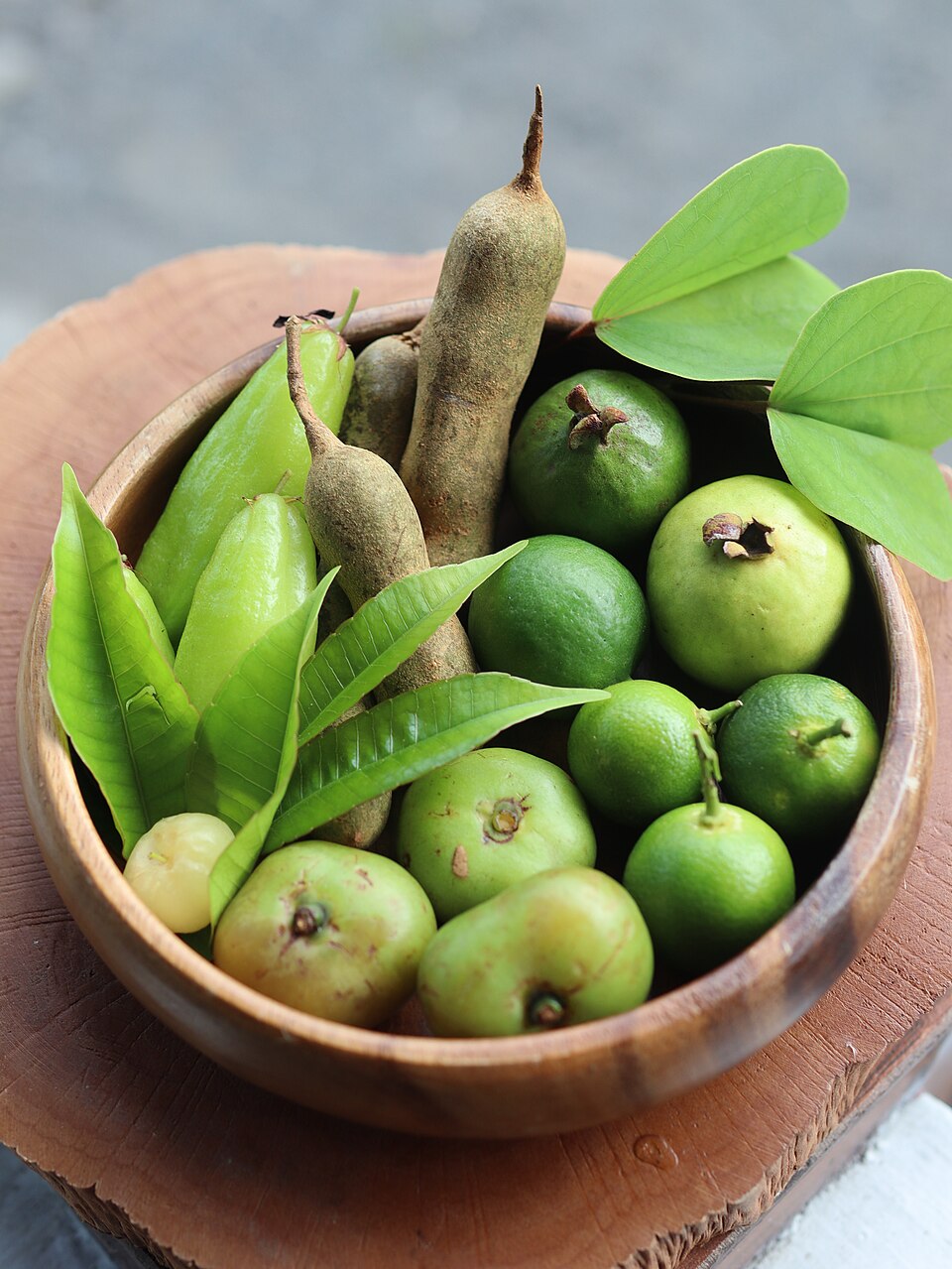
wikimedia· cc-by
Ravi Upadhyay, India Uploaded by Vinayaraj (via Wikimedia Commons)
gbif· cc-by
Picturae
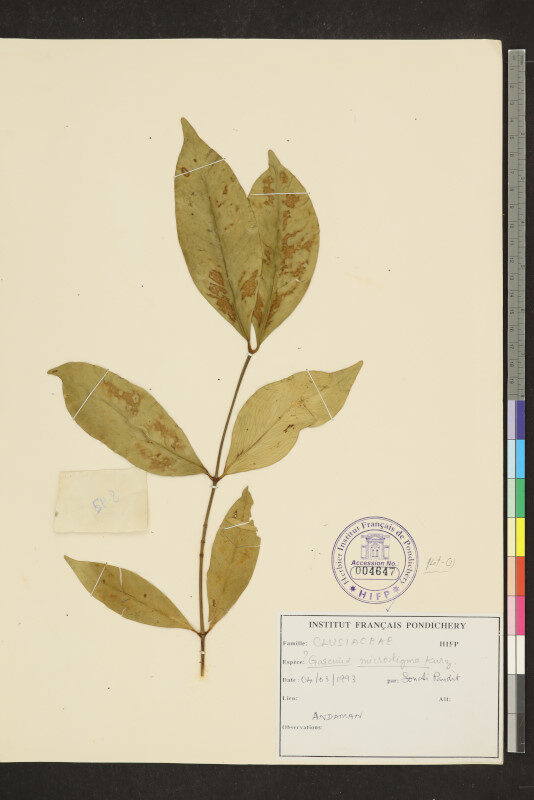
gbif· cc-by
RECOLNAT (ANR-11-INBS-0004)
gbif· cc-by
RECOLNAT (ANR-11-INBS-0004)
Description
A tree. The edges of the leaves curl under. The flower stalks are 7 mm long. The fruit is small and yellow.
This description is brief — help expand it
Edible Uses
The fruit are eaten raw.
Traditional Uses
The fruit are eaten raw.
This uses section is brief — help expand it
Distribution
A tropical and subtropical plant.
Where It Grows
Asia, Himalayas, India, Northeastern India, Pacific, Philippines, SE Asia,
Production
In NE India plants flower and fruit February to August.
Also Known As
Denda duti, Dieng-soh-longksan, Tekra
References (6)
- Coronel, R.E., 1982, Fruit Collections in the Philippines. IBPGR Newsletter p 6
- Fl. ind. 2:623. 1832
- Gangwar, A. K. & Ramakrishnan, P. S., 1990, Ethnobotanical Notes on Some Tribes of Arunachal Pradesh, Northeastern India. Economic Botany, Vol. 44, No. 1 pp. 94-105
- Jeeva, S., 2009, Horticultural potential of wild edible fruits used by the Khasi tribes of Meghalaya. Journal or Horticulture and Forestry Vol. 1(9) pp. 182-192
- Sawian, J. T., et al, 2007, Wild edible plants of Meghalaya, North-east India. Natural Product Radiance Vol. 6(5): p 417
Show all 6 references Hide references
- Singh, B., et al, 2012, Wild edible plants used by Garo tribes of Nokrek Biosphere Reserve in Meghalaya, India. Indian Journal of Traditional Knowledge. 11(1) pp 166-171