Bixa orellana
L.
Bixa
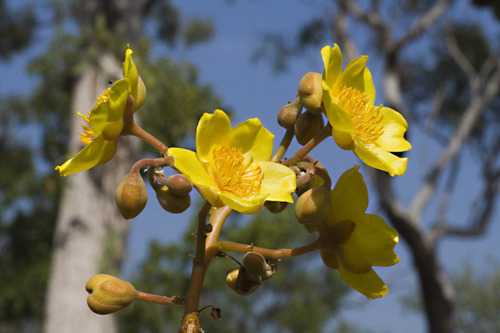
iNaturalist· cc-by-nc
(c) León, some rights reserved (CC BY-NC), uploaded by León
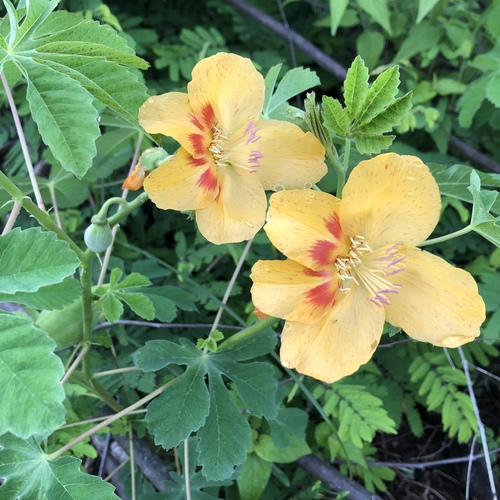
iNaturalist· cc-by-nc
(c) Mei, some rights reserved (CC BY-NC), uploaded by Mei
iNaturalist· cc-by-nc
(c) Omar Monzon Carmona, some rights reserved (CC BY-NC), uploaded by Omar Monzon Carmona
Summary
Source: WikipediaBixa orellana, also known as achiote, is a shrub or small tree native to Mexico and Central and South America. Bixa orellana is grown in many countries worldwide. The plant is best known as the source of annatto, a natural orange-red condiment (also called achiote or bijol) obtained from the waxy arils that cover its seeds. The ground seeds are widely used in traditional dishes in Central and South America, Mexico, and the Caribbean, such as cochinita pibil, chicken in achiote, caldo de olla, and nacatamal. Annatto and its extracts are also used as an industrial food coloring to add yellow or orange color to many products such as butter, cheese, margarine, ice creams, meats, and condiments. Some of the indigenous peoples of North, Central, and South America originally used the seeds to make red body paint and lipstick, as well as a spice. For this reason, the Bixa orellana is sometimes called the lipstick tree.
Description
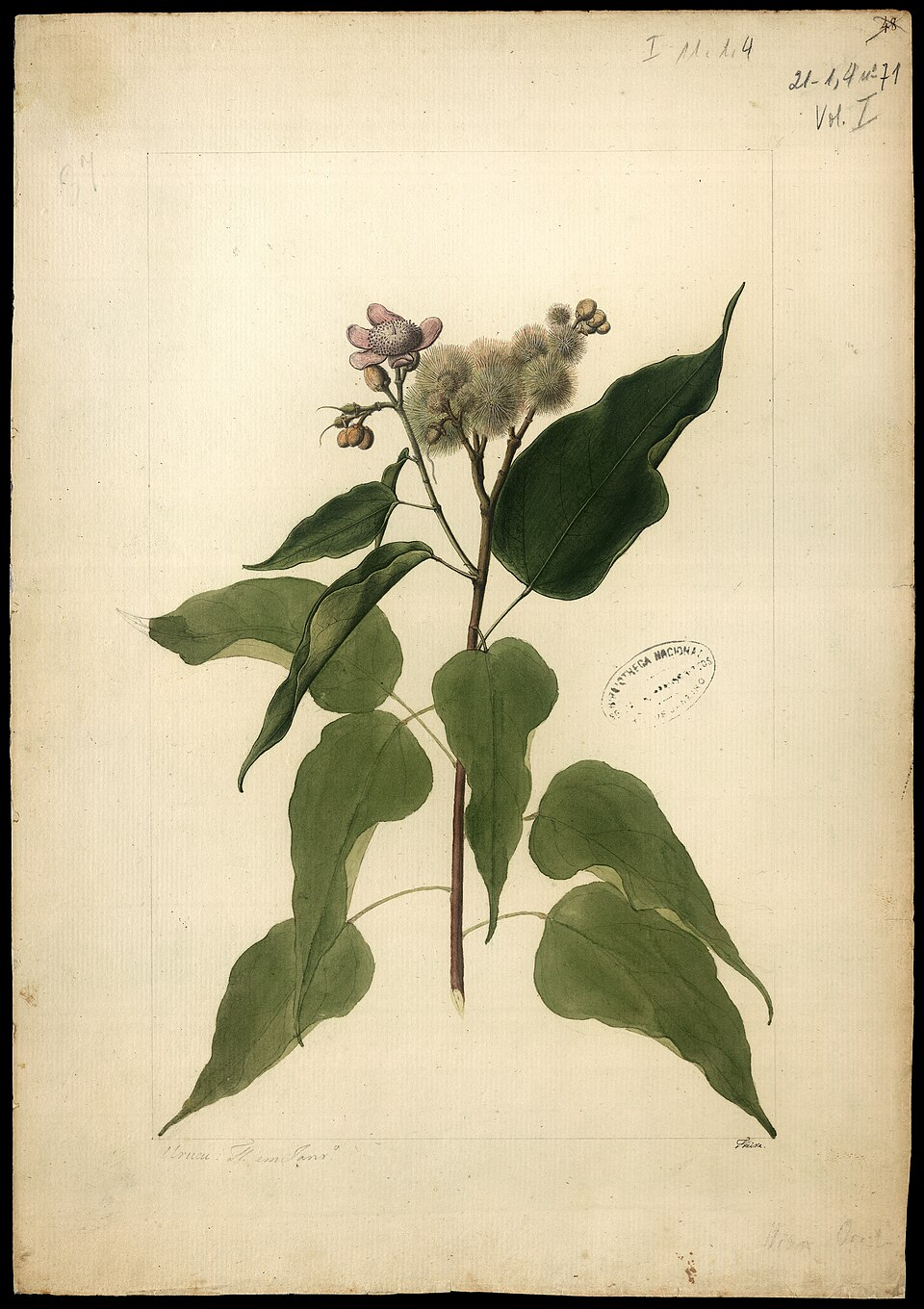
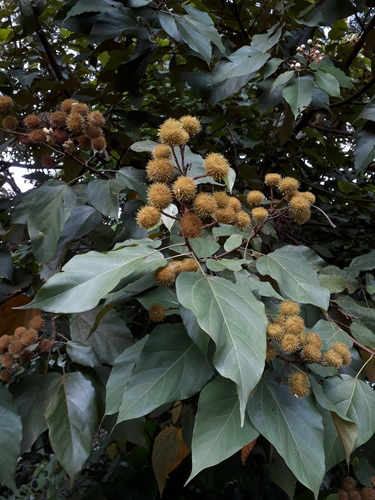
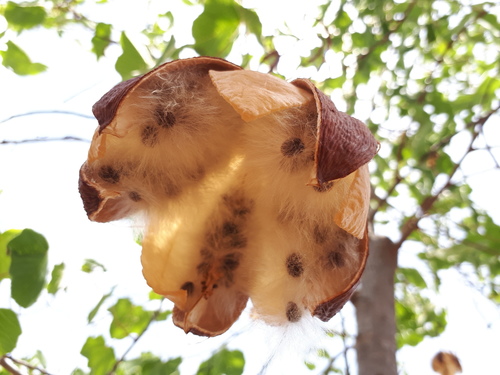
An evergreen tree. It grows to 10 m high and spreads to 3 m across. The stem is erect and it is intricately branched giving the tree a crown which is spreading and graceful. The leaf stalks are long. The leaves are alternate and simple. They are broad and heart shaped. They taper to the tip and have long leaf stalks. The flowers occur in a branched flower stalk. Several of these occur at the ends of branches. The flowers are open and cup-shaped. They can be pink or purple and 5 cm across. The fruit are hairy or bristly and heart shaped capsules. They are 3 cm long. They have a soft red skin. They can be yellow. When they are ripe they turn brown and split open. The capsules contain many dark red seeds.
Edible Uses
Edible Parts: Seed Edible Uses: Colouring Condiment Gum Tea Edible portion: Seeds, Spice. The seeds are relatively tasteless. They are briefly steeped in hot oil which is then strained and cooled to be used as a flavouring in various dishes. The whole seeds can be ground into a paste with various other spices, which gives a more pronounced flavour. The seeds have a high nutritive value, containing a small amount of fatty oil (5%) and about 13% of protein. The ground seed is red and this can be used to colour foods. A yellow colour is obtained from the seed coat, and this is widely used as a colouring in margarines etc in the food industry. It is a harmless, non-carcinogenic dye . It colours butter, margarine, cheese, and chocolate. It is ground and used as a spice (Annatto) in South America.
Traditional Uses
The seeds are fried gently and used as a food colouring. It colours butter, margarine, cheese, chocolate. It is ground and used as a spice (Annatto) in South America.
Medicinal Uses
Antiasthmatic Aphrodisiac Astringent Bitter Cancer Digestive Diuretic Dysentery Emmenagogue Expectorant Febrifuge Malaria Mouthwash Ophthalmic Poultice Purgative Skin Vermifuge The medical properties of annatto are poorly understood, but it is a bitter, astringent, purgative herb that reputedly destroys intestinal worms, lowers fever, improves digestion and has expectorant effects. A decoction of the leaves is used as a treatment for dysentery, and to reduce vomiting during pregnancy. The leaves are applied to the head and to sprains to relieve aches. A decoction is gargled as a cure for mouth and throat infections. The leaves may also be used in baths to relieve muscular aches, fevers, colic or to get rid of worms in children. The fresh shoots are steeped in water, which is then used as a eyewash for inflamed eyes. The leaves can be picked as required and used fresh or dried. The sap from the leaf petiole is soaked in hot water with rum, then used to remove secretions from encrusted eyelids as a treatment for blepharitis. Young shoots are applied locally as a poultice on abscesses. The roots are digestive and diuretic. A decoction is taken orally to control asthma. An infusion of the root in water and rum is used to treat venereal diseases. A tea made from the root is used to treat oliguria and jaundice. The seeds are used as an aphrodisiac, emmenagogue, expectorant and vermifuge. They are used to treat asthma and nasal cavity problems. A macerated seed decoction is taken orally for the relief of fevers. In a syrup, they are used in the treatment of pharyngitis and bronchitis. The ground seeds are applied to burns in order to prevent blistering and scarring. The seeds are harvested as the fruits split open, and can be dried for later use. They can also be soaked in hot water - the resulting sediment is pressed into cakes for use in medicines and dyes. The pulp surrounding the seed is made into an astringent drink used to treat cancer, dysentery and kidney infections. The fruit pulp is used as a rub on the skin to prevent sores, probably from sunburn. The dye obtained from the seed coat is used as an antidote for prussic acid poisoning caused by eating poorly treated Manihot esculenta. Sap from the bark and crushed leaves is used as a treatment for skin rashes. A decoction of the bark is used as a treatment for malaria; angina and asthma. The leaves contain cyanidine and ellagic acid.
Known Hazards
Poison: A waxy substance that has paralytic action on mammalian intestinal parasites is present in the seed coat. Bixin extracted from the seed coat is used in India as an insect repellent.
Distribution
A tropical plant. It suits hot humid tropical and subtropical climates. It needs a temperature above 16-18°C. It is drought and frost tender. It should be grown in full sunlight. It needs a fertile well drained soil. Seed need soil temperatures of at least 19-24°C to start growing. In Papua New Guinea it grows from sea level up to about 2,000 m altitude. It suits hardiness zones 10-12. Bontoc. In XTBG Yunnan.
Where It Grows
Africa, Amazon, Andamans, Argentina, Asia, Australia, Bangladesh, Bolivia, Brazil, Burkina Faso, Cameroon, Caribbean, Central Africa, Central America, China, Colombia, Congo DR, Costa Rica, Côte d'Ivoire, Cuba, Ecuador, Dominican Republic, East Africa, East Timor, Ecuador, Fiji, Galapagos, Ghana, Grenada, Guadeloupe, Guam, Guatemala, Guiana, Guianas, Guinea, Guinée, Guinea-Bissau, Guyana, Haiti, Hawaii, Himalayas, Honduras, India, Indochina, Indonesia, Ivory Coast, Jamaica, Laos, Liberia, Madagascar, Malawi, Malaysia, Marianas, Marquesas, Mexico*, Micronesia, Mozambique, Myanmar, Nepal, New Caledonia, Nicaragua, Nigeria, North America, Pacific, Palau, Panama, Papua New Guinea, PNG, Paraguay, Peru, Philippines, Puerto Rico, Rotuma, Samoa, Sao Tome and Principe, SE Asia, Sierra Leone, South America, Sri Lanka, St Lucia, Suriname, Taiwan, Tanzania, Thailand, Timor-Leste, Togo, Vanuatu, Vietnam, Wallis and Futuna, West Africa, West Indies, Zambia, Zimbabwe,
Cultivation
It can grow at elevations from sea level up to 2,200 metres in tropical to subtropical climates where a mean annual rainfall of 2,500 - 5,000mm is distributed throughout the year. It can withstand droughts of up to 4 months, but thrives best with well distributed rainfall and a dry season for seed ripening. It prefers a mean annual temperature in the range 28 - 32°c, with a mean maximum temperature of 22 - 27°c and a mean minimum temperature of 18 - 26°c. An easily grown plant, it succeeds on almost all soil types, preferring a moist, but well-drained neutral or slightly alkaline soil in a sunny position. Prefers a slightly acid soil according to another report. Prefers a pH in the range 5.5 - 7.5, tolerating 4.5 - 8.5. It grows into a larger tree when planted in deeper and more fertile soil, rich in organic matte. Plants commence fruiting when quite young. Trees can commence bearing fruit when only 2 years old. Seed-grown plants take longer to flower than vegetatively propagated ones, and do so sparingly. Under favourable conditions, fruiting commences 18 months from planting or earlier, and full crops of seeds are obtained after 3 - 4 years. Seed yields reach their peak when the trees are 4 - 5 years of age, usually a decline become evident around 12 years, but productivity can continue for up to 20 years. Seed yields from 0.5 - 5 tonnes/ha per year have been reported, but usually yields are between 800 - 1,500 kg/ha. 20 - 50g of dye can be obtained from 1 kilo of seed. In Puerto Rico and the Virgin Islands, flowering occurs mainly in spring and fruiting chiefly in the summer. In some areas the tree can produce flushes of fruits at several times through the year.
Propagation
Seed - the plant is usually grown from seed taken from freshly gathered ripe pods, which germinate better than dry ones. Mature seeds, taken directly from fresh fruits, germinate readily in 7 - 10 days under moist conditions. Seed is sown directly in the field, 2 - 5 seeds per hole in well-prepared soil, usually at the beginning of the rainy season. After germination only one seedling per hole is retained. Seedlings may also be raised in planting trays; they are transferred to 1 kg bags containing a soil mixture and kept in the nursery for 3 - 4 months before they are transplanted into the field. Cleaned, sun-dried seeds retain viability for over one year, but their germination rate falls to 12% in 3 years Cuttings in sand. Hardwood cuttings of 8mm or more in diameter readily root when a root hormone suitable for hardwood cuttings is applied. Roots are produced in abundance in 7 - 9 weeks. Rooted cuttings are first transferred into pots or bags and kept in a nursery and can be transplanted to the field after 3 months. Propagating by cuttings allows selection of high-yielding, rapidly growing cultivars that flower early and profusely and bear fruit within 2 years. Air layering Budding
Other Uses
Dye Essential Fencing Friction sticks Fuel Gum Hair Hedge Houseplant Insecticide Plant support Shelterbelt Soap making String Wood Other uses rating: High (4/5). Small flowering tree, Dye plant, Planter, Accent, Flower Border, Screening, Conservatory. Suitable for growing indoors. Agroforestry Uses: The plant is amenable to pruning and can be grown as a hedge. Plants are tolerant of hard trimming. Other Uses A red dye, known as annatto, is obtained from the fruit. The dye is obtained from the seed coat. The dye is used to colour cloth, and is also used by native people as a cosmetic for painting the skin and as a lipstick. It is also used in the cosmetic production of nail gloss, hair oil, lipstick and soap, as well as in the production of floor wax, furniture and shoe polish. The colour rapidly fades when exposed to light and air. A waxy substance that has paralytic action on mammalian intestinal parasites is present in the seed coat. Bixin extracted from the seed coat is used in India as an insect repellent. The red dye obtained from the seed is applied to the skin to repel mosquitoes and other biting insects. Annatto paste filters out the ultraviolet rays of sunlight, thereby protecting the skin from excessive sunburn. The bark from the branches of the trees yields a water-soluble gum that is similar to gum arabic. The seeds contain a characteristic pleasant-smelling essential oil. It is said that fire can be started by the friction of 2 pieces of the soft wood. A fibre for cordage has been obtained from the bark of the tree. The sapwood is whitish and the heartwood light brown or yellowish. The wood is soft, light in weight (specific gravity 0.4), porous, weak and not durable. The stems and branches are used for fuel. Special Uses Carbon Farming Food Forest Hedge
Production
It flowers and fruits throughout the year in Papua New Guinea. Plants grown from cuttings tend to flower at a younger age.
Other Information
It is not known if it is used for food in Papua New Guinea.
Notes
The plant is often used for face and body painting. There is only one Bixa species. It has anticancer and antioxidant properties.
Synonyms
Also Known As
Achiote, Achote, Achuete, Annato Tree, Arnatto, Atsuete, Axiote, Bandenu tape, Bija, Conok sayau, Dieu nhuom, Djambarana, Djanfarana, Duchichiimu puka, Galuga, Hpawng-long-awn, Japhara, Kam tai, Kari, Kesum, Kesumba, Koeswe, Kum-saet, Kunyit jawa, Kura, Latkan, Latkhan, Latpan, Lipstick tree, Lotkon, Maxe, Nteke, Perdu kesumba, Po-thidin, Raktabeja, Rangmale, Rocou, Rocouyer, Roucou, Sendri, Siemphung, Sinduria, Thidin, Tomati-enshee, Tu-hpawng, Urucu, Urucum, Uruku, Vahinamalona, Waiang, Zanzolo-leh
References (89)
- Ambasta S.P. (Ed.), 2000, The Useful Plants of India. CSIR India. p 74
- Arellanes, Y., et al, 2013, Influence of traditional markets on plant management in the Tehuacan Valley. Journal of Ethnobiology and Ethnomedicine 9:38
- Barwick, M., 2004, Tropical and Subtropical Trees. A Worldwide Encyclopedic Guide. Thames and Hudson p 52
- Bennett, B. C., 1990, Useful Plants of Amazonian Ecuador. US Agency for International Development. Fifth Progress Report. New York Botanical Gardens. p 40
- Bodkin, F., 1991, Encyclopedia Botanica. Cornstalk publishing, p 149
Show all 89 references Hide references
- Bodner, C. C. and Gereau, R. E., 1988, A Contribution to Bontoc Ethnobotany. Economic Botany, 43(2): 307-369
- Borrell, O.W., 1989, An Annotated Checklist of the Flora of Kairiru Island, New Guinea. Marcellin College, Victoria Australia. p 59
- Bremness, L., 1994, Herbs. Collins Eyewitness Handbooks. Harper Collins. p 41
- Brickell, C. (Ed.), 1999, The Royal Horticultural Society A-Z Encyclopedia of Garden Plants. Convent Garden Books. p 180
- Brouk, B., 1975, Plants Consumed by Man. Academic Press, London. p 266
- Brown, D., 2002, The Royal Horticultural Society encyclopedia of Herbs and their uses. DK Books. p 144
- Burkill, I.H., 1966, A Dictionary of the Economic Products of the Malay Peninsula. Ministry of Agriculture and Cooperatives, Kuala Lumpur, Malaysia. Vol 1 (A-H) p 333
- Cabalion, P. and Morat, P., 1983, Introduction le vegetation, la flore et aux noms vernaculaires de l'ile de Pentcoste (Vanuatu), In: Journal d'agriculture traditionnelle et de botanique appliquee JATBA Vol. 30, 3-4
- Caballero-Serrano, V., et al, 2019, Traditional ecological knowledge and medicinal plant diversity in Ecuadorian Amazon home gardens. Global Ecology and Conservation 17 (2019) e00524 p 8
- Condit, R., et al, 2011, Trees of Panama and Costa Rica. Princeton Field Guides. p 94
- Coe, F. G., and Anderson, G. J., 1996, Ethnobotany of the Garifuna of Eastern Nicaragua. Economic Botany 50(1) pp 71-107
- Coe, F. G. and Anderson, G. J., 1999, Ethnobotany of the Sumu (Ulwa) of Southeastern Nicaragua and Comparisons with Miskitu Plant Lore. Economic Botany Vol. 53. No. 4. pp. 363-386
- Croft, J., in Henty, E. E., (Ed.), 1981, Handbooks of the Flora of Papua New Guinea, Melbourne University Press, p 1
- Cundall, P., (ed.), 2004, Gardening Australia: flora: the gardener's bible. ABC Books. p 239
- D'Ambrosio, U., & Puri, R. K., 2016, Foodways in transition: food plants, diet and local perceptions of change in a Costa Rican Ngäbe community. Journal of Ethnobiology and Ethnomedicine (2016) 12:3 p 22
- Duchelle, A. E., 2007, Observations on Natural Resource use and Conservation by the Shuar In Ecuador's Cordillera del Condor. Ethnobotany Research & Applications 5:005-023
- Engel, D.H., & Phummai, S., 2000, A Field Guide to Tropical Plants of Asia. Timber Press. p 36
- Etherington, K., & Imwold, D., (Eds), 2001, Botanica's Trees & Shrubs. The illustrated A-Z of over 8500 trees and shrubs. Random House, Australia. p 133
- Facciola, S., 1998, Cornucopia 2: a Source Book of Edible Plants. Kampong Publications, p 50
- FAO, 2012, Forest Genetic Resources Situation in Mexico. Final Report of Project TCP/ 3301 p 286
- Flora of Australia, Volume 8, Lecythidales to Batales, Australian Government Publishing Service, Canberra (1982) p 85
- Forest Inventory and Planning Institute, 1996, Vietnam Forest Trees. Agriculture Publishing House p 74
- Fowler, D. G., 2007, Zambian Plants: Their Vernacular Names and Uses. Kew. p 23
- Glew, R. H., et al, 1997, Amino Acid, Fatty Avid and Mineral Composition of 24 Indigenous Plants of Burkina Faso. Journal of Food Composition and Analysis 10, 205-217
- Grandtner, M. M. & Chevrette, J., 2013, Dictionary of Trees, Volume 2: South America: Nomenclature, Taxonomy and Ecology. Academic Press p 65
- Guatemala thesis 19 - AppendixE
- Hawthorne, W.& Marshall, C., 2013, Nimba Western Area Iron Ore Concentrator Mining Project Environmental and Social Impact Assessment. AcelorMittel Liberia. p 461
- Hearne, D.A., & Rance, S.J., 1975, Trees for Darwin and Northern Australia. AGPS, Canberra p 32
- Hedrick, U.P., 1919, (Ed.), Sturtevant's edible plants of the world. p 107
- Heywood, V.H., Brummitt, R.K., Culham, A., and Seberg, O. 2007, Flowering Plant Families of the World. Royal Botanical Gardens, Kew. p 64
- Hunter, D., et al, 2019, The potential of neglected and underutilized species for improving diets and nutrition. Planta (2019) 250:709-729
- Hutton, W., 1997, Tropical Herbs and Spices of Indonesia. Periplus. p 10
- Jansen, P.C.M., 2005. Bixa orellana L. [Internet] Record from Protabase. Jansen, P.C.M. & Cardon, D. (Editors). PROTA (Plant Resources of Tropical Africa / Ressources végétales de l’Afrique tropicale), Wageningen, Netherlands. < http://database.prota.org/search.htm>. Accessed 14 October 2009.
- Kiple, K.F. & Ornelas, K.C., (eds), 2000, The Cambridge World History of Food. CUP p 1719
- Krishen P., 2006, Trees of Delhi, A Field Guide. DK Books. p 112
- Latham, P., 2004, Useful Plants of Bas-Congo province. Latham & DFID p 51
- Latham, P. & Mbuta, A. K., 2014, Useful Plants of Bas-Congo Province, Democratic Republic of Congo. Volume 1. Salvation Army. p 77
- Lazarides, M. & Hince, B., 1993, Handbook of Economic Plants of Australia, CSIRO. p 33
- Leal, M. L. et al, 2018, Knowledge, use, and disuse of unconventional food plants. Journal of Ethnobiology and Ethnomedicine (2018) 14:6
- Lentz, D. L., 1993, Medicinal and Other Economic Plants of the Paya of Honduras. Economic Botany, Vol. 47, No. 4, pp. 358-370
- Llamas, K.A., 2003, Tropical Flowering Plants. Timber Press. p 147
- Lord, E.E., & Willis, J.H., 1999, Shrubs and Trees for Australian gardens. Lothian. p 49
- Lorenzi, H., 2002, Brazilian Trees. A Guide to the Identification and Cultivation of Brazilian Native Trees. Vol. 01 Nova Odessa, SP, Instituto Plantarum p 74
- Manandhar, N.P., 2002, Plants and People of Nepal. Timber Press. Portland, Oregon. p 113
- McMakin, P.D., 2000, Flowering Plants of Thailand. A Field Guide. White Lotus. p 11
- Menninger, E.A., 1977, Edible Nuts of the World. Horticultural Books. Florida p 115
- Montani, M. C. & Scarpa, G. F., 2016, Recursos vegetales y prácticas alimentarias entre indígenas tapiete del noreste de la provincia de Salta, Argentina. Darwiniana, nueva serie vol.4 no.1 San Isidro jul. 2016
- Morley, B.D., & Toelken, H.R., (Eds), 1983, Flowering Plants in Australia. Rigby. p 94
- Oliviera V. B., et al, 2012, Native foods from Brazilian biodiversity as a source of bioactive compounds. Food Research International 48 (2012) 170-179
- Omawale, 1973, Guyana's edible plants. Guyana University, Georgetown p 63
- Paz, F. S., et al, 2021, Edible Fruit Plant Species in the Amazon Forest Rely Mostly on Bees and Beetles as Pollinators. Journal of Economic Entomology, XX(XX), 2021, 1–13
- Peekel, P.G., 1984, (Translation E.E.Henty), Flora of the Bismarck Archipelago for Naturalists, Division of Botany, Lae, PNG. p 381, 380
- Penafield Anchundia, D. D., 2017, Traditional food consumption and its nutritional contribution in Guasaganda, Central Ecuador. PhD Ghent University p 71
- Perry, F., and Hay, R., 1982, Guide to Tropical and Subtropical Plants. Sun Books p 14
- Pham-Hoang Ho, 1999, An Illustrated Flora of Vietnam. Nha Xuat Ban Tre. p 547
- Piedra-Malagón, E. M. et al, 2022, Edible native plants of the Gulf of Mexico Province. Biodiversity Data Journal 10: e80565 p 14
- Plants of Haiti Smithsonian Institute http://botany.si.edu
- Purseglove, J.W., 1968, Tropical Crops Dicotyledons, Longmans. p 629
- Raghavan, S., 2007, Handbook of Spices, Seasonings, and Flavourings. Second Edition. CRC Press p 68
- Rahmatullah, M., et al, 2009, A survey of medicinal plants in two areas of Dinajpur district, Bangladesh including plants which can be used as functional foods. American-Eurasian Journal of Sustainable Agriculture, 3(4): 862-876
- Roa, J. A. G. & Boada, D. S. G., 2018, Fundación para el Fortalecimiento de la Fruticultura y Plantas Alimenticias no Convencionales en Colombia.
- Segura, S. et al, 2018, The edible fruit species in Mexico. Genet Resour Crop Evol (2018) 65:1767–1793
- Seidemann J., 2005, World Spice Plants. Economic Usage, Botany, Taxonomy. Springer. p 65
- Smith, N., Mori, S.A., et al, 2004, Flowering Plants of the Neotropics. Princeton. p 54
- Solomon, C., 2001, Encyclopedia of Asian Food. New Holland. p 11
- Sp. pl. 1:512. 1753
- Steggerda, M., Some Ethnological Data Concerning One Hundred Yucatan Plants. Smithsonian Institution Anthropological Papers, No. 29
- Sukarya, D. G., (Ed.) 2013, 3,500 Plant Species of the Botanic Gardens of Indonesia. LIPI p 592
- Swaminathan, M.S., and Kochnar, S.L., 2007, An Atlas of Major Flowering Trees in India. Macmillan. p 29
- Torre, de la L., et al, 2008, Enciclopedia de las Plantas Útiles del Ecuador. Herbario QCA. Pontificia Universidad Católica del Ecuador. p 247
- Vael, L., 2015, Ethnobotanical study of the plant use in the natural landscape of two mestizo communities in the Ucayali region of the Peruvian Amazon. Universiteit Gent.
- van Roosmalen, M.G.M., 1985, Fruits of the Guianan Flora. Utrecht Univ. & Wageningen Univ. p 54
- van Wyk, B., 2005, Food Plants of the World. An illustrated guide. Timber press. p 90
- Vasquez, R. and Gentry, A. H., 1989, Use and Misuse of Forest-harvested Fruits in the Iquitos Area. Conservation Biology 3(4): 350f
- Vickery, M.L. and Vickery, B., 1979, Plant Products of Tropical Africa, Macmillan. p 101
- Wiersema, J. H. & Leon, B., 2013, World Economic Plants. A Standard Reference CRC Press. 2nd Ed. p 104
- Williams, C.N., Chew, W.Y., and Rajaratnam, J.A., 1989, Tree and Field Crops of the Wetter Regions of the Tropics. Longman, p 222
- Williamson, J., 2005, Useful Plants of Malawi. 3rd. Edition. Mdadzi Book Trust. p 37
- Woodward, P., 2000, Asian Herbs and Vegetables. Hyland House. p 33
- World Checklist of Useful Plant Species 2020. Royal Botanic Gardens, Kew
- www.colecionandofrutas.org
- www.worldagroforestrycentre.org/treedb/
- Young, J., (Ed.), 2001, Botanica's Pocket Trees and Shrubs. Random House. p 141
- Zaldivar, M. E., et al, 2002, Species Diversity of Edible Plants Grown in Homegardens of Chibehan Amerindians from Costa Rica. Human Ecology, Vol. 30, No. 3, pp. 301-316