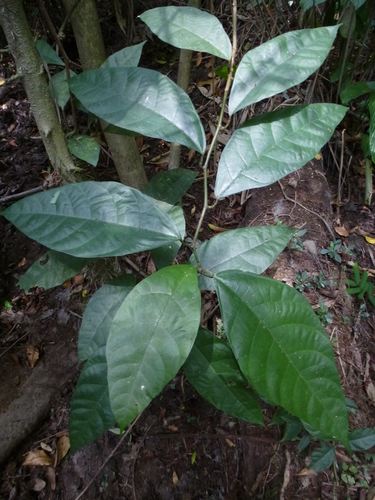
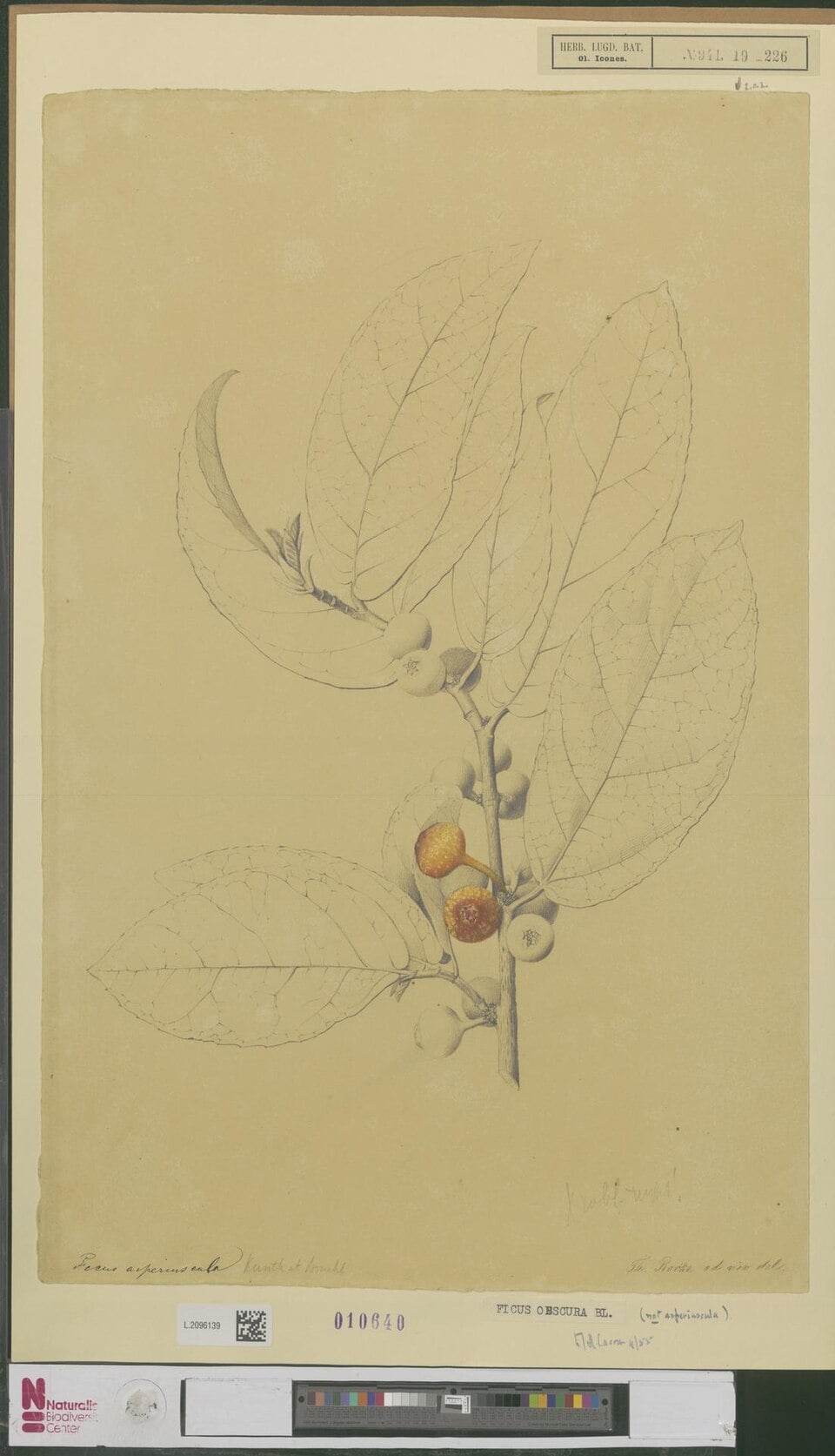
Pseudolmedia laevis
(Ruiz. & Pav.) J. F. Macbride
Glabrous false olmedia
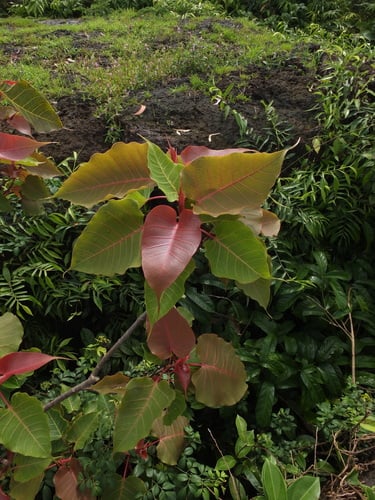
iNaturalist· cc-by-nc
(c) Sébastien SANT, some rights reserved (CC BY-NC)
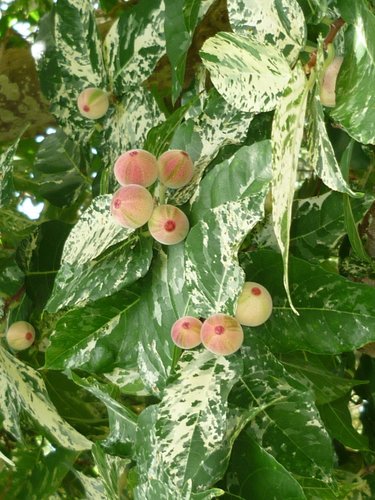
iNaturalist· cc-by-nc
(c) Sébastien SANT, some rights reserved (CC BY-NC)
iNaturalist· cc-by-nc
(c) Sébastien SANT, some rights reserved (CC BY-NC)
Description
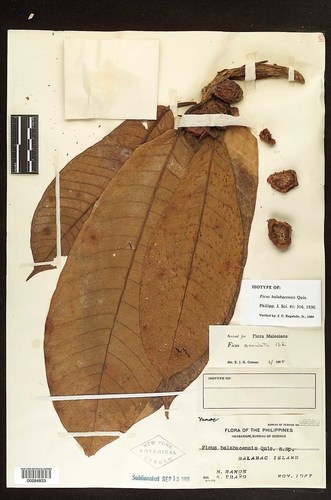
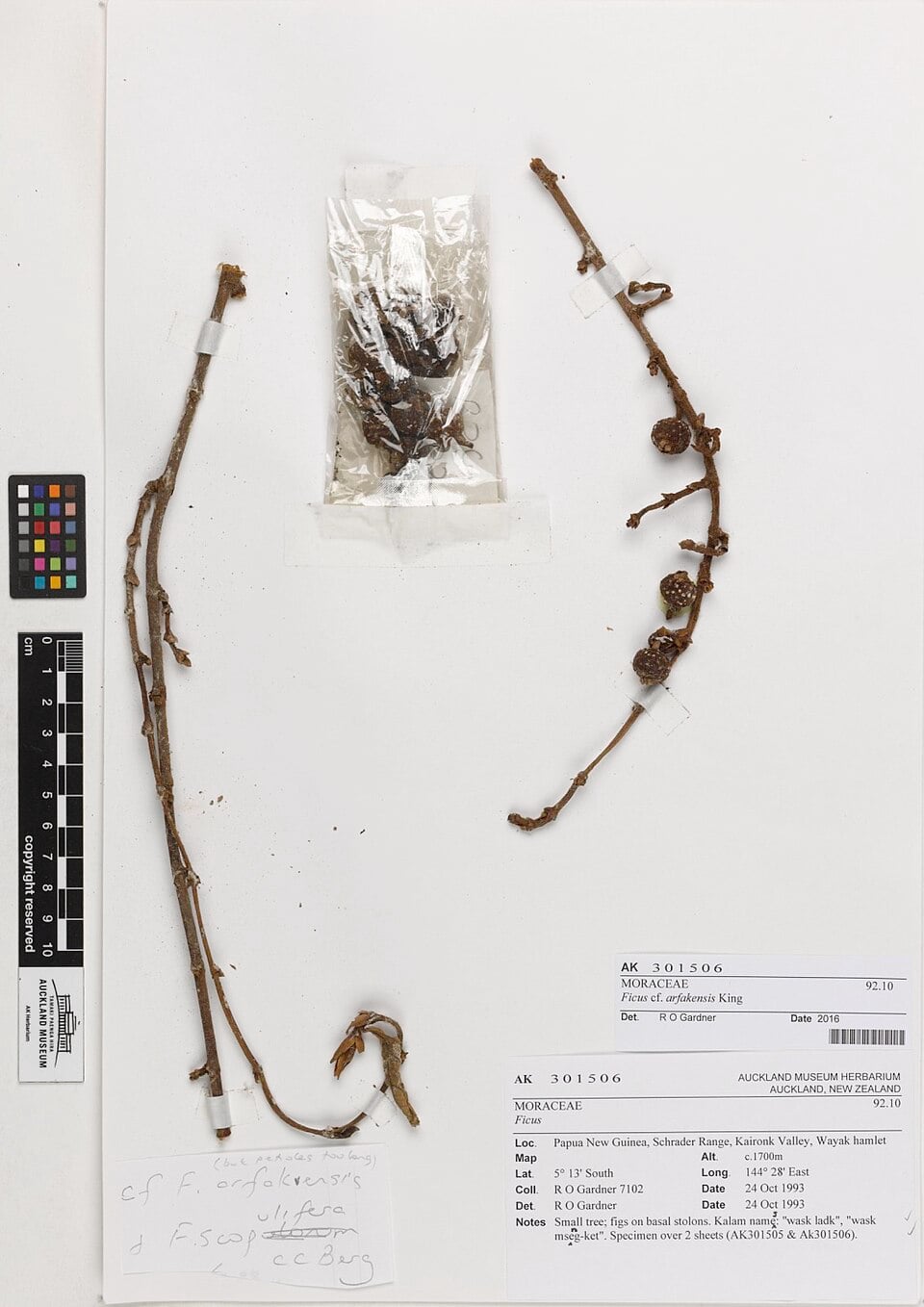
A large tree. It grows 40 m tall. The bark has white latex. The leaves are simple. The plants are separately male and female. The flowers are in the axils of leaves. The fruit is oval and 1.3 cm long by 0.8 cm wide. There is one seed.
Edible Uses
Fruit - raw. Sweet and slightly acid.Much eaten by local people. The bright red fruit is around the size of a cherry.
Traditional Uses
The fruit pulp is sweet.
This uses section is brief — help expand it
Medicinal Uses
The plant is used medicinally. No more details are given.
Distribution
A tropical plant. It grows in rainforest and savanna forest.
Where It Grows
Amazon, Bolivia, Brazil, Colombia, Ecuador, Guiana, Guianas, Guyana, Peru, South America*, Suriname, Venezuela,
Cultivation
A shade-loving species that grows in partial shade on terra firma in clayey soils. A dioecious species, both male and female forms need to be grown if fruit and seed are required.
Other Uses
A yellowish latex exudes freely from the bark and heartwood. It turns orangish over time, and flows in teardrops after cutting. A white latex exudes abundantly from incisions on the trunk; upon exposure to the air this condenses into an elastic resin, reddish chestnut in colour. The heartwood is pinkish or dark brown; the sapwood yellowish brown with an extensive grayish tinge. The grain is straight, or slightly wavy; growth rings are present, but poorly defined; they are visible owing to a slight variation in depth of colour. The wood is said to be 'as hard as a rock'. It is of medium weight and strong, though is sometimes perishable and susceptible to stain. It is not difficult to work and holds its place well. The wood is esteemed for making canoes, and also the rollers used for crushing sugar cane; it is also used in construction. The wood is used for fuel.
Synonyms
Also Known As
Ardilla kaspi, Ardillo caspi, Asoasi hi, Bojo, Cabecita, Capinuri, Capuli, Chamame, Chimi, Chimiqua, Congona, Charo, Charo macho, Charo peludo, Chimicua, Chimicua colorada, Doagamo, Glinowe, Guayhil, Guion, Iwanamgem, Itahuba amarilla, Itauba amarilla, Leche chiva, Leche perra, Man-letr'oedoe, Miik chimi, Mishochaqui, Naso dei ni, Noi, Nui, Obogamo, Oboye, Oboyebe, Ojoso colorado, Ojoco negro, Omaya, Omoybe, Palo pichi, Pama-ferro, Pama pequena, Pama-preta, Pamma, Pandisho del monto, Sangangacho, Toto yahi, Ucho hualis, Uchu wallis, Vara piedra, Wallis muyu, Wea yaji, Winenemewe, Yahi
References (16)
- Bendezu, Y. F., 2018, Arboles nativos de lad Region Ucayali. Instituto Nacional de Innovacion Agraria. p 232
- Daly, D. C., An Index of Common Names of Plants in Acre, Brazil. New York Botanical Garden Universidade Federal do Acre.
- Duchelle, A. E., 2007, Observations on Natural Resource use and Conservation by the Shuar In Ecuador's Cordillera del Condor. Ethnobotany Research & Applications 5:005-023
- Etkin, N. L. (Ed.), 1994, Eating on the Wild Side, Univ. of Arizona. p 140, 157
- Fouqué, A., 1972, Espèces fruitières d'Amérique tropicale. Institut français de recherches fruitierès outre-mer (As Pseudolmedia obliqua)
Show all 16 references Hide references
- Gilmore, M. P., et al, 2013, The socio-cultural importance of Mauritia flexuosa palm swamps (aguajales) and implications for multi-use management in two Maijuna communities of the Peruvian Amazon. Journal of Ethnobiology and Ethnomedicine 2013, 9:29
- Grandtner, M. M. & Chevrette, J., 2013, Dictionary of Trees, Volume 2: South America: Nomenclature, Taxonomy and Ecology. Academic Press p 543
- Kermath, B. M., et al, 2014, Food Plants in the Americas: A survey of the domesticated, cultivated and wild plants used for Human food in North, Central and South America and the Caribbean. On line draft. p 719
- Lopez-Diago, D. & Garcia, N., 2021, Wild edible fruits of Colombia. Biota ColomBiana 22 (2) p 43
- NYBG herbarium "edible"
- Philips, O., 1992, The potential for harvesting fruits in tropical rainforests: new data from Amazonian Peru. Biodiversity and Conservation 2, 18-38
- Roa, J. A. G. & Boada, D. S. G., 2018, Fundación para el Fortalecimiento de la Fruticultura y Plantas Alimenticias no Convencionales en Colombia.
- Torre, de la, L., et al, 2008, Enciclopedia de las Plantas Útiles del Ecuador. Herbario QCA. Pontificia Universidad Católica del Ecuador. p 455
- van Roosmalen, M.G.M., 1985, Fruits of the Guianan Flora. Utrecht Univ. & Wageningen Univ. p 312
- Vasquez, R. and Gentry, A. H., 1989, Use and Misuse of Forest-harvested Fruits in the Iquitos Area. Conservation Biology 3(4): 350f
- www.proyanomami.org