Ficus amazonica
(Miq.) Miq.
Bird fig, Pakar
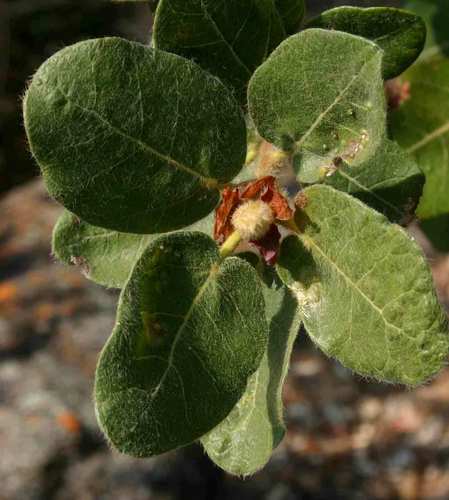
iNaturalist· cc-by-nc
(c) Guillaume Léotard, some rights reserved (CC BY-NC)
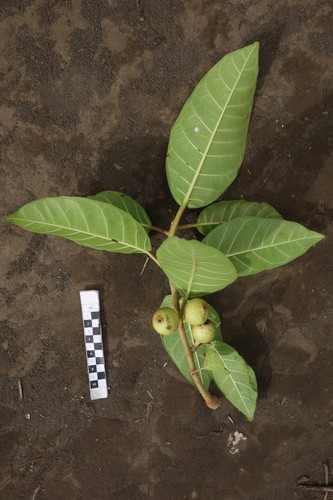
iNaturalist· cc-by-nc
(c) Guillaume Léotard, some rights reserved (CC BY-NC)
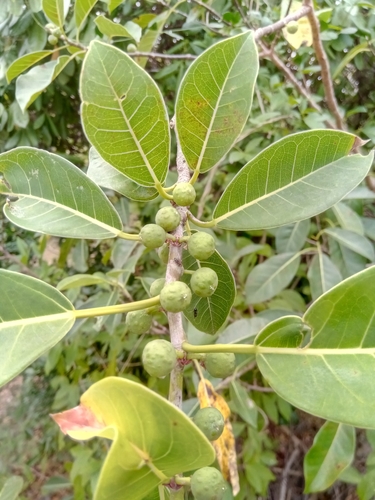
iNaturalist· cc-by-nc
(c) Guillaume Léotard, some rights reserved (CC BY-NC)
Summary
Source: WikipediaFicus amazonica is a species of flowering plant in the family Moraceae. It is a tree native to northern and west-central Brazil, Colombia, Ecuador, the Guianas, Peru, Trinidad and Tobago, and Venezuela. It is a tree which grows up to 18 meters tall which can behave like a strangler fig. It is native to the lowland tropical rain forests of the Amazon biome and Trinidad and Tobago, where it grows in riverine forests and terra firma forests on rocky outcrops up to 700 meters elevation. The species was first described as Urostigma amazonicum by Friedrich Anton Wilhelm Miquel in 1847. In 1866 Édouard André placed it in genus Ficus as F. amazonica.
Description
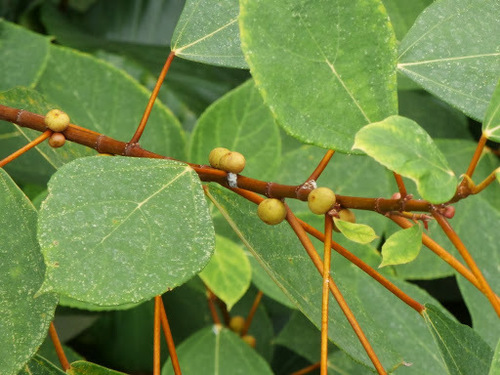
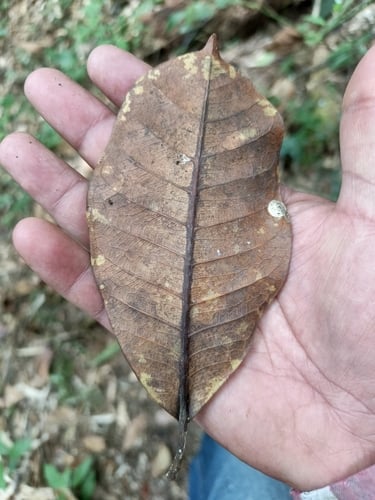
A fig. It is an evergreen shrub or small tree. It can grow 16 m tall. The small branches are 25 mm across. They can be slightly hairy. The leaf blade is narrowly oval and 4-13 cm long by 2-6 cm wide. The base is rounded or heart shaped and it taper to the tip.
Edible Uses
The fruit is eaten.
Medicinal Uses
An exudate from the stem is used in the treatment of pain, swelling and abcesses.
Distribution
A tropical plant. It grows in forests near rivers.
Where It Grows
Brazil, Colombia, Ecuador, French Guiana, Guyana, Peru, South America, Suriname, Trinidad-Tobago, Venezuela,
Cultivation
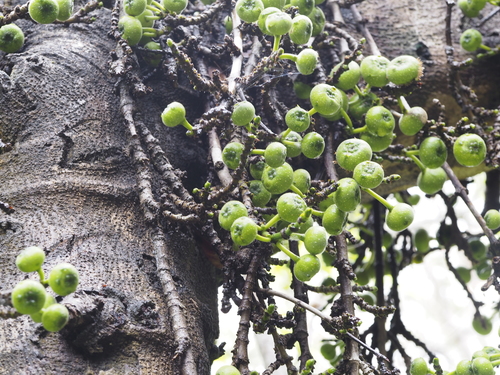
Fig trees have a unique form of fertilization, each species relying on a single, highly specialized species of wasp that is itself totaly dependant upon that fig species in order to breed. The trees produce three types of flower; male, a long-styled female and a short-styled female flower, often called the gall flower. All three types of flower are contained within the structure we usually think of as the fruit. The female fig wasp enters a fig and lays its eggs on the short styled female flowers while pollinating the long styled female flowers. Wingless male fig wasps emerge first, inseminate the emerging females and then bore exit tunnels out of the fig for the winged females. Females emerge, collect pollen from the male flowers and fly off in search of figs whose female flowers are receptive. In order to support a population of its pollinator, individuals of a Ficus spp. must flower asynchronously. A population must exceed a critical minimum size to ensure that at any time of the year at least some plants have overlap of emmission and reception of fig wasps. Without this temporal overlap the short-lived pollinator wasps will go locally extinct.
Notes
There are about 800-1000 Ficus species. They are mostly in the tropics. There are 120 Ficus species in tropical America.
Synonyms
Also Known As
Mutumutu
References (3)
- Kermath, B. M., et al, 2014, Food Plants in the Americas: A survey of the domesticated, cultivated and wild plants used for Human food in North, Central and South America and the Caribbean. On line draft. p 368
- Kew Plants of the World Online
- Omawale, 1973, Guyana's edible plants. Guyana University, Georgetown p 6 (As Ficus surinamensis)