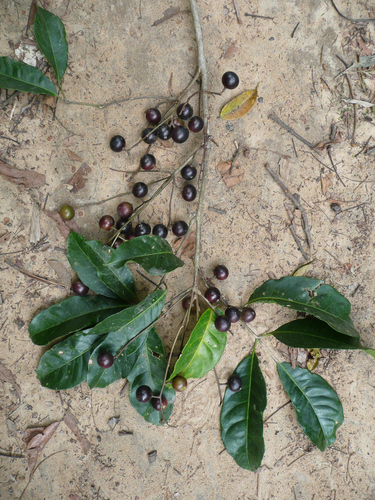
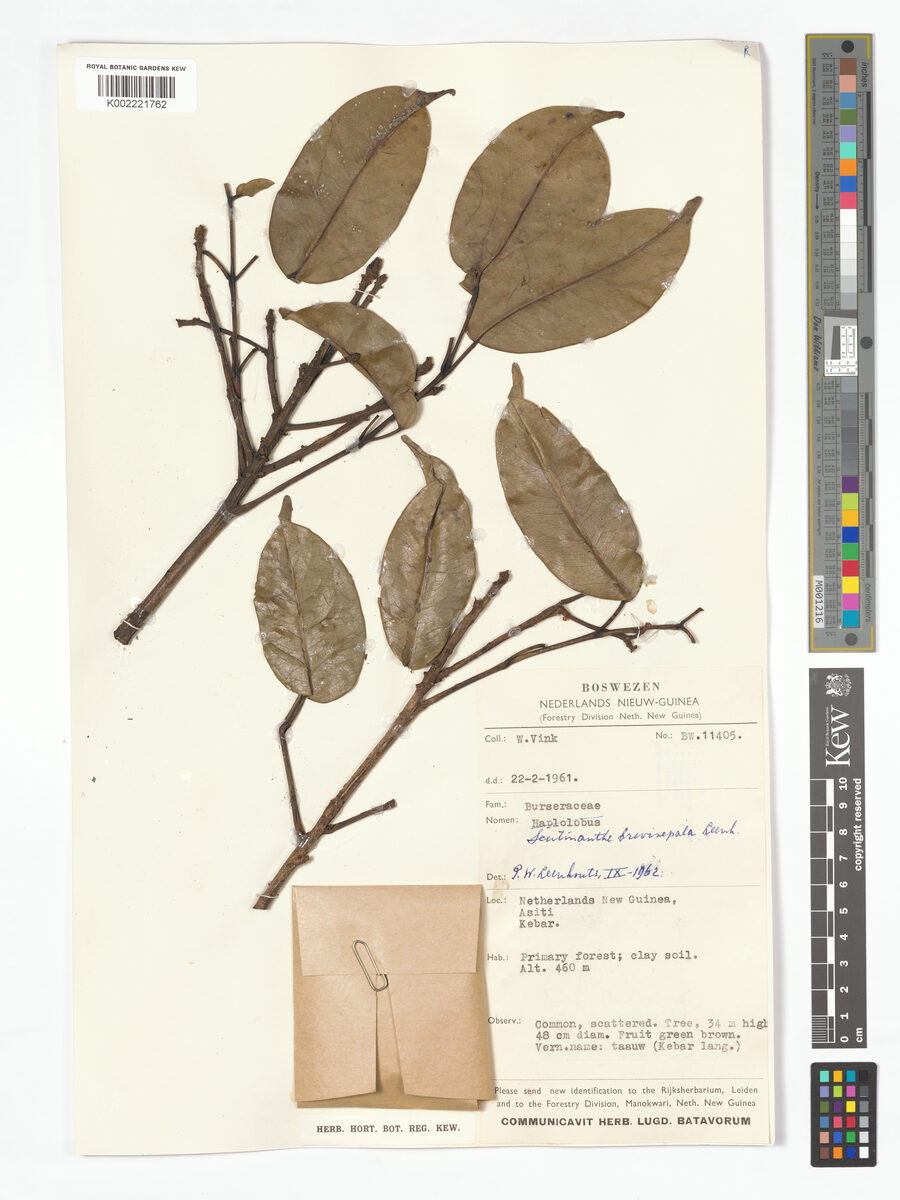
Commiphora mossambicensis
(Oliv.) Engl.
Pepper-leaf corkwood
iNaturalist· cc-by-nc-sa
(c) Günter Baumann, some rights reserved (CC BY-NC-SA)
iNaturalist· cc-by-nc
(c) Bart Wursten, some rights reserved (CC BY-NC)
Description
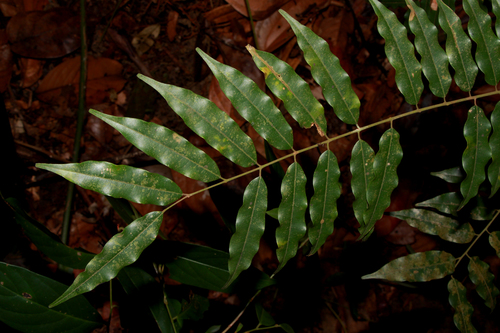
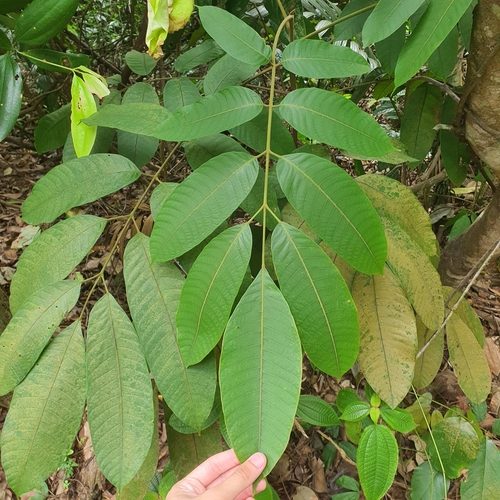
A small tree. It does not have thorns. It loses its leaves during the year. The trunk is usually single. The crown is round. The bark is smooth and brown. The young twigs are velvety. The leaves are alternate and have 3 leaflets. The leaf stalk can be 45 mm long. The leaflets droop. The leaflets are almost round. The flowers are in clusters in the axils of leaves. They are small and yellow to pink. Male and female flowers occur on different plants.
Edible Uses
The roots are chewed, probably for their sweet moisture, especially by children.
Traditional Uses
The roots are chewed probably for their sweet moisture.
This uses section is brief — help expand it
Distribution
A tropical plant. It grows in the hot arid bushveld. It is often on rocky hillsides. It grows in areas with a rainfall between 500-800 mm per year. It grows between 390-1,600 m altitude. It can grow in arid places. It grows in Miombo woodland.
Where It Grows
Africa, Botswana, East Africa, Malawi, Mozambique, Namibia, South Africa, Southern Africa, Tanzania, Zambia, Zimbabwe,
Cultivation
Trees are used as a live fence.
Other Uses
A yellow gum oozes out of cuts in the bark, becoming a hard clear resin on exposure to air. The resin is used for sealing trays. Carbon from half-burnt wood is used for making local gunpowder. The tree is used as a live fence.
Production
The rootstock is collected during the rainy season.
Other Information
They are eaten especially by children.
Synonyms
Also Known As
Iminyela lentaba, Moroka, Mokomoto, Muchove, Mukompe, Nripwi, Peperblaakanniedood
References (12)
- A. L. P. P. de Candolle & A. C. de Candolle, Monogr. phan. 4:26. 1883
- Fowler, D. G., 2007, Zambian Plants: Their Vernacular Names and Uses. Kew. p 15
- Fox, F. W. & Young, M. E. N., 1982, Food from the Veld. Delta Books. p 140
- https://growwild.co.za Edible Indigenous plants
- Njana, M. A., et al, 2013, Are miombo woodlands vital to livelihoods of rural households? Evidence from Urumwa and surrounding communities, Tabora, Tanzania. Forests, Trees and Livelihoods, 22:2, 124-140
Show all 12 references Hide references
- Palmer & Pitman, 1981,
- Peters, C. R., O'Brien, E. M., and Drummond, R.B., 1992, Edible Wild plants of Sub-saharan Africa. Kew. p 73
- Royal Botanic Gardens, Kew (1999). Survey of Economic Plants for Arid and Semi-Arid Lands (SEPASAL) database. Published on the Internet; http://www.rbgkew.org.uk/ceb/sepasal/internet [Accessed 5th April 2011]
- Ruffo, C. K., Birnie, A. & Tengnas, B., 2002, Edible Wild Plants of Tanzania. RELMA p 224
- van Wyk, B, van Wyk, P, and van Wyk B., 2000, Photographic guide to Trees of Southern Africa. Briza. p 99
- van Wyk, Be., & Gericke, N., 2007, People's plants. A Guide to Useful Plants of Southern Africa. Briza. p 84
- World Checklist of Useful Plant Species 2020. Royal Botanic Gardens, Kew