Santiria tomentosa
Blume
Kerantai, Kerantai merah, Kerati
iNaturalist· cc-by
(c) pbsg, some rights reserved (CC BY), uploaded by pbsg
iNaturalist· cc-by
(c) pbsg, some rights reserved (CC BY)
Summary
Source: WikipediaSantiria tomentosa is a species of plant in the family Burseraceae. It is found in Indonesia, Malaysia, the Philippines, and Singapore.
Description
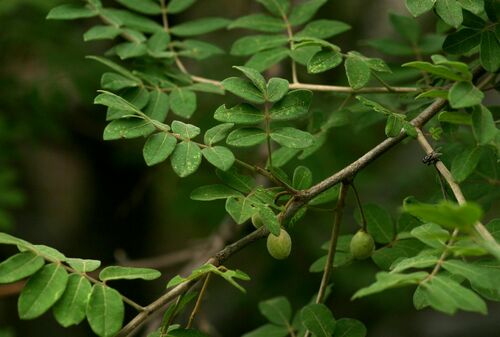
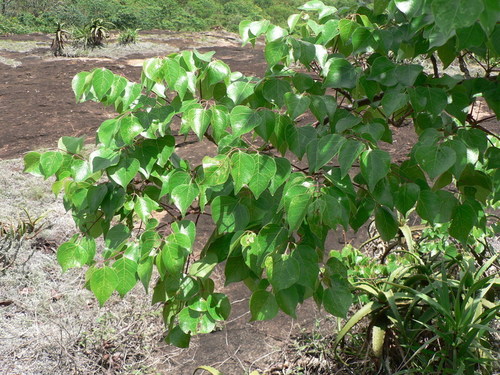
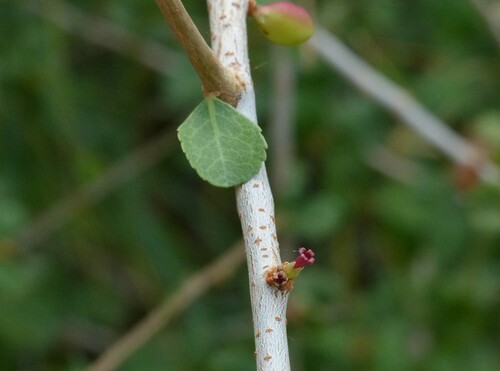
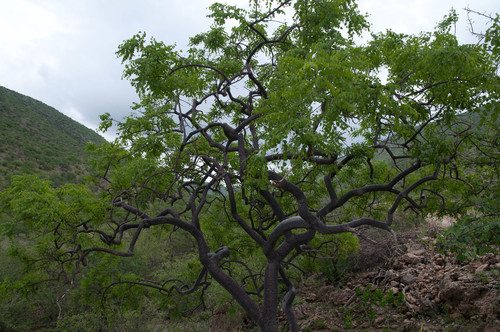
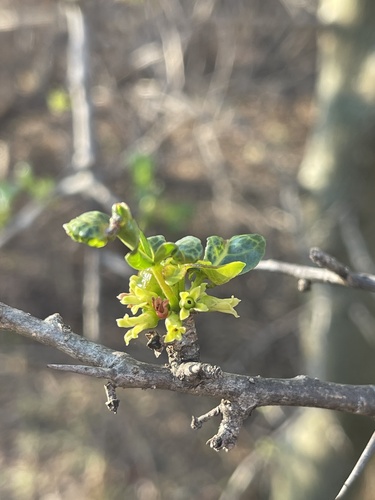
A moderate sized tree. It grows 30 m tall. The trunk is 50 cm across. It has buttresses 2 m tall. The bark is grey brown and scaly. The leaves have 1-4 pairs of leaflets. The leaf stalks are hairy. The leaves are oval and 11-27 cm long by 4-12 cm wide. There are 10-20 pairs of side veins and these are raised on both surfaces. They curve and join near the edge. The flowers are hairy and in groups on the axils of leaves. The fruit is round or oblong and 2-3 cm long by 2 cm wide.
Edible Uses
The fruits, after being boiled, are eaten. The purple, fleshy drupes are about 17mm long. An oil is pressed out of the fleshy fruit.
Distribution
A tropical plant. It grows in mixed forests from sea level to 500 m above sea level. It is usually on sandy soils.
Where It Grows
Asia, Brunei, Indochina, Indonesia, Malaysia, SE Asia, Singapore, Thailand,
Cultivation
Usually found in the wild on sandy soils, but also on clay and occasionally on limestone. This species is usually dioecious, in which case both male and female forms need to be grown if fruit and seed are required, but there are also reports of monoecious trees where the flowers of both sexes can be found on the same tree.
Other Uses
The timber, though not very durable, is used for indoor-construction. This species is one of the main sources of kedondong timber, which is obtained from several species in the family Burseraceae. We do not have a specific description of the wood for this species, but the general description of kedondong wood is as follows:- The heartwood is generally a light brown; it is not sharply demarcated from the 3 - 5cm wide band of lighter-coloured sapwood. The texture is moderately fine and even; the grain is interlocked to wavy; the surface is lustrous. The wood is light in weight; moderately hard; not very durable, being susceptible to fungi, dry wood borers and termites. It seasons somewhat slowly with only a slight risk of checking and distortion; once dry it is moderately stable to stable in service. The wood has a fairly high blunting effect, stellite-tipped and tungsten carbide tools are recommended; it is moderately easy to slightly difficult to plane; finishes smooth to rough; can be easy to very difficult to bore; slightly difficult to difficult to turn; nailing and screwing properties are good; gluing is correct. The wood is suitable for internal use as a general utility timber for planking, cladding, plywood, flooring, furniture, packing cases, pallets and general carpentry work.
Synonyms
Also Known As
Bantrang, Bunyao, Jabai, Garinggung, Kajang karang, Kahingai, Kayu jagung, Kambaloh
References (6)
- Burkill, I.H., 1966, A Dictionary of the Economic Products of the Malay Peninsula. Ministry of Agriculture and Cooperatives, Kuala Lumpur, Malaysia. Vol 2 (I-Z) p 1992
- Leenhouts, P.W., 1955, Burseraceae in Flora Malesiana Vol 5 p 231
- Milow, P., et al, 2013, Malaysian species of plants with edible fruits or seeds and their evaluation. International Journal of Fruit Science. 14:1, 1-27
- Slik, F., www.asianplant.net
- Soepadmo, E. and Wong, K. M., 1995, Tree Flora of Sabah and Sarawak. Forestry Malaysia. Volume One. p 95
Show all 6 references Hide references
- World Checklist of Useful Plant Species 2020. Royal Botanic Gardens, Kew