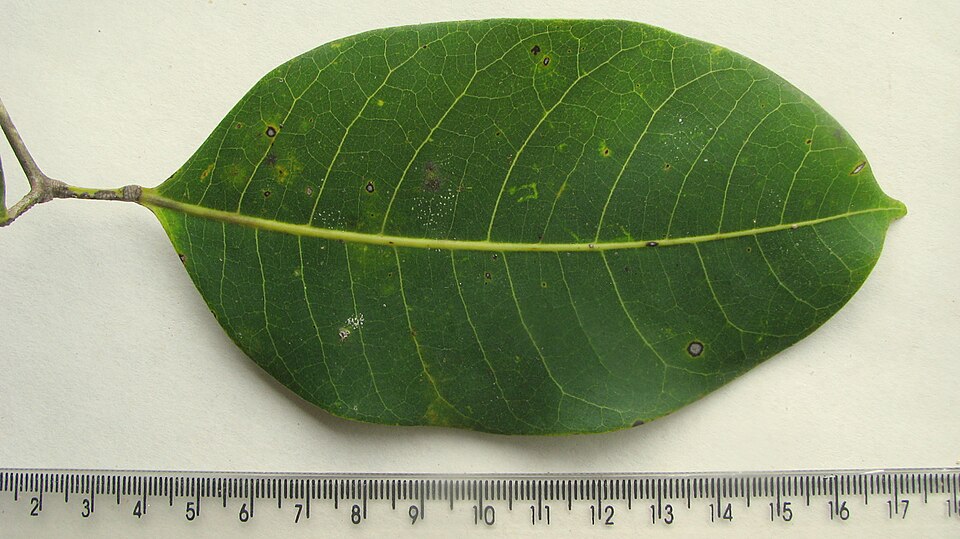
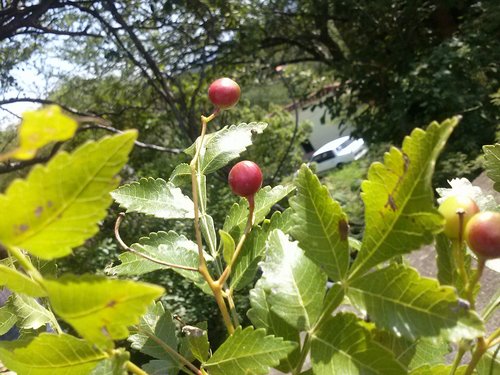
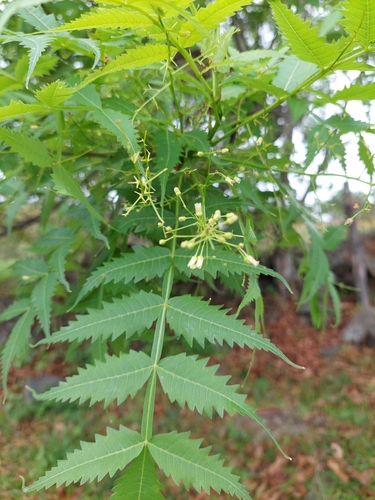
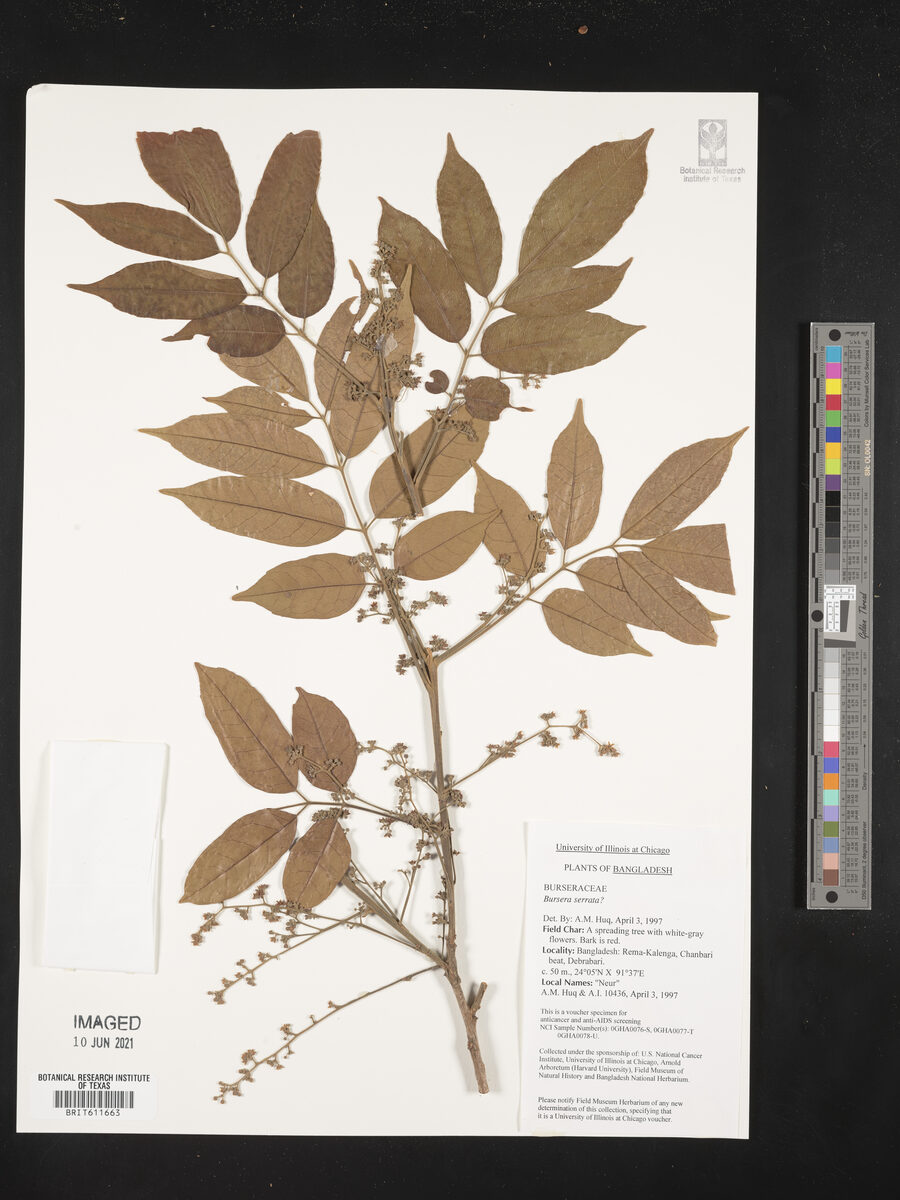
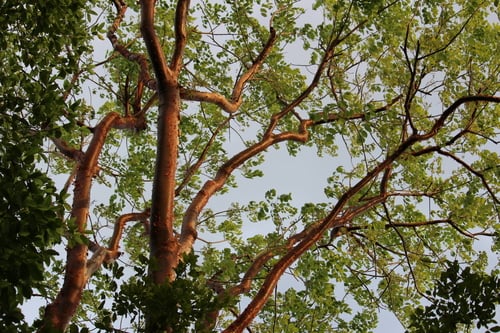
Santiria rubiginosa
Blume
Rusty-leafed santiria
iNaturalist· cc-by-nc-nd
(c) loupok, some rights reserved (CC BY-NC-ND)
gbif· cc0
President and Fellows of Harvard College
Description
A tree. It grows 35 m tall. It can have buttresses 65 cm across.
This description is brief — help expand it
Distribution
It is a tropical plant. It grows up to 900 m above sea level.
Where It Grows
Andamans, Asia, India, Indonesia, Malaysia, Papua New Guinea, PNG, Philippines, SE Asia, Thailand,
Other Uses
The wood is used in general construction. This species is one of the sources of kedondong timber, which is obtained from several species in the family Burseraceae. We do not have a specific description of the wood for this species, but the general description of kedondong wood is as follows:- The heartwood is generally a light brown; it is not sharply demarcated from the 3 - 5cm wide band of lighter-coloured sapwood. The texture is moderately fine and even; the grain is interlocked to wavy; the surface is lustrous. The wood is light in weight; moderately hard; not very durable, being susceptible to fungi, dry wood borers and termites. It seasons somewhat slowly with only a slight risk of checking and distortion; once dry it is moderately stable to stable in service. The wood has a fairly high blunting effect, stellite-tipped and tungsten carbide tools are recommended; it is moderately easy to slightly difficult to plane; finishes smooth to rough; can be easy to very difficult to bore; slightly difficult to difficult to turn; nailing and screwing properties are good; gluing is correct. The wood is suitable for internal use as a general utility timber for planking, cladding, plywood, flooring, furniture, packing cases, pallets and general carpentry work.
Synonyms
References (1)
- World Checklist of Useful Plant Species 2020. Royal Botanic Gardens, Kew