Zygophyllum fabago
Linn.
Bean caper, Syrian bean caper
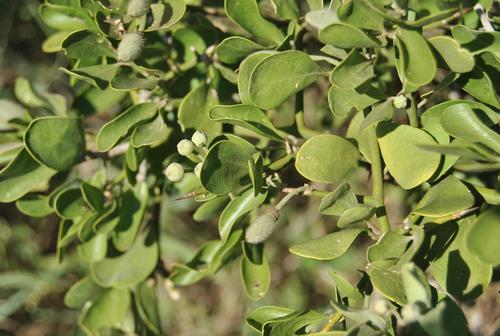
iNaturalist· cc-by-nc
(c) Юрій Бенгус, some rights reserved (CC BY-NC), uploaded by Юрій Бенгус
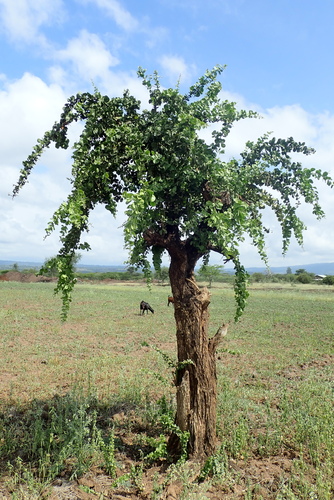
iNaturalist· cc-by-nc
(c) Curren Frasch, some rights reserved (CC BY-NC), uploaded by Curren Frasch
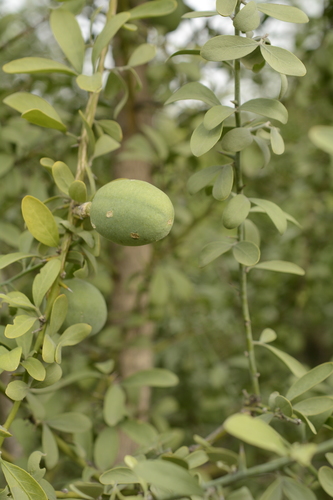
iNaturalist· cc-by-nc
(c) Andrew Lamb, some rights reserved (CC BY-NC), uploaded by Andrew Lamb
Summary
Source: WikipediaZygophyllum fabago is a species of plant known by the common name Syrian bean-caper. It is considered a noxious weed of economic importance in much of the western United States. It is native to Asia, East Europe (Russia and Ukraine), and Southeast Europe (Romania).
Description
A hairless perennial herb. It has erect stems 1 m tall. The leaves have 2 oval fleshy leaflets. The leaf stalk extends beyond the leaflets. The flowers are white with an orange centre. They are 9-11 mm across and occur singly in the axils of the upper leaves. The petals are oblong and longer than the sepals. The fruit is a capsule which hangs down. It is cylinder shaped and 20-35 mm long.
Edible Uses
The flower buds are pickled and used as a substitute for capers.
Traditional Uses
The flower buds are pickled and used as a caper substitute.
This uses section is brief — help expand it
Medicinal Uses
None known
Distribution
It is a temperate and Mediterranean climate plant. It grows on dry rocky and sandy places.
Where It Grows
Afghanistan, Africa, Asia, Central Asia, China, Europe, France, Inner Mongolia, Kazakhstan, Mediterranean, North Africa, Pakistan, Portugal, Russia, Spain, Tajikistan, Turkmenistan,
Cultivation
Requires a sunny position in a dry very well-drained soil. This species is not hardy in the colder areas of the country, it tolerates temperatures down to between -5 and -10°c. Dioecious. Male and female plants must be grown if seed is required.
Propagation
Sow seed in spring in a greenhouse. Prick seedlings into individual pots when large enough to handle and grow on in the greenhouse through their first winter. Plant out in late spring or early summer. Division can be done in spring; larger divisions can go directly into permanent positions, while smaller divisions are best potted up and grown on in light shade in a greenhouse or cold frame until establishing well, then planted out in summer or the following spring. Basal cuttings can be taken in late spring by harvesting shoots with plenty of underground stem when they are about 8–10cm above ground. Pot into individual pots and keep in light shade in a cold frame or greenhouse until rooting well, then plant out in summer.
Other Uses
None known Special Uses
Also Known As
Miandandan
References (9)
- Blamey, M and Grey-Wilson, C., 2005, Wild flowers of the Mediterranean. A & C Black London. p 115
- Facciola, S., 1998, Cornucopia 2: a Source Book of Edible Plants. Kampong Publications, p 249
- Hedrick, U.P., 1919, (Ed.), Sturtevant's edible plants of the world. p 708
- Heywood, V.H., Brummitt, R.K., Culham, A., and Seberg, O. 2007, Flowering Plant Families of the World. Royal Botanical Gardens, Kew. p 338
- Jia, X., et al, 2022, Ethnobotany of wild edible plants in multiethnic areas of the Gansu–Ningxia–Inner Mongolia junction zone. Journal of Ethnobiology and Ethnomedicine 18:53
Show all 9 references Hide references
- Joshi, A., et al, 2018, Halophytes of Thar Desert: Potential source of nutrition and feedstuff. International Journal of Bioassays 8.1 (2018) pp. 5674-5683
- Sp. pl. 1:385. 1753
- Tanaka,
- Tardio, J., et al, Ethnobotanical review of wild edible plants in Spain. Botanical J. Linnean Soc. 152 (2006), 27-71