Balanites wilsoniana
Dawe & Sprague
Torchwood
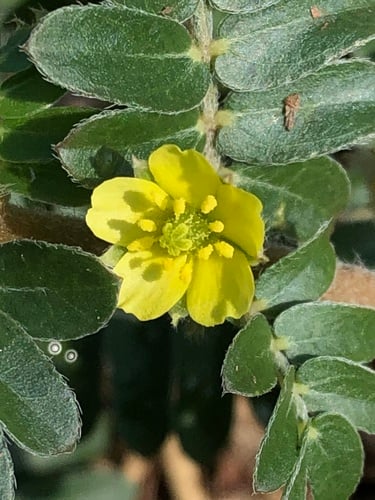
iNaturalist· cc-by-nc
(c) Carel Jongkind, some rights reserved (CC BY-NC), uploaded by Carel Jongkind
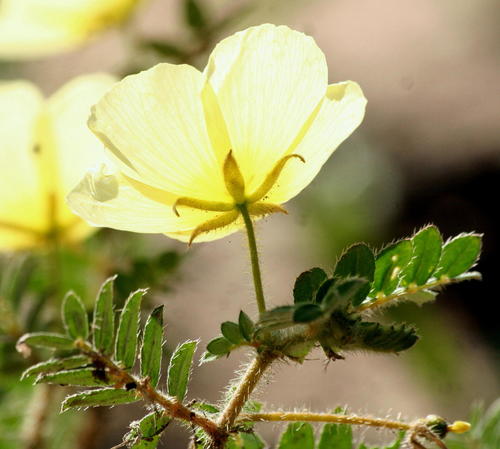
iNaturalist· cc-by-nc
(c) Carel Jongkind, some rights reserved (CC BY-NC), uploaded by Carel Jongkind
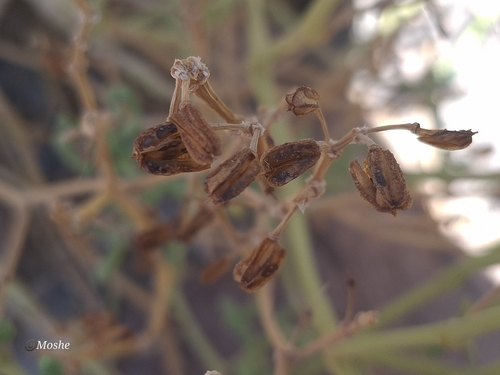
iNaturalist· cc-by-nc
(c) Carel Jongkind, some rights reserved (CC BY-NC), uploaded by Carel Jongkind
Summary
Source: WikipediaBalanites wilsoniana is a species of fruit-bearing tree from west and central Africa in the caltrop family Zygophyllaceae.
Description
A large tree. It grows to 35 m high. The trunk can be 3 m around. There are buttresses. Young trees have long branched spines. The bark is thin and yellow or greenish-grey. The non flowering branches have spines. There are no spines on the flowering branches. The leaves have 2 leaflets. The leaflets are 5-13 cm long by 3.5-7 cm wide. The leaf stalk is 10-25 mm long. The stalks of the leaflets are 5-15 mm long. The flowers are in clusters. They are produced above the leaf axils. The flowers are green with long hairs on the inner surface. The fruit are oval and 4-10 cm long by 3-5 cm wide. They are yellow when ripe. There is a single seed encased in a hard stone.
Edible Uses
A cooking oil is extracted from the seeds of Balanites wilsoniana, the seeds are pounded then boiled in water to extract the oil which is skimmed off the water once cooled. A healing, soothing ointment is made of the oil, as well as being used as a lubricant. Despite its unpleasant smell, the fruit is regarded as edible. A steroidal saponin, diosgenin, is present in the flesh of the fruit and in the stone, and is a substance of interest as a primary compound for the production of pharmaceutical steroids. The bark and roots are used to kill freshwater snails and for fishing. They are effective in killing the snails which host the parasite Schistosoma (cause of bilharzia in humans) as well as killing the larval stages of the parasite. The wood of Balanites wilsoniana is fairly heavy, straight-grained and soft, initially it is white in colour but yellows with time. It is easily worked, polishes well, and is a suitable timber for building poles, carving, the handles of tools, spoons, walking sticks, furniture such as stools and grain mortars. It is also used for fuel and for making charcoal.
Traditional Uses
The seed kernel is edible. They are boiled cut thinly and then soaked in running water to remove bitterness. The seeds are the source of a clear oil similar to olive oil. The seeds are pounded and boiled in water then allowed to cool and the oil skimmed off. The fruit are eaten occasionally.
Medicinal Uses
A healing, soothing ointment is made of the oil. Morphologically the fruit is a drupe. A steroidal saponin, diosgenin, is present in the fruit-pulp and in the kernel. This is a substance of interest as a starting point for the preparation of pharmaceutical steroids. The roots of uncertain provenance have been tested for anti-malarial activity and found to be ineffective against avian malaria.
Distribution
It is a tropical plant. It grows in lowland rainforest. It suits humid locations. In Tanzania it grows between sea level and 400 m above sea level. In Nigeria it grows up to 1200 m above sea level. It grows in areas with a rainfall between 1,000-1,800 mm. It can tolerate a range of soils but is best in rich loams.
Where It Grows
Africa, Angola, Botswana, Cameroon, Central Africa, Central African Republic, CAR, Congo, Congo DR, Côte d'Ivoire, East Africa, Ghana, Ivory Coast, Kenya, Nigeria, Senegal, Southern Africa, Tanzania, Uganda, West Africa, Zambia,
Cultivation
Plants can be grown from seeds or root suckers.
Propagation
Seed - Suckers
Other Uses
The bark contains numerous horizontal ring-like markings which are the cells containing a copious quantity of scented gum. This is commonly collected for making into a cosmetic. The gum is allowed to dry and then ground to a powder for use as a dusting-powder or the powder is mixed up with a little water to make a pomade for application to the neck or armpits. The ointment is also applied to newborn babies and to suckling babies to make them grow big. The fruit pulp is toxic to the snails which carry bilharzia. Whether the fruit-pulp has molluscicidal and arthropodicidal properties as have other members of this genus merits investigation. The seeds are oil-bearing. The oil is used as a lubricant. West African material has been reported as containing 30% oil of the kernel on dry weight, but since the seed-coat amounts to 79% of the whole seed, the net quantity of oil is relatively small. The oil is brownish, acidic, and of an unpleasant taste. The wood is soft and straight-grained, white but yellowing in time, fairly heavy. It works quite easily, polishes well, and is suitable for building poles, carvings, tool handles, spoons, walking sticks, furniture, grain mortars and stools.. The wood is used for fuel and for making charcoal.
Production
In Tanzania fruit are collected between August and October. Seed can be stored for months.
Notes
The fruit pulp kill the snails that spread Bilharzia.
Synonyms
Also Known As
Bechieta, Biwala, Budare, Ekela, Ekele, Kivuw'a, Kobo, Mbiwala, Mguguni, Mkonga, Mngalangala, Mwera, Popoma, Ubogho, Ulele, Wamba
References (20)
- Abbiw, D.K., 1990, Useful Plants of Ghana. West African uses of wild and cultivated plants. Intermediate Technology Publications and the Royal Botanic Gardens, Kew. p 49
- Burkill, H. M., 1985, The useful plants of west tropical Africa, Vol. 1. Kew.
- Dalziel, J. M., 1937, The Useful plants of west tropical Africa. Crown Agents for the Colonies London.
- Facciola, S., 1998, Cornucopia 2: a Source Book of Edible Plants. Kampong Publications, p 45
- Global Plants JSTOR
Show all 20 references Hide references
- Hart. T. B. and Hart, J. A., 1986, The Ecological Basis of Hunter-Gatherer Subsistence in African Rain Forests: The Mbuti of eastern Zaire. Human Ecology. Vol. 14, No. 1. pp 29-55
- Ichikawa, M., Determinismes Ecologiques et Culturels Des Choix Alimentaires de chasseurs-cueilleurs Mbuti du Zaire. p 759 in L'Alimentation en Foret Tropicale UNESCO
- Jardin, C., 1970, List of Foods Used In Africa, FAO Nutrition Information Document Series No 2.p 32
- Keay, R.W.J., 1989, Trees of Nigeria. Clarendon Press, Oxford. p 146
- Maundu, P. et al, 1999, Traditional Food Plants of Kenya. National Museum of Kenya. p 70
- Menninger, E.A., 1977, Edible Nuts of the World. Horticultural Books. Florida p 114
- Mutie, F. G., 2020, Conservation of Wild Food Plants and Their Potential for Combatting Food Insecurity in Kenya as Exemplified by the Drylands of Kitui County. Plants 2020, 9, 1017
- Peters, C. R., O'Brien, E. M., and Drummond, R.B., 1992, Edible Wild plants of Sub-saharan Africa. Kew. p 68
- Ruffo, C. K., Birnie, A. & Tengnas, B., 2002, Edible Wild Plants of Tanzania. RELMA p 156
- Tanno, T., 1981, Plant Utilization of the Mbuti Pygmies: With Special reference to their Material Culture and Use of Wild Vegetable Foods. Kyoto University Research. African Study Monographs 1:1-53
- Terashima, H., & Ichikawa, M., 2003, A comparative ethnobotany of the Mbuti and Efe hunter-gatherers in the Ituri Forest, Democratic Republic of Congo. African Study Monographs, 24 (1, 2): 1-168, March 2003
- Tredgold, M.H., 1986, Food Plants of Zimbabwe. Mambo Press. p 85
- Uphof,
- von Katja Rembold, 2011, Conservation status of the vascular plants in East African rain forests. Dissertation Universitat Koblenz-Landau p 157
- World Checklist of Useful Plant Species 2020. Royal Botanic Gardens, Kew