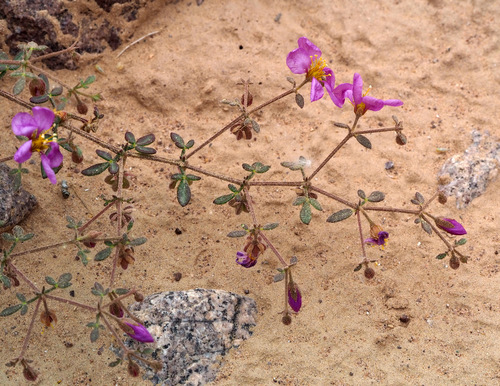
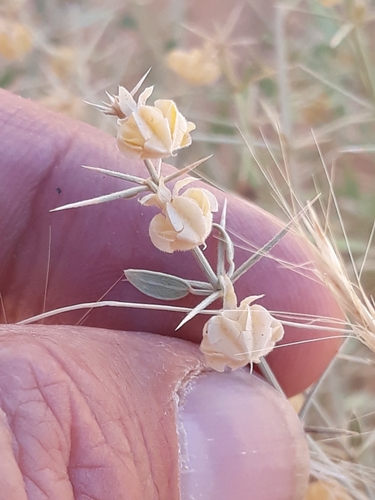
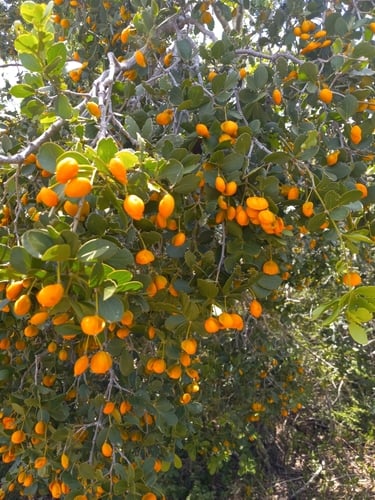
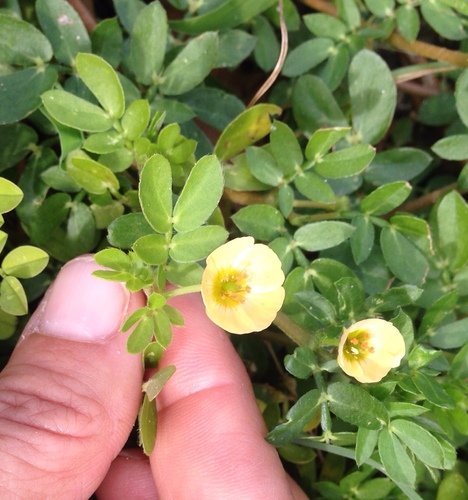
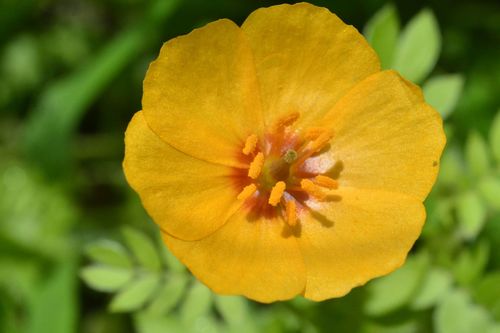
Guaiacum sanctum
L.
Holywood
iNaturalist· cc-by-nc
(c) David Russell, some rights reserved (CC BY-NC), uploaded by David Russell
iNaturalist· cc-by-nc
(c) Tatiana Velasco, some rights reserved (CC BY-NC)
Summary
Source: WikipediaGuaiacum sanctum, commonly known as holywood, lignum vitae or holywood lignum-vitae, is a species of flowering plant in the creosote bush family, Zygophyllaceae. It is native to the Neotropical realm, from Mexico through Central America, Florida in the United States, the Caribbean, and northern South America. It has been introduced to other tropical areas of the world. It is currently threatened by habitat loss in its native region, and as such, is currently rated near threatened on the IUCN Red List. Guaiacum sanctum is the national tree of the Bahamas.
Description
Evergreen tree reaching 6 m in height and spread, growing slowly. Tolerates light sandy, medium loamy, and heavy clay soils with good drainage. Grows in mildly acidic to basic soils and can thrive in very alkaline and saline conditions. Prefers semi-shade to full sun and adapts to both dry and moist soil. Tolerant of maritime exposure and UK hardy to zone 10.
Edible Uses
None known
Traditional Uses
The wood and resin are used as a spice and flavouring.
This uses section is brief — help expand it
Medicinal Uses
Although considered slightly less effective than G. officinale, the wood and resin of this species are used medicinally in much the same way. The wood in particular serves as a mild laxative and diuretic, and is given in powdered form for tonsillitis. It is especially useful for rheumatoid arthritis, chronic rheumatism, and gout, where it relieves pain and inflammation between attacks and, with continued dosing, can reduce their recurrence. It acts as an acrid stimulant, raising body heat and promoting circulation. Taken as a hot decoction with the body kept warm, it acts as a diaphoretic; taken cool, it works as a diuretic. It is also used for secondary syphilis, skin diseases, and scrofula. Resins from the wood, bark, leaves, and flowers are used in some pharmaceutical preparations, and the resin from the heartwood is specifically diuretic and mildly laxative.
Distribution
It is a tropical plant.
Where It Grows
Antilles, Belize, Bahamas, Caribbean, Central America, Colombia, Costa Rica, Cuba, Curacao, Dominican Republic, El Salvador, Guatemala, Haiti, Honduras, Mexico, Nicaragua, North America, Puerto Rico, South America, USA, Venezuela, West Indies*,
Cultivation
A plant of the lowland moist tropics, where it is found at elevations up to 100 metres. It grows best in areas where annual daytime temperatures are within the range 22 - 28°c, but can tolerate 20 - 34°c. It can be killed by temperatures of 1°c or lower. It prefers a mean annual rainfall in the range 700 - 1,500mm, but tolerates 500 - 2,000mm. Can be grown in full sun or partial shade on a wide variety of soils, including alkaline. Plants will easily tolerate wet or dry soil, wind, and salt, making it an ideal choice especially for seaside plantings. It grows well in shallow soils, particularly in limestone areas, well-drained low areas, low foothills subject to hot dry winds, and rocky limestone regions. Prefers a pH in the range 5 - 7.5, tolerating 4.5 - 8. Young trees commence flowering when about 6 - 8 years old.Flowering Time: Late Spring/Early Summer. Bloom Color: Light Blue Medium Blue. Spacing:15-20 ft. (4.7-6 m) 20-30 ft. (6-9 m). Drought-tolerant; suitable for xeriscaping.
Propagation
Seed is best sown as soon as ripe. Soaking seeds in running water at 20°C for 24 hours before sowing improves germination. Sow 1 cm deep in containers of sandy compost — germination begins 6–8 days after sowing and is complete by 16–20 days. Fresh seeds achieve 40–60% germination in nurseries. Transplant seedlings into nursery bags once they reach 6 cm in height. They are ready for outplanting one year after sowing, at 30–40 cm tall. Seeds can be stored for up to one month at 5–8°C, but lose viability within a month if kept at ambient temperature and humidity. Fruits should be collected from the ground early in the morning to avoid predation by rodents. Place fruits on the floor and dry for 7 days in the shade, then remove the pericarp with running water to extract seeds. Dry the seeds in the shade and store in airtight containers. Seed count averages 20,000 per kg.
Other Uses
A brown to reddish-brown resin is obtained from the heartwood. It contains guaiaconic acid, guaiaretic acid, vanillin, and guaiac yellow, and is used for making small objects requiring strength, hardness, and weight. It is extracted by boring a log longitudinally and heating it at an angle so the melted resin runs out, or by chipping the wood and boiling it in water so the resin floats to the surface. The leaves can be used as a soap substitute. Lignum vitae is one of the heaviest of all woods — it sinks rather than floats. The heartwood ranges from dark greenish-brown to almost black, darkening further with air and light exposure, and is sharply distinct from the narrow, pale yellow to cream sapwood. The wood is extremely hard and heavy, very fine and uniform in texture, with a heavily interlocked grain, and is oily due to a resin content constituting about 25% of dry weight. It turns and shapes well, takes a high polish, and is very resistant to decay fungi, termites, and marine borers. Because of its oily resins, special surface preparation is needed for satisfactory gluing, though no preservation treatment is required given its high resin content and density. It is used in bearings, bushing blocks, pulley sheaves, mallet heads, and turnery, and was once widely used for bowling balls. Its most noted application is in propeller shaft bearings and bushing blocks in ships, valued for its self-lubrication and hardness.
Synonyms
Also Known As
Bulabari, Lignum vitae
References (4)
- Grandtner, M. M., 2008, World Dictionary of Trees. Wood and Forest Science Department. Laval University, Quebec, Qc Canada. (Internet database http://www.wdt.qc.ca)
- Kermath, B. M., et al, 2014, Food Plants in the Americas: A survey of the domesticated, cultivated and wild plants used for Human food in North, Central and South America and the Caribbean. On line draft. p 399
- Plants of Haiti Smithsonian Institute http://botany.si.edu/antilles/West Indies
- Seidemann J., 2005, World Spice Plants. Economic Usage, Botany, Taxonomy. Springer. p 170