Veratrum viride
Aiton
Indian poke, White Hellebore
iNaturalist· cc-by
(c) 101595408250610106310, some rights reserved (CC BY), uploaded by 101595408250610106310
iNaturalist· cc-by
(c) Alison Northup, some rights reserved (CC BY), uploaded by Alison Northup
iNaturalist· cc-by-nc
(c) Tiffa Theden, some rights reserved (CC BY-NC), uploaded by Tiffa Theden
Summary
Source: WikipediaVeratrum viride, known as Indian poke, corn-lily, Indian hellebore, false hellebore, green false hellebore, or giant false-helleborine, is a species of Veratrum native to eastern and western (but not central) North America. It is extremely toxic, and is considered a pest plant by farmers with livestock. The species has acquired a large number of other common names within its native range, including American false hellebore, American white hellebore, bear corn, big hellebore, corn lily, devil's bite, duck retten, itchweed, poor Annie, blue hellebore and tickleweed.
Description
A perennial growing to 2 m tall, hardy to UK zone 3. Flowers July-August with hermaphroditic blooms pollinated by bees, flies, and lepidopterans. Establishes in light sandy to heavy clay soils with mildly acid to basic pH, tolerating semi-shade to full sun and preferring moist to wet conditions.
Edible Uses
One report mentions that the leaves have been used in soups. The plant is highly toxic, so this use is probably best avoided.
Traditional Uses
CAUTION: Probably very poisonous. The leaves are used to make soup.
This uses section is brief — help expand it
Medicinal Uses
Indian poke is a highly toxic plant that was widely used medicinally by several native North American Indian tribes, primarily externally for wounds and pain. It is rarely used in modern herbalism, though it is of interest for its steroidal and other alkaloids and chelidonic acid, some of which lower blood pressure and dilate peripheral vessels — these have been used in conventional medicine to treat high blood pressure and rapid heart rate. Any use of this plant should be approached with great caution and preferably only under the supervision of a qualified practitioner. Even external application to unbroken skin has been known to cause side effects. The root is analgesic, diaphoretic, emetic, expectorant, febrifuge, narcotic, and sedative. It has been used in acute cases of pneumonia, peritonitis, and threatened apoplexy. A decoction of the root has treated chronic coughs and constipation. The root may be chewed or used as a decoction for stomach pain. Roots are harvested in autumn and can be dried for later use. The root has been made into a skin wash and compresses for bruises, sprains, and fractures. The powdered root has been applied to wounds as a healing agent and used as a delousing agent. Scraped stem powder has been snuffed to induce sneezing. An infusion of the leaves serves as a wash for aches and pains. The plant is also used in homeopathic preparations to slow the heart rate.
Known Hazards
The plant is highly toxic. Even external application to unbroken skin has been known to cause side effects.
Distribution
It is a temperate plant.
Where It Grows
North America, USA,
Cultivation
Requires a deep fertile moisture retentive humus-rich soil. Succeeds in full sun if the soil does not dry out but prefers a position in semi-shade. Dislikes dry soils, preferring to grow in a bog garden. Grows best in a cool woodland garden or a north facing border. Members of this genus are rarely if ever troubled by browsing deer. Plants are long-lived and can be left in the same position for years without attention. In some N. American Indian tribes, following the death of a chief, all the young aspirants to be chief were given a drink of this toxic plant and the person least affected was deemed to be the strongest and therefore made chief.
Propagation
Unless stored in damp sand at around 4°C, seed has a short viability. Where possible, sow fresh seed in a lightly shaded greenhouse position as soon as it is ripe. Stored seed requires stratification and can be very slow to germinate — even fresh seed germinates erratically, typically within 3–12 months at 15°C but sometimes longer. The plant produces only one seed leaf in its first year, which then forms an overwintering bulb, and can take up to 10 years to reach maturity. Sow seed thinly to avoid thinning or transplanting, and leave seedlings undisturbed in their pots for the first two years, applying liquid feed at intervals through the growing season. At the end of the second year, pot dormant plants individually and grow on in light shade in a greenhouse for a further one to two years before planting out into permanent positions in late spring or early summer. Division can be done in March/April or in October; establish divisions in pots in a shaded frame before planting out. Division is best done in autumn as the plants come into growth very early in spring. Root cuttings 6mm long with a bud can be rooted in sandy soil in a cold frame.
Other Uses
The dried, powdered root is used as an insecticide and parasiticide, and is also effective against caterpillars and mammals — great caution is advised in its use. Grated roots have been added to laundry water to clean clothing. A fibre obtained from the stem is used for weaving wallets and similar items.
Notes
Caution: False hellebore (Veratrum eschscholtzii) is very poisonous. Porsild, A.E., 1974, Rocky Mountain Wild Flowers. Natural History Series No. 2 National Museums of Canada. p 106
References (3)
- Hedrick, U.P., 1919, (Ed.), Sturtevant's edible plants of the world. p 672
- Hort. kew. 3:422. 1789
- Moerman, D. F., 2010, Native American Ethnobotany. Timber Press. p 590
More from Melanthiaceae
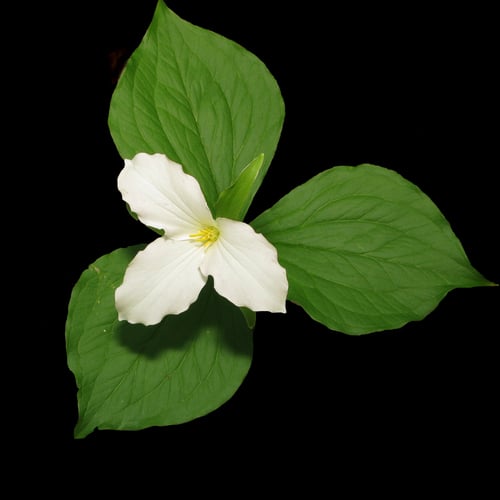
Trillium grandiflorum
White trilium, Wake robin, White wake robin, Grand trillium, Showy trillium, Large-flowered trillium
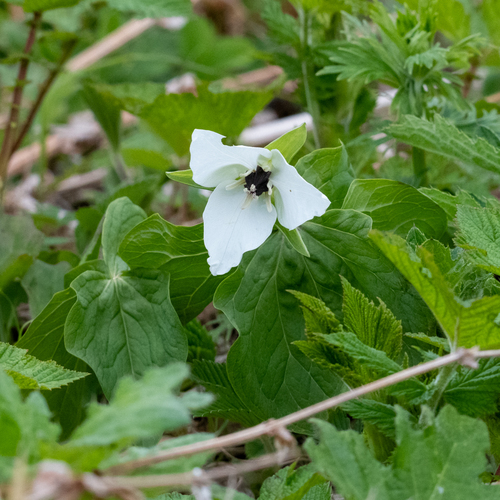
Trillium kamtschaticum
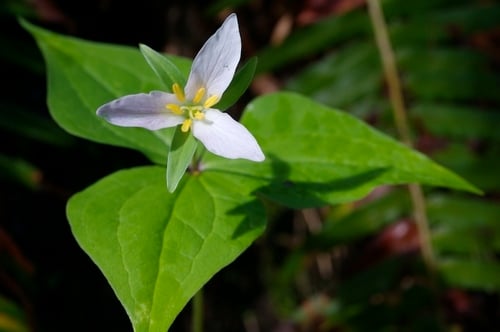
Trillium ovatum
Wakerobin, Western trillium, Pacific trillium
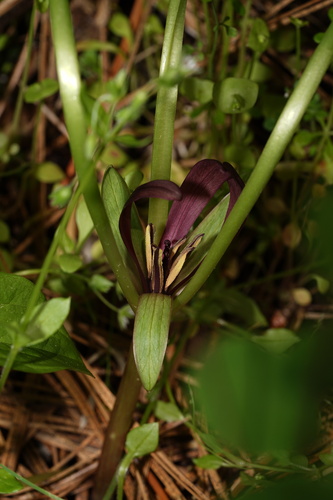
Trillium petiolatum
Idaho trillium, Purple trillium, Round-leaved trillium
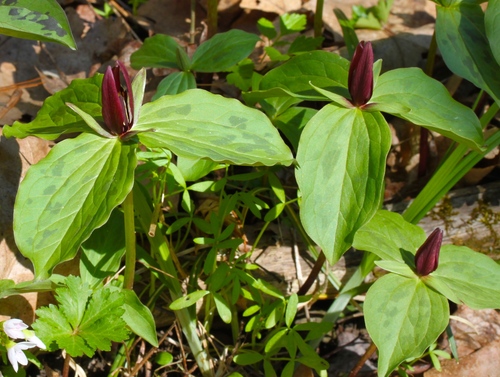
Trillium sessile
Toadshade, Red trillium, Wake robin, Sessile trillium
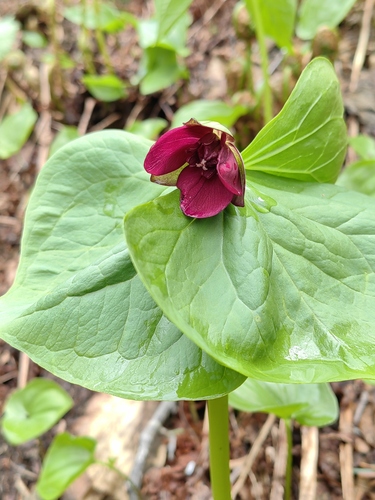
Trillium smallii
Enrei-So