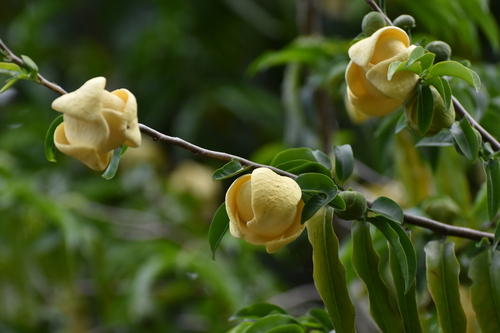
Xylopia discreta
(Linn.f.) Sprague & Hutch.
Wikipedia· cc-by-sa
Wikimedia Commons - Xylopia_discreta.jpg
Summary
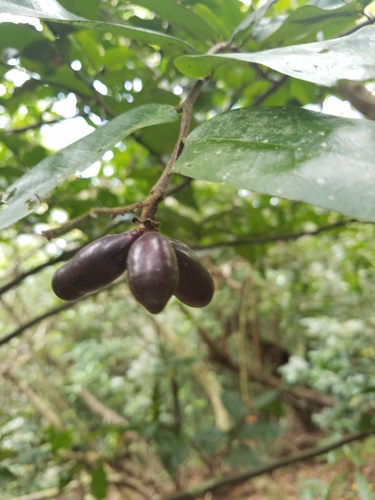
Source: WikipediaXylopia discreta is a species of plant in the Annonaceae family. It is native to Brazil, Colombia, French Guiana, Guyana, Suriname, and Venezuela. Carl Linnaeus the Younger, the botanist who first formally described the species using the basionym Unona discreta, named it after its purple, aromatic fruit which set it apart (discretus in Latin) from other members of the family.
Description
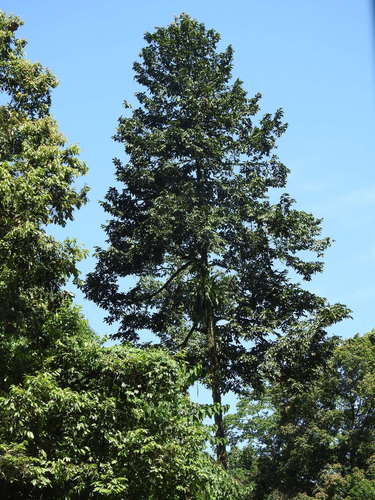
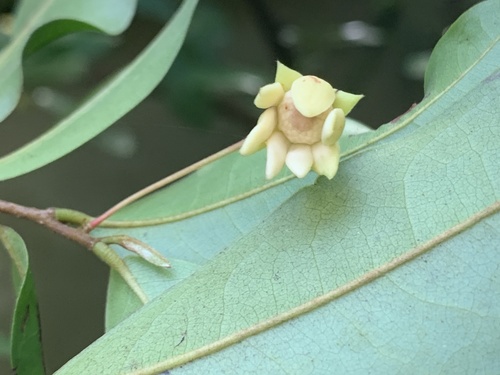
An evergreen tree. It grows 30 m tall. Young shoots have a coating. The leaves are sword shaped and 2-6 cm long. They taper to the tip and are wedge shaped at the base. There are 1-3 flowers in the axils of leaves. The fruit are 12-14 mm long. The seed is 5-8 mm.
Edible Uses
Bioactive compounds extracted from its leaves and seeds have been reported to have antileishmanial activity in laboratory tests.
Medicinal Uses
An infusion of the dry powdered fruit is employed as an antispasmodic in the treatment of dysentery.
Distribution
A tropical plant. It grows in moist coastal regions along rivers.
Where It Grows
Amazon, Brazil, Central America, Colombia, Guiana, Guianas, Guyana, Panama, South America, Suriname, Venezuela,
Cultivation
A plant of mainly low elevations in the moist tropics.
Notes
Medicine.
Synonyms
Also Known As
Ponotourayek
References (4)
- Hedrick, U.P., 1919, (Ed.), Sturtevant's edible plants of the world. p 664 (As Unona discrete)
- Kermath, B. M., et al, 2014, Food Plants in the Americas: A survey of the domesticated, cultivated and wild plants used for Human food in North, Central and South America and the Caribbean. On line draft. p 930
- Martin, F. W., et al, 1987, Perennial Edible Fruits of the Tropics. USDA Handbook 642 p 81 (As Unona discreta)
- Tropical Plants Database, Ken Fern. tropical.theferns.info