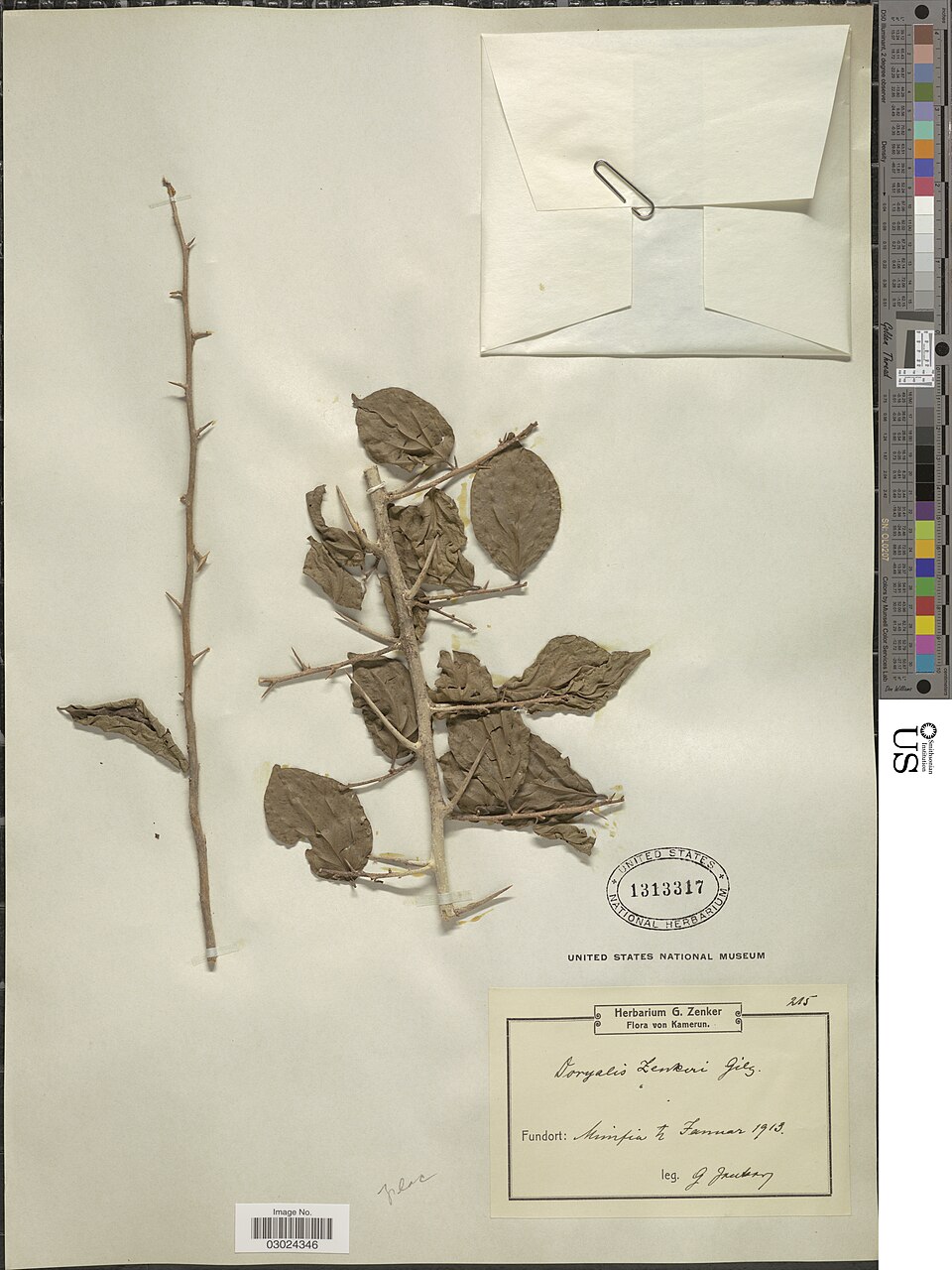
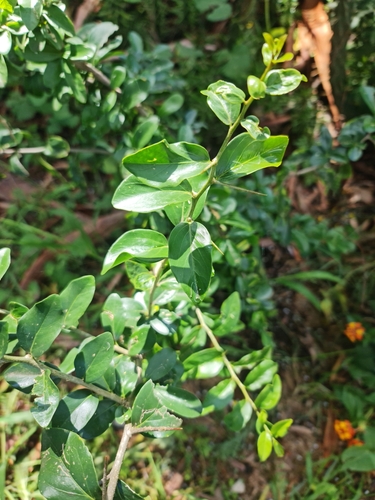
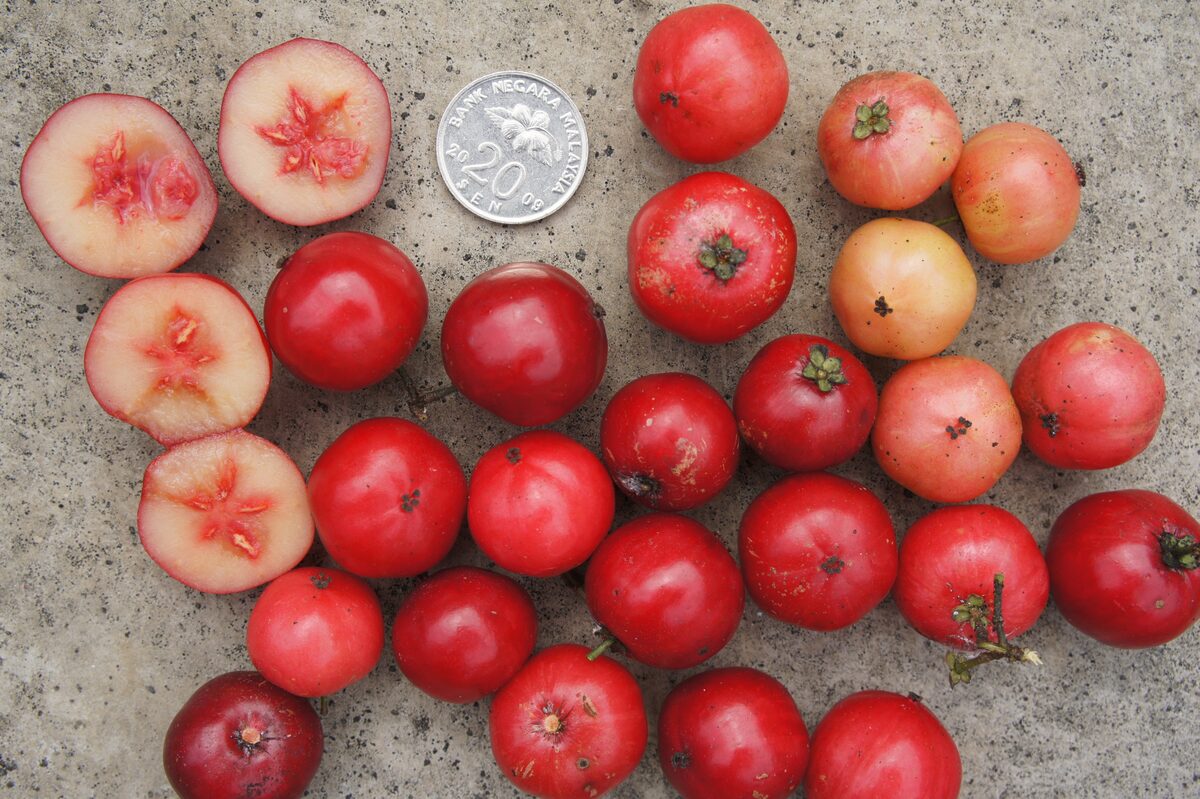
Populus tremula
Linn.
Aspen, European aspen, Quaking aspen
wikimedia· cc-by-sa
Orcaborealis (via Wikimedia Commons)
wikimedia· cc-by
Foto: Jonn Leffmann (via Wikimedia Commons)
wikimedia· cc-by-sa
MPF at English Wikipedia (via Wikimedia Commons)
iNaturalist· cc-by-nc-sa
(c) José María Escolano, some rights reserved (CC BY-NC-SA)
iNaturalist· cc-by-nc
(c) mallaliev, some rights reserved (CC BY-NC), uploaded by mallaliev
iNaturalist· cc-by-sa
(c) Andreas Rockstein, some rights reserved (CC BY-SA)
Summary
Source: WikipediaPopulus tremula (commonly called aspen, common aspen, Eurasian aspen, European aspen, or quaking aspen) is a species of poplar native to cool temperate regions of the Old World.
Description
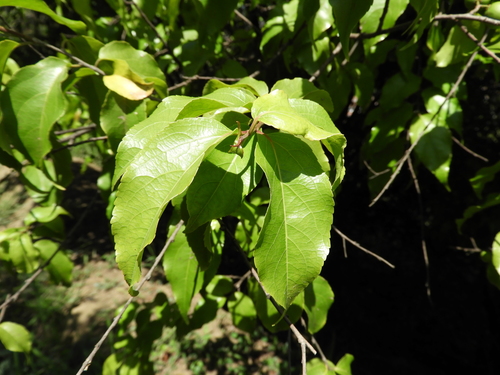
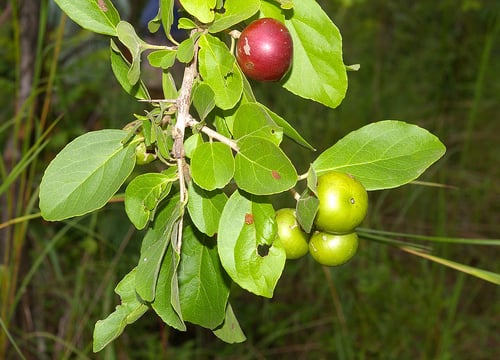
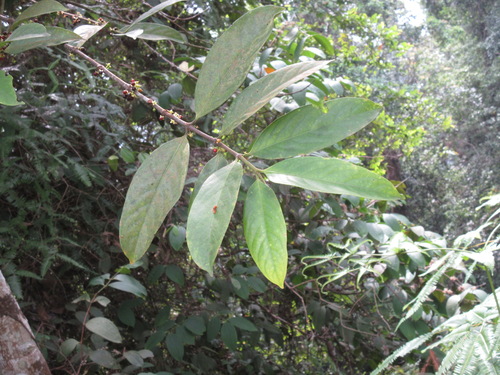
A small tree. It grows 15 m high and spreads 10 m wide. The bark is dark grey and cracked. The leaves are grey-green. They tremble in the breeze. They are finely hairy and whiter underneath. The leaves turn yellow and orange in autumn.
Edible Uses
The inner bark can be dried, ground into a powder, and added to flour for making bread. It is a famine food, used only when all else fails.
Traditional Uses
The wood and sawdust are used to smoke meat and also used as an ingredient in bread and for vinegar. The dried leaves are put under bread during baking.
Medicinal Uses
The bark and leaves are mildly diuretic, expectorant, and stimulant. The plant is seldom used medicinally but is sometimes included in proprietary medicines for chronic prostate and bladder disorders. Although no specific records exist for this species, the bark of most members of the genus contains salicin, a glycoside that probably decomposes into salicylic acid (aspirin) in the body, making it anodyne, anti-inflammatory, and febrifuge. It is used especially for rheumatism and fevers, and to relieve the pain of menstrual cramps. The plant is also used in Bach flower remedies, prescribed for vague fears of unknown origin, anxiety, and apprehension.
Distribution
It is a temperate plant. It suits hardiness zones 2-9.
Where It Grows
Africa, Andorra, Australia, Belarus, Belgium, Estonia, Europe, Finland, Lithuania, Luxembourg, Mongolia, North Africa, Russia, Scandinavia, Siberia, Sweden,
Cultivation
A very easily grown plant, it does well in a heavy cold damp soil, preferring a neutral to acid soil, and avoiding calcareous soils. The sub-species P. tremula davidiana. (Dode.)Schneid. is tolerant of extremely alkaline soils. The species generally prefers a deep rich well-drained circumneutral soil, growing best in the south and east of Britain. Growth is much less on wet soils, on poor acid soils and on thin dry soils. This species grows well on poor soils, probably because of its intolerance of competition. Plants are very tolerant of exposure, doing well in cold exposed sites so long as sufficient moisture is present. Plants dislike shade, and are intolerant of root or branch competition. A fast growing tree but it is short-lived. Trees produce suckers freely and can form dense thickets. The aspen is a very good wildlife plant, it has over 90 associated insect species and is a food plant for the green hairstreak butterfly. Poplars have very extensive and aggressive root systems that can invade and damage drainage systems. Especially when grown on clay soils, they should not be planted within 12 metres of buildings since the root system can damage the building's foundations by drying out the soil. Can be planted to improve heavy clay soils in neglected woodlands. Dioecious. Male and female plants must be grown if seed is required.
Propagation
Seed must be sown as soon as it is ripe in spring, as poplar seed has an extremely short period of viability and must be sown within a few days of ripening. Surface sow or just lightly cover the seed in trays in a cold frame. Prick out seedlings into individual pots when large enough to handle and grow on in the cold frame. If sufficient growth is made, plants can go out in late summer; otherwise keep in the cold frame until the following late spring. Most poplar species hybridize freely, so seed may not come true unless collected from the wild where no other poplars grow. Cuttings of mature wood taken in November or December in a sheltered outdoor bed — this species is rather difficult from cuttings. Suckers can be taken in early spring, and root cuttings taken in winter.
Other Uses
This fast-growing, wind-resistant tree can be planted to provide a shelterbelt. Trees can also be planted to improve heavy clay soils in neglected woodlands. The wood is very soft, elastic, easily split, and rather woolly in texture, without smell or taste, of low flammability, not durable, and very resistant to abrasion. It makes a high quality paper and produces a very good charcoal.
Also Known As
Drebule, Haab, Osina, Pedai, Swedish aspen, Topolis
References (9)
- Cundall, P., (ed.), 2004, Gardening Australia: flora: the gardener's bible. ABC Books. p 1073
- Hedrick, U.P., 1919, (Ed.), Sturtevant's edible plants of the world. p 512
- https://en.wikipedia.org/wiki/List of wild edible plants in Mongolian cuisine
- Kalle, R. & Soukand, R., 2012, Historical ethnobotanical review of wild edible plants of Estonia (1770s-1960s) Acta Societatis Botanicorum Poloniae 81(4):271-281
- Kolosova, V., et al, 2020, Foraging in Boreal Forest: Wild Food Plants of the Republic of Karelia, NW Russia. Foods 2020, 9, 1015; p 20
Show all 9 references Hide references
- Prakofjewa, J., et al, 2023, Boundaries Are Blurred: Wild Food Plant Knowledge Circulation across the Polish-Lithuanian-Belarusian Borderland. Biology 2023, 12, 571.
- Soukand, R., et al, 2017, Multi-functionality of the few: current and past uses of wild plants for food and healing in Liubań region, Belarus. Journal of Ethnobiology and Ethnomedicine (2017) 13:10
- Sp. pl. 2:1034. 1753
- Svanberg, I. et al, 2012, Uses of tree saps in northern and eastern parts of Europe. Acta Societatis Botanicorum Poloniae 81 (4): 343-357