Polyalthia cerasoides
(Roxb.) Benth. & Hook.f.
iNaturalist· cc-by-nc
(c) Elavarasan M, some rights reserved (CC BY-NC)
iNaturalist· cc-by-nc
(c) Elavarasan M, some rights reserved (CC BY-NC)
iNaturalist· cc-by-nc
(c) Elavarasan M, some rights reserved (CC BY-NC)
Description
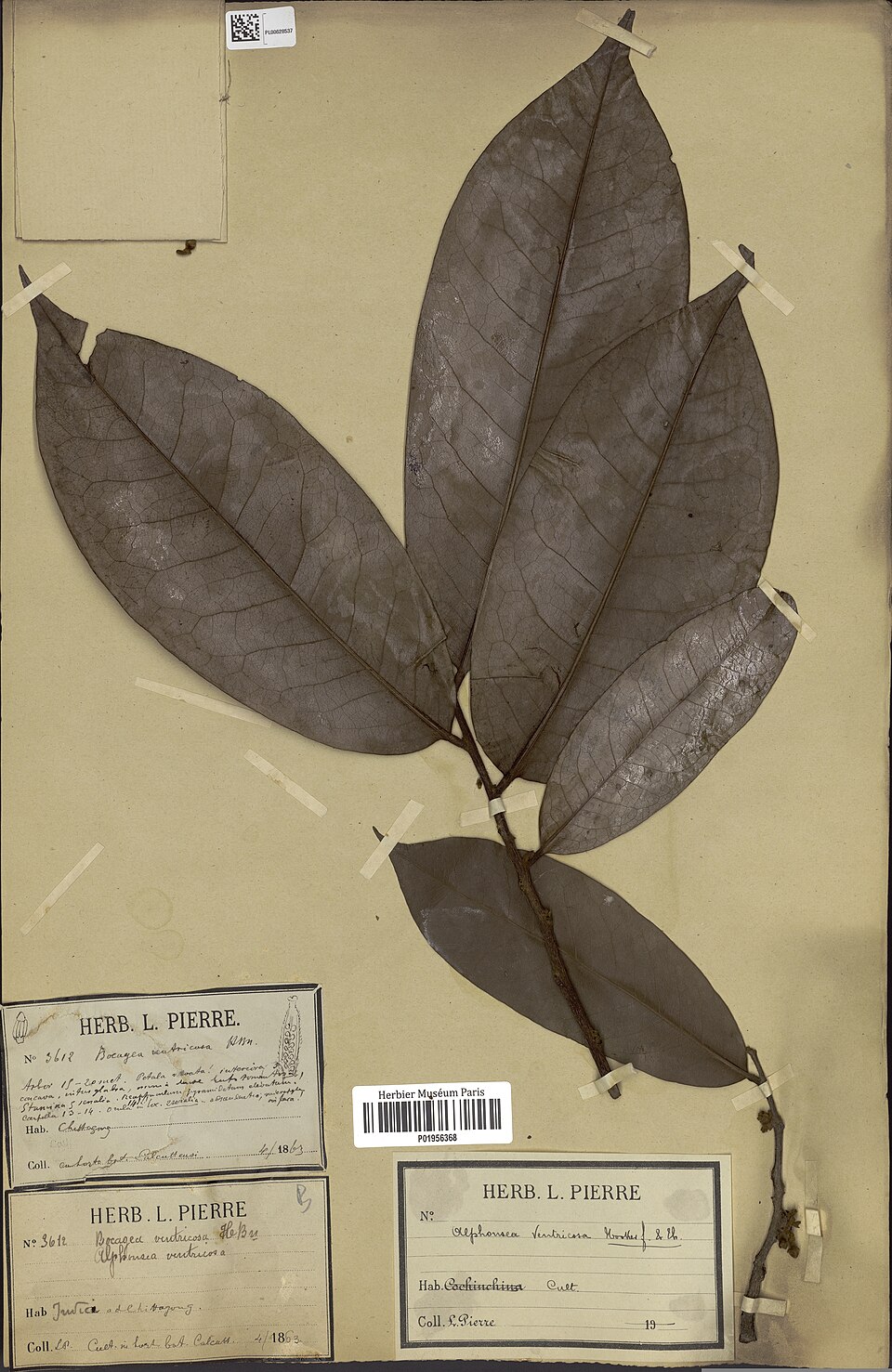
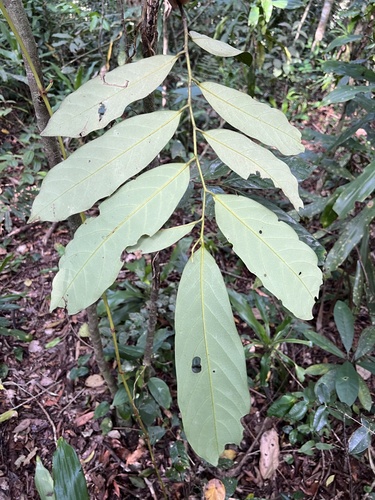
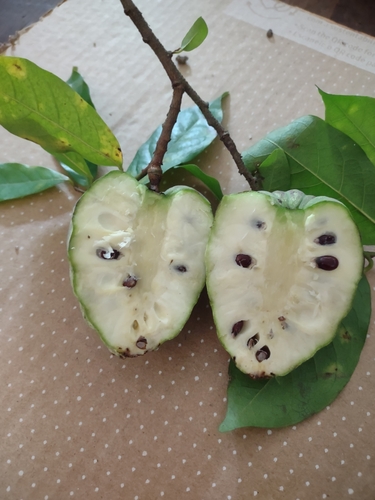
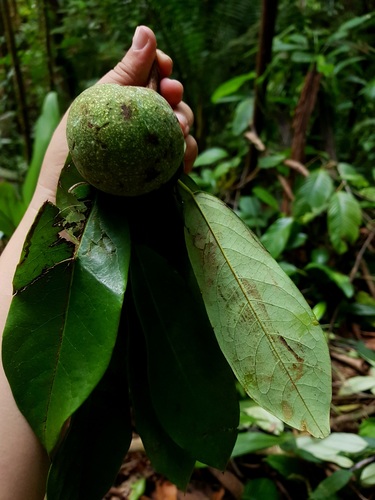
A small tree. It grows 8 m tall. The leaves are oblong and narrow. They taper to the tip. The flowers are greenish-white. They have a scent. The fruit occur in clusters. They are red and like cherries. They are 6 mm across. They have one seed.
Edible Uses
The fruit is eaten when fully ripe.
Traditional Uses
The fruit are eaten when fully ripe.
This uses section is brief — help expand it
Distribution
A tropical plant. It grows in tropical rainforest and on the edges of secondary forest. It grows up to 700 m above sea level. In Yunnan.
Where It Grows
Asia, Bangladesh, Cambodia, China, India, Indochina, Laos, Myanmar, SE Asia, Thailand, Vietnam,
Synonyms
Also Known As
Cay noc, Chan dong, Chilka dudduga, Duoi trau, Ka dan nga paa, Knaydael, Kray, Kudumi, Marmi, Nedunarai, Nhoc, Nhoc la be, Panjon, Quandau trai-tron, Ran, Senthala maram, Snaydel
References (13)
- Arinathan, V., et al, 2007, Wild edibles used by Palliyars of the western Ghats, Tamil Nadu. Indian Journal of Traditional Knowledge. 6(1) pp 163-168
- Dey, A. & Mukhererjee, A., 2015, Living and Survival Amidst Hunger: Wild Edible Botanicals as a Prime Forest Productivity in the Rural Purulia District, West Bengal, India from Colonial to Present. Research Journal of Forestry 9(3): 71-86
- Fern, K., 2012, Tropical Species Database http://theferns.info/tropical/
- Gardner, S., et al, 2000, A Field Guide to Forest Trees of Northern Thailand, Kobfai Publishing Project. p 42
- Hedrick, U.P., 1919, (Ed.), Sturtevant's edible plants of the world. p 510
Show all 13 references Hide references
- Hook. F., Fl. Brit. Ind. 1:63. 1872
- Kachenchart, B., et al, 2008, Phenology of Edible Plants at Sakaerat Forest. In Proceedings of the FORTROP II: Tropical Forestry Change in a Changing World. Bangkok, Thailand.
- Kannan, M., et al, 2015, Ethnobotanical survey on wild edible plants of Kalrayan Hills, Salem District, Tamil Nadu, India. Global J. Res. Med Plants & Indigen. med. 4(12): 236-246
- Pasha, M. K. & Uddin, S. B., 2019, Minor Edible Fruits of Bangladesh. Bangladesh J. Plant Taxon. 26(2): 299–313
- Reddy, K. N. et al, 2007, Traditional knowledge on wild food plants in Andhra Pradesh. Indian Journal of Traditional Knowledge. Vol. 6(1): 223-229
- Swaminathan, M.S., and Kochnar, S.L., 2007, An Atlas of Major Flowering Trees in India. Macmillan. p 24
- Turreira Garcia, N., et al, 2017, Ethnobotanical knowledgeof the Kuy and Khmer people in Prey Lang, Cambodia. Cambodian Journal of Natural History 2017 (1): 76-101
- Van Sam, H. et al, 2004, Trees of Laos and Vietnam: A Field Guide to 100 Economically or Ecologically Important Species. Blumea 29 (2004) 201-349