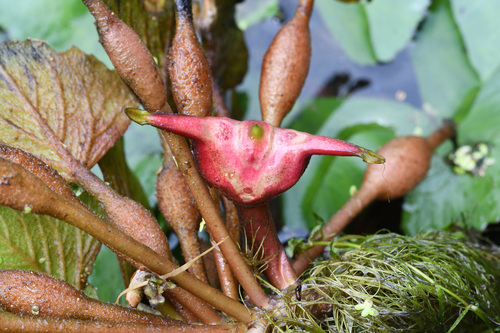
Punica protopunica
Balf. f.
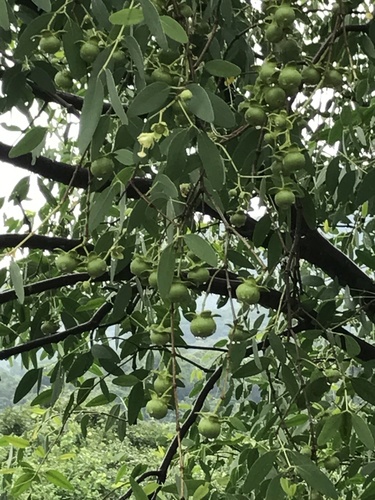
iNaturalist· cc-by-nc
(c) Morten Ross, some rights reserved (CC BY-NC), uploaded by Morten Ross
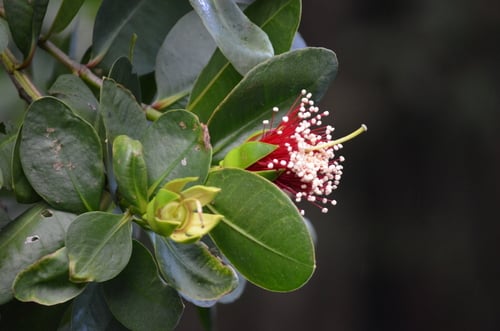
iNaturalist· cc-by-nc
(c) Nick Helme, some rights reserved (CC BY-NC)
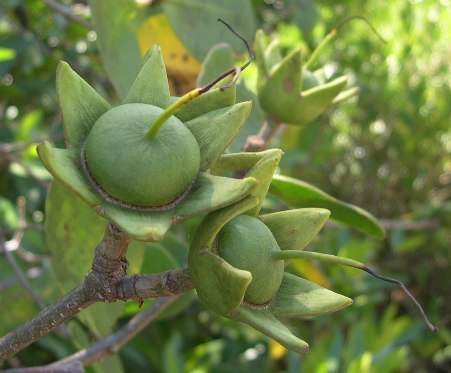
iNaturalist· cc-by-nc
(c) Nick Helme, some rights reserved (CC BY-NC)
Summary
Source: WikipediaPunica protopunica, commonly known as the pomegranate tree or Socotran pomegranate, is a species of flowering plant in the family Lythraceae. It is endemic to the island of Socotra (Yemen). Its natural habitat is subtropical or tropical dry forests. The tree, often thorny, attains a height of 2.5 to 4.5 m (8 ft 2 in to 14 ft 9 in). It has reddish-brown bark when young, fading to grey as it ages and becomes less fruitful. Leaves are dark green, glossy, and opposite, growing up to 3 cm (1.2 in) long. The fruit are globose and 2–3 cm in diameter. Flowers and fruits occur from December and January through to the summer. P. protopunica is considered to be the precursor to the pomegranate (P. granatum) and is the only other species in the genus Punica. It differs from the pomegranate in having pink (not red), trumpet-shaped flowers and smaller, less sweet fruit. The fruit when ripe are yellowish-green or brownish-red in color.
Description
A small tree.
This description is brief — help expand it
Edible Uses
The fruit are not an important food on Socotra. The pithy tissue lying under the skin and around the seeds of larger, ripe fruits is the only part eaten. The seeds are said to be bitter and caustic, and to cause sores on the tongue. The skin of the unripe fruit is extremely sour. In the well-vegetated areas of the island, the foliage is little grazed, except in a prolonged dry season, when the fallen dead leaves are eaten. In drier areas, goats eat the leaves and especially the new shoots of smaller and more prostrate shrubs, while sheep eat dry plant litter. It is not palatable to cattle. Goats are fond of the immature fruit and small livestock also like the flowers, fresh or dried.
Traditional Uses
The thin pithy layer around the seeds are larger ripe fruit is eaten.
This uses section is brief — help expand it
Medicinal Uses
The skins of the fruit are crushed and cooked, and the paste is applied to treat sores and wounds. Alternatively, they are dried and crushed to a powder, which is applied topically to treat skin sores in the same way. Occasionally, people eat the seeds as a purge to relieve stomachache. More recently, people have started using the skins to treat stomach complaints and expel worms, a treatment apparently learned from the mainland.
Distribution
It is a Mediterranean plant.
Where It Grows
Middle East, Socotra, Yemen,
Other Information
A minor food plant.
References (5)
- Morley, B.D., & Toelken, H.R., (Eds), 1983, Flowering Plants in Australia. Rigby. p 170
- Morley, B. & Everard, B., 1970, Wild Flowers of the World. Ebury press. Plate 28
- Proc. Roy. Soc. Edinburgh 11:512. 1882
- Wikipedia
- Zeven, A. C. & de West, J. M. J., 1982, Dictionary of cultivated plants and their regions of diversity. Wageningen. p 100