Juniperus bermudiana
Linn.
Bermuda cedar, Bermuda juniper
iNaturalist· cc-by-nc-sa
(c) Tony Rodd, some rights reserved (CC BY-NC-SA)
iNaturalist· cc-by-nc
(c) James Bailey, some rights reserved (CC BY-NC), uploaded by James Bailey
iNaturalist· cc-by-nc
(c) James Bailey, some rights reserved (CC BY-NC), uploaded by James Bailey
Summary
Source: WikipediaJuniperus bermudiana is a species of juniper endemic to Bermuda. This species is most commonly known as Bermuda cedar, but is also referred to as Bermuda juniper (Bermudians refer to it simply as cedar). Historically, this tree formed woodland that covered much of Bermuda. Settlers cleared part of the forest and the tree was used for many purposes including building construction and was especially prized for shipbuilding. Scale insects introduced during the Second World War construction of United States airbases in Bermuda devastated the forests, killing over 99% of the species (an event known in Bermuda as 'the Blight' or 'the Cedar Blight'). Since then, the salt tolerant Casuarina equisetifolia has been planted as a replacement species, and a small number of Bermuda cedars have been found to be resistant to the scale insects. Populations of certain endemic birds which had co-evolved with the tree have plummeted as a result of its demise, while endemic cigalas (or cicada) and solitary bees were driven to extinction.
Description
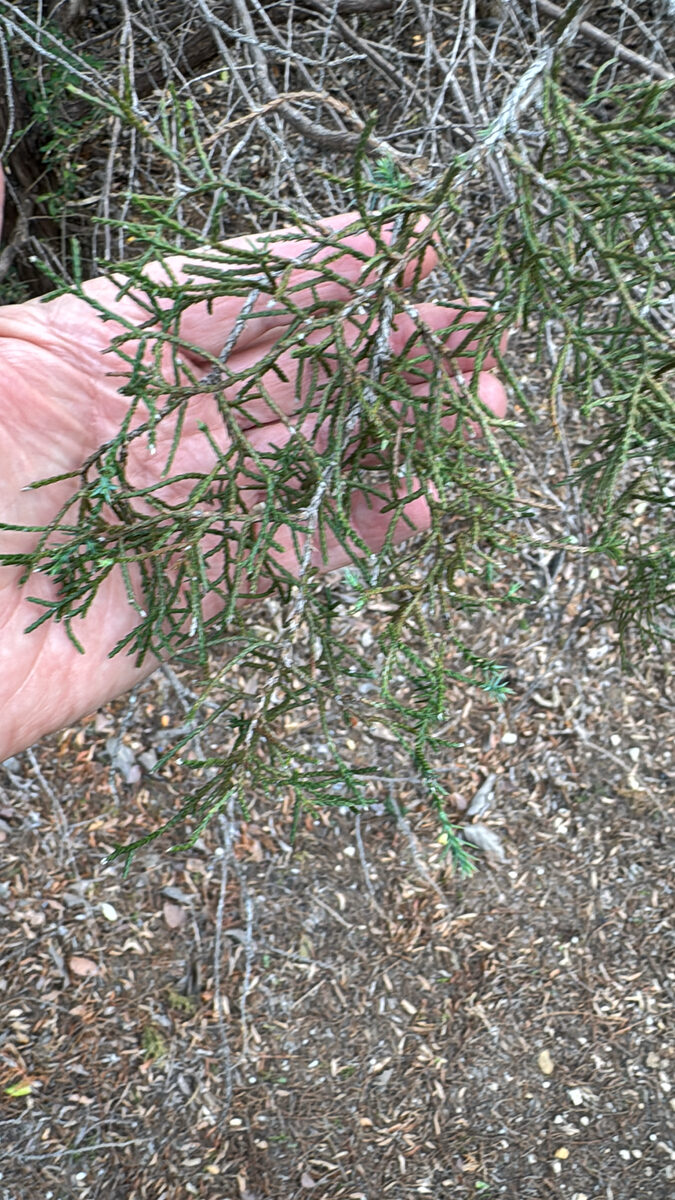
A tree. It grows 15 m high. The trunk is sturdy. The bark is dark red. The branches are divided and the small branches are 4 sided. The leaves are scale like and overlapping. They are in ranks of 4. The seed cones are an irregular rounded shape or pear shape. They are 4-6 mm long by 5-8 mm wide.
Edible Uses
The berries (seed cones) have traditionally been eaten.
Traditional Uses
The berries have been eaten.
This uses section is brief — help expand it
Medicinal Uses
A decoction of the leafy branches is taken to treat cough. The leafy branches are used in steam baths for inhalation against respiratory diseases. An essential oil obtained from the plant is powerfully diuretic. There are two essential oils, one from the leaves and one from the wood - this report could refer to both or to either. An ethanol extract of the twigs and leaves of has shown antitumour activity due to the presence of the lignan deoxypodophyllotoxin.
Distribution
It is a warm temperate and subtropical plant. It can tolerate alkaline and wet soils. It suits hardiness zones 8-10.
Where It Grows
Atlantic, Australia, Bermuda, Grenada, St Helena,
Cultivation
A plant of the subtropical Islands of Bermuda, where the climate is mild and frost-free. It is often grown as an ornamental in the tropics and subtropics, and is also surprisingly successful in the temperate zone. In Britain, for example, as well as succeeding in the mildest regions of the country, it is also being grown successfully at Hillier's Arboretum in Hampshire where winter frosts are common and temperatures can occasionally fall to around -8°c Juniperus bermudiana is grown as an ornamental and timber tree outside its native range. Perhaps the biggest planting is in St Helena and on Ascension Island where seed was introduced during the mid-19th century to establish timber tree plantations. Ironically, on these islands the tree is now becoming an invasive problem. Growth during the first 10 years is slow. A dioecious species, both male and female forms need to be grown if fruit and seed are required.
Propagation
Seed - germination takes 3 - 6 months.
Other Uses
An essential oil is obtained by distillation from the wood. It is often used for perfumery, sometimes in medicine. An essential oil is obtained by distillation from the leaves.. It is mainly used medicinally. The heartwood is reddish-brown; the sapwood yellowish-white. The tree produces wood of a fine-textured, aromatic, low density and durable quality. The wood is generally knotty, due to the branching habit of the tree and lack of pruning. It has an attractive colour and a sweet scent. The grain is often irregular due to the knots, making it unsuitable for pencil-making. The wood is used in carpentry. It was formerly much used for ship and house building, joinery and cabinet work, but large trees have become scarce, and the wood is now mainly used for making furniture and souvenirs. The wood is used for fuel. The tree is grown in hedges.
Synonyms
References (5)
- Etherington, K., & Imwold, D., (Eds), 2001, Botanica's Trees & Shrubs. The illustrated A-Z of over 8500 trees and shrubs. Random House, Australia. p 408
- Hedrick, U.P., 1919, (Ed.), Sturtevant's edible plants of the world. p 363
- Marinelli, J. (Ed), 2004, Plant. DK. p 144
- Sp. pl. 2:1039. 1753
- Staples, G.W. and Herbst, D.R., 2005, A tropical Garden Flora. Bishop Museum Press, Honolulu, Hawaii. p 66
More from Cupressaceae
Juniperus rigida
Temple Juniper, Needle Juniper
Juniperus sabina
Juniperus scopulorum
Rocky Mountain Juniper, Weeping Rocky Mountian Juniper, Colorado Red Cedar
Juniperus silicicola - (Small.)L.H.Bailey.
Southern Redcedar, Juniper, Southern Red Cedar
Juniperus tetragona
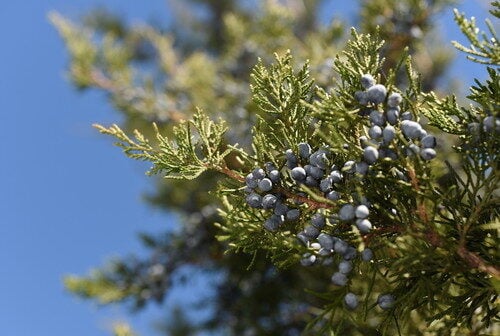
Juniperus virginiana
Pencil Cedar, Eastern redcedar, Southern redcedar, Silver Cedar, Burk Eastern Red Cedar, Silver East