Juniperus osteosperma - (Torr.)Little.
(Torr.)Little.
Desert Juniper, Utah juniper
gbif· cc-by
Steve Matson
gbif· cc-by-nc
Zac Cota
gbif· cc-by
Steve Matson
Description
Juniperus osteosperma is an evergreen Tree growing to 12 m (39ft 4in) at a slow rate. See above for USDA hardiness. It is hardy to UK zone 5. It is in leaf all year, and the seeds ripen in October. The species is dioecious (individual flowers are either male or female, but only one sex is to be found on any one plant so both male and female plants must be grown if seed is required). and is pollinated by Wind. The plant is not self-fertile. It is noted for attracting wildlife. Suitable for: light (sandy), medium (loamy) and heavy (clay) soils and prefers well-drained soil. Suitable pH: mildly acid, neutral and basic (mildly alkaline) soils and can grow in very alkaline soils. It cannot grow in the shade. It prefers dry or moist soil and can tolerate drought.
Edible Uses
Fruit - raw or cooked. A thin flesh, it is sweet but strongly flavoured of resin and has a mealy texture. Used as a flavouring in stews. The fruit can be eaten fresh or it can be dried and ground into a powder then baked into cakes. The cones are about 6 - 18mm in diameter, they take 2 years to mature.
Medicinal Uses
Analgesic Antiseptic Blood tonic Diuretic Kidney Laxative Odontalgic Poultice Salve. Desert juniper was widely employed medicinally by a number of native North American Indian tribes who used it to treat a variety of complaints, especially those connected to the bladder and kidneys and to the skin. It is little, if at all, used in modern herbalism. The leaves are antiseptic, blood tonic and laxative. A decoction is used in the treatment of constipation. A poultice of the leaves has been applied to the jaw to treat toothaches and sore and swollen gums. A decoction of the young twigs has been used in the treatment of stomach aches, kidney complaints, haemorrhages, coughs and colds. Fumes from the burning twigs have been inhaled in the treatment of headaches and colds. The branches have been used in a sweat bath to treat rheumatism. A strong decoction has been used as an antiseptic wash on sores. A poultice of the mashed twigs has been used as a dressing on burns and swellings. The seeds are analgesic. They have been eaten in the treatment of headaches. The fruits are analgesic, blood tonic and diuretic. A decoction has been used to relieve the pain of menstrual cramps, to induce urination and to treat kidney complaints, fevers, coughs and colds. Externally, a decoction has been used as a poultice on rheumatic joints.
Distribution
South-western N. America - California to New Mexico and Wyoming.
Where It Grows
NORTHERN AMERICA: United States (Colorado (west), Idaho (south), Montana (s.-c.), Wyoming, New Mexico (northwest), Arizona (north), California, Nevada, Utah)
Cultivation
Succeeds in most soils if they are well drained, preferring a neutral or slightly alkaline soil. Thrives in calcareous soils. A drought tolerant plant once established, succeeding in hot dry positions. A slow-growing but long-lived tree, specimens several centuries old have been recorded. It grows better in dry areas with hot summers, western Britain is generally to cool and wet for this species to thrive. Good crops of fruit are produced in alternate years in the wild. Closely related to J. californica. This species is resistant to honey fungus. The seed takes 2 years to mature. Plants are usually dioecious, though occasional trees with both male and female flowers are sometimes found. Male and female plants must usually be grown if seed is required. In garden design, as well as the above-ground architecture of a plant, root structure considerations help in choosing plants that work together for their optimal soil requirements including nutrients and water. Juniper berries (the fleshy cones) are typically harvested in late summer to early autumn depending on the species. Junipers produce male cones in spring, while the female cones develop into berries over the summer. Growth rates vary by species, but many Junipers are considered slow to moderate growers, typically reaching maturity in 5 to 15 years, depending on environmental conditions and species.
Propagation
The seed requires a period of cold stratification. The seed has a hard seedcoat and can be very slow to germinate, requiring a cold period followed by a warm period and then another cold spell, each of 2 - 3 months duration. Soaking the seed for 3 - 6 seconds in boiling water may speed up the germination process. The seed is best sown as soon as it is ripe in a cold frame. Some might germinate in the following spring, though most will take another year. Another possibility is to harvest the seed 'green' (when the embryo has fully formed but before the seedcoat has hardened). The seedlings can be potted up into individual pots when they are large enough to handle. Grow on in pots until large enough, then plant out in early summer. When stored dry, the seed can remain viable for several years. Cuttings of mature wood, 5 - 10cm with a heel, September/October in a cold frame. Plant out in the following autumn. Layering in September/October. Takes 12 months.
Other Uses
Beads Fuel Hair Incense Thatching Tinder Wax Wood Agroforestry uses: Junipers can be used as windbreaks or hedges, and due to their extensive root systems, they are often employed in erosion control. They also provide habitat and shelter for wildlife. A wax on the fruit is obtained by simmering the fruit in hot water and skimming off the wax as it rises to the surface. The wax can be used to make aromatic candles. The bark is employed as a tinder and is also made into a slow match. The crushed bark was twisted into a rope, tied at intervals with yucca (Yucca species), and wrapped into a coil. The free end was set on fire and kept smouldering by blowing on it at intervals. Fire could be carried in this fashion for several hours. The bark has been used as a thatching on the roofs of buildings. The dried seeds have been used as beads or as the 'rattle' in rattles. An infusion of the plant has been used as a hair wash. The plant has been burnt as an incense and fumigant in the home. Wood - soft, close-grained, slightly fragrant. It is used occasionally for fuel, fencing etc.
Synonyms
More from Cupressaceae
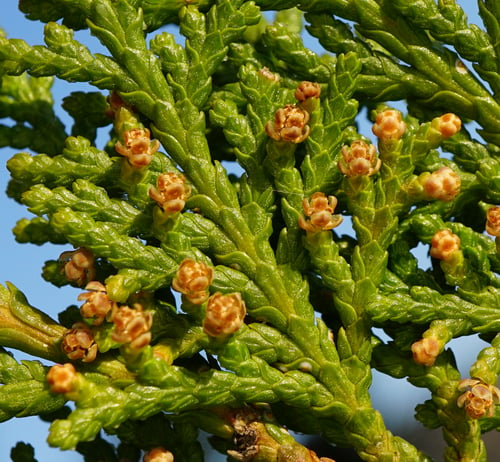
Platycladus orientalis
Oriental cedar
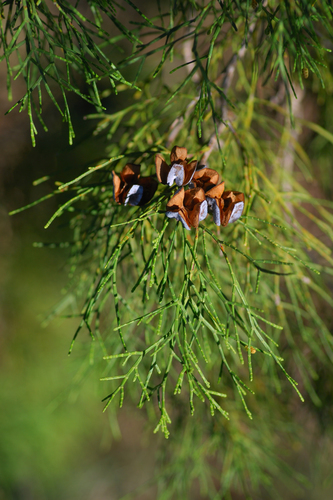
Tetraclinis articulata
Arartree
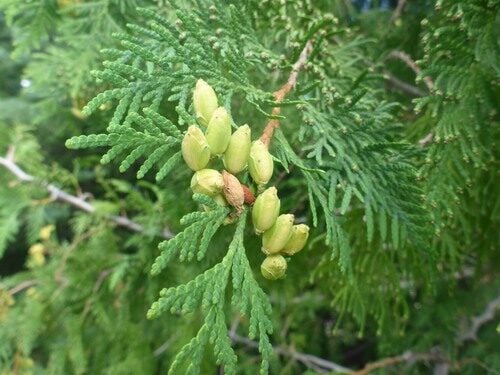
Thuja occidentalis
American Arbor-Vitae, Arborvitae, Eastern Arborvitae, Siberian Arborvitae, Northern White Cedar, Wh
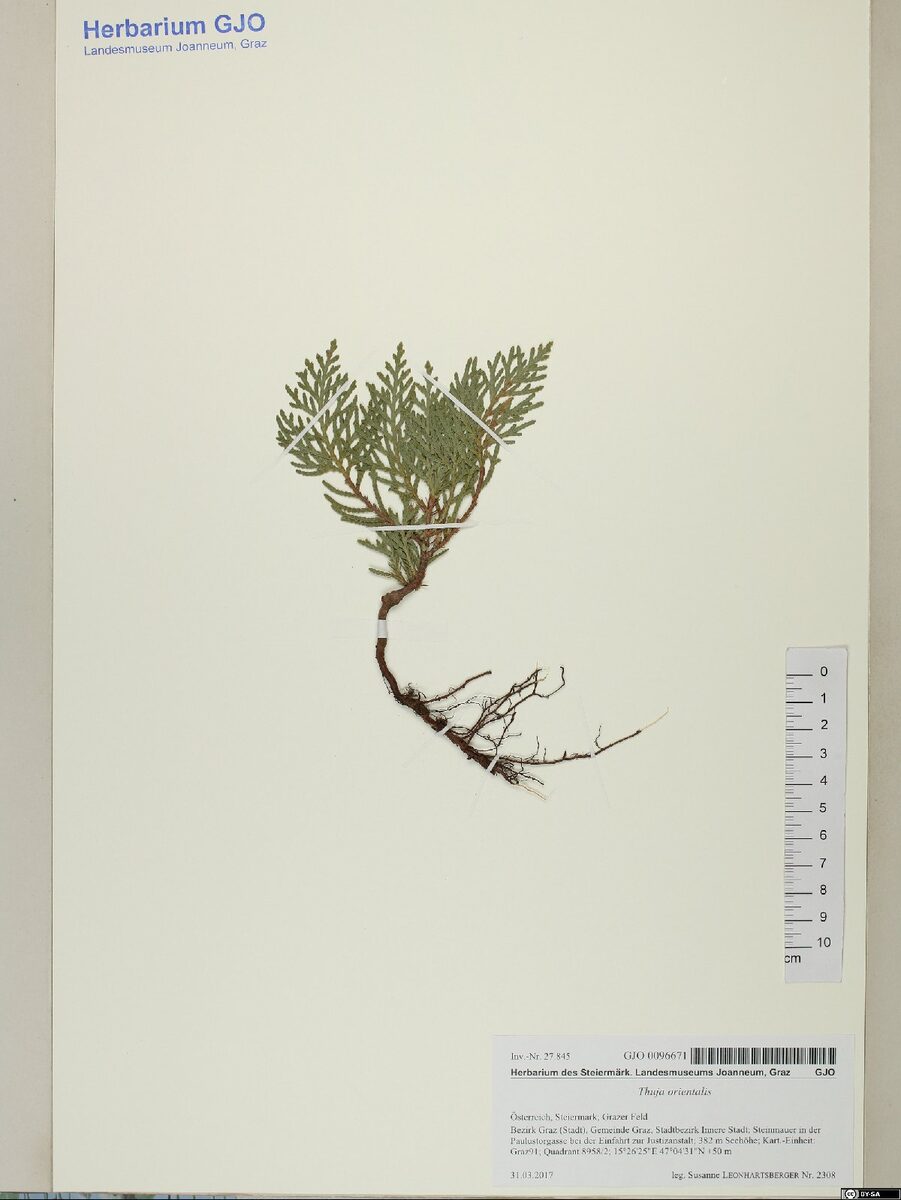
Thuja orientalis
Biota
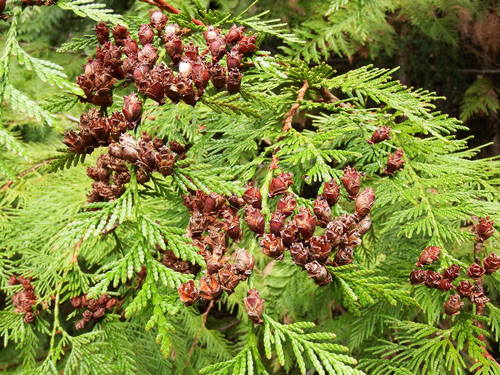
Thuja plicata
Western Red Cedar, Western Arborvitae, Giant Thuya
ZZZ Cupressus sempervirens
Saru