Juniperus oxycedrus
Linn.
Prickly Juniper
iNaturalist· cc-by-nc
(c) Mario Carrasco, some rights reserved (CC BY-NC), uploaded by Mario Carrasco
iNaturalist· cc-by-nc
(c) Сергей, some rights reserved (CC BY-NC)
iNaturalist· cc-by-nc
(c) jl__cc, some rights reserved (CC BY-NC), uploaded by jl__cc
Summary
Source: WikipediaJuniperus oxycedrus, vernacularly called Cade, cade juniper, prickly juniper, prickly cedar, or sharp cedar, is a species of juniper, native across the Mediterranean region, growing on a variety of rocky sites from sea level. The specific epithet oxycedrus means "sharp cedar" and this species may have been the original cedar or cedrus of the ancient Greeks.
Description
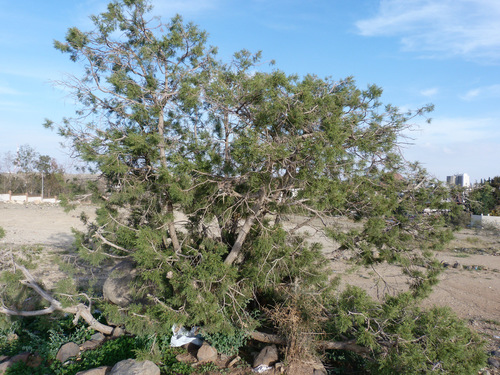
An evergreen tree. It is broadly cone shaped. It grows 10 m high. The bark is purple brown and peels off in strips. The leaves are needle like and slender. They are 2.5 cm long. They spread out in rings of three. They are sharp pointed. They are green above and have 2 bands underneath. The male and female flowers occur on separate plants. Male flowers are yellow and female flowers are green. They occur in small clusters in the axils of leaves. The fruit are berry-like cones. They become red to purple as they ripen. The cones are 1.2 cm across.
Edible Uses
The wood yields an oil through destructive distillation, though no edible uses are known for this plant.
Traditional Uses
The fruit are used to flavour gin. They can be eaten fresh or boiled to prepare juice. The fruit are also used for a herbal tea. They are also used as a seasoning in meat stews. The shoots are boiled to make tea or cooked and used as a spice. The seeds are used as a coffee substitute.
Medicinal Uses
Destructive distillation of the wood produces 'Oil of Cade,' an essential oil used externally to treat skin diseases including psoriasis and chronic eczema. It acts as an effective parasiticide against psora and favus, and also has antiseptic properties.
Distribution
It is a temperate plant. It grows naturally in dry woods and on hills in Southern Europe. It suits hardiness zones 5-10.
Where It Grows
Africa, Asia, Balkans, Bosnia, Croatia, Europe, Georgia, India, Italy, Libya, Macedonia, Mediterranean, North Africa, San Marino, Spain, Turkey, Türkiye,
Cultivation
Succeeds in most soils if they are well drained, preferring a neutral or slightly alkaline soil and succeeding on chalk. A drought tolerant plant once established, succeeding in hot dry positions. Dioecious. Male and female plants must be grown if seed is required. Juniper berries (the fleshy cones) are typically harvested in late summer to early autumn depending on the species. Junipers produce male cones in spring, while the female cones develop into berries over the summer. Growth rates vary by species, but many Junipers are considered slow to moderate growers, typically reaching maturity in 5 to 15 years, depending on environmental conditions and species.
Propagation
Juniper seed requires cold stratification and has a hard seedcoat that makes germination slow, typically needing a cold period, then a warm period, then another cold spell — each lasting 2–3 months. Soaking seed in boiling water for 3–6 seconds may speed germination. Sow seed as soon as it is ripe in a cold frame; some may germinate the following spring, but most take another year. Seed can also be harvested green, once the embryo has fully formed but before the seedcoat hardens. Prick seedlings into individual pots when large enough, grow on in pots, then plant out in early summer. Stored dry, seed remains viable for several years. Take cuttings of mature wood, 5–10cm with a heel, in September or October in a cold frame, and plant out the following autumn. Layering in September or October takes about 12 months.
Other Uses
Junipers work well as windbreaks or hedges and are widely used in erosion control thanks to their extensive root systems. They also provide habitat and shelter for wildlife. An oil distilled from the heartwood serves medicinal and parasiticide purposes, and is additionally used as an immersion oil in microscope work. Juniper flowers are inconspicuous and produce no significant nectar, though some pollen may be available to insects. The berries (technically cones) are eaten by many birds and mammals, and the dense foliage offers shelter, nesting, and roosting sites. Rough bark and dense growth provide overwintering habitat for invertebrates, and leaf litter supports insects and other small creatures. The strong aroma of juniper's berries and foliage has natural insect-repellent properties that can help deter certain pests.
Notes
There are 50 to 60 Juniperus species.
Synonyms
Also Known As
Ardic, Enebro, Gili gili, GInebre, Katran ardici, Kleka obicna, Kozaraca, Smrck, Smreka, Smrekina, Smrika
References (14)
- Ari, S., et al, 2015, Ethnobotanical survey of plants used in Afyonkarahisar-Turkey. Journal of Ethnobiology and Ethnomedicine 11:84
- Blamey, M and Grey-Wilson, C., 2005, Wild flowers of the Mediterranean. A & C Black London. p 29
- Coombes, A.J., 2000, Trees. Dorling Kindersley Handbooks. p 47
- Dogan, A. & Tuzlaci, E., 2015, Wild Edible Plants of Pertek (Tunceli-Turkey). Marmara Pharmaceutical Journal 19: 126-135
- Dolina, K. & Luczaj, L., 2014, Wild food plants used on the Dubrovnik coast (south-eastern Croatia) Acta Soc Bot Pol 83(3):175–181
Show all 14 references Hide references
- Ertug, F, Yenen Bitkiler. Resimli Türkiye Florası -I- Flora of Turkey - Ethnobotany supplement
- Etherington, K., & Imwold, D., (Eds), 2001, Botanica's Trees & Shrubs. The illustrated A-Z of over 8500 trees and shrubs. Random House, Australia. p 410
- Luczaj, L. et al, 2013, Wild food plants used in the villages of the Lake Vrana Nature Park (northern Dalmatia, Croatia). Acta Societatis Botanicorum Poloniae, 82(4): 275-281
- Luczaj, L. et al, 2014, Wild Food Plants of Dalmatia (Croatia). Chapter 8 in A. Pieroni, C. L. Quave (eds.), Ethnobotany and Biocultural Diversities in the Balkans, Springer Science
- Mahklouf, M. H., 2019, Ethnobotanical Study of Edible Wild Plants in Libya. European Journal of Ecology. 5(2): 30-40
- Polat, R., et al, 2015, Survey of wild food plants for human consumption in Elazig (Turkey). Indian Journal of Traditional Knowledge. Vol. 1(1): 69-75
- Redzic, S. J., 2006, Wild Edible Plants and their Traditional Use in the Human Nutrition in Bosnia-Herzegovina. Ecology of Food and Nutrition, 45:189-232
- Sp. pl. 2:1038. 1753
- Tardio, J., et al, Ethnobotanical review of wild edible plants in Spain. Botanical J. Linnean Soc. 152 (2006), 27-71
More from Cupressaceae

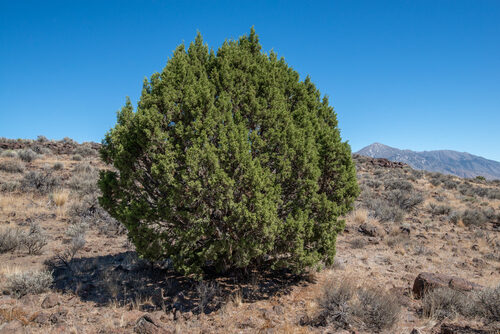
Juniperus monosperma - (Engelm)Sarg.
One-Seed Juniper
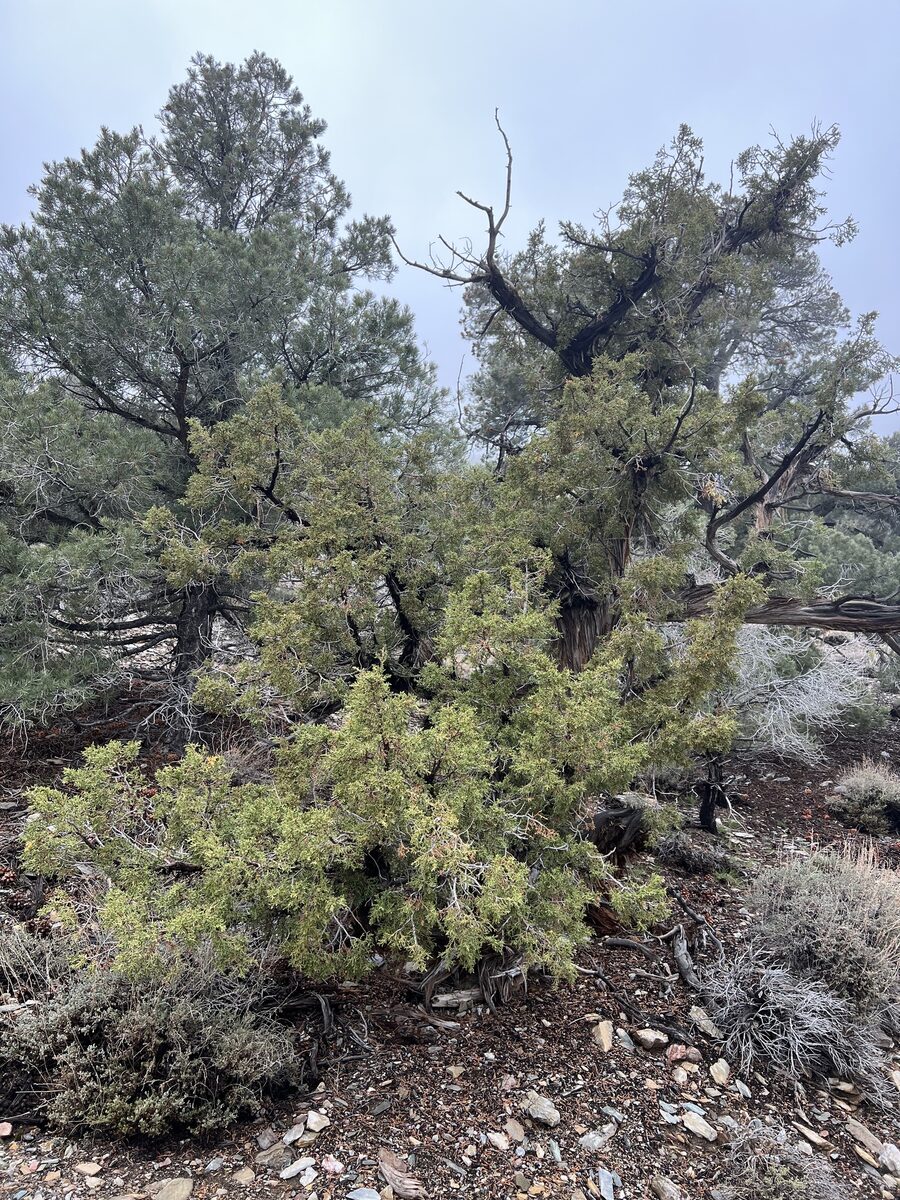
Juniperus occidentalis
Western Juniper
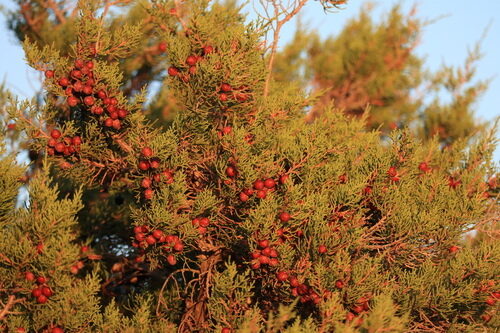
Juniperus osteosperma - (Torr.)Little.
Desert Juniper, Utah juniper
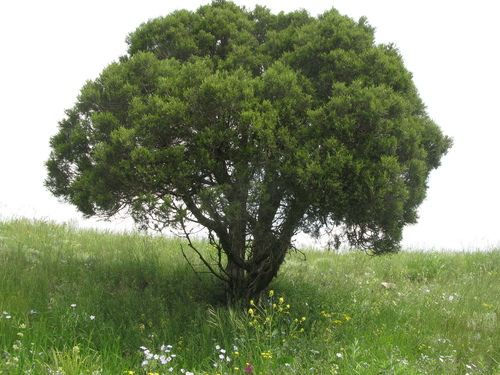
Juniperus phoenicea
Phoenician Juniper
Juniperus polycarpos
Indian Juniper, Himalayan Pencil cedar
Juniperus procera
Cedar, African juniper