Juniperus procera
Hochst. ex Endl.
Cedar, African juniper
iNaturalist· cc-by-nc
(c) Miguel A. Casado, some rights reserved (CC BY-NC), uploaded by Miguel A. Casado
iNaturalist· cc-by-nc
(c) Abdurrahman Hussein, some rights reserved (CC BY-NC)
iNaturalist· cc-by-nc
(c) e0n_, some rights reserved (CC BY-NC), uploaded by e0n_
Summary
Source: WikipediaJuniperus procera (known by the common English names African juniper, African pencil-cedar, East African juniper, East African-cedar, and Kenya-cedar) is a coniferous tree native to mountainous areas in Africa and the Arabian Peninsula. It is a characteristic tree of the Afromontane flora.
Description
A tree. It grows 35 m high. The bark is thin and fibrous. The leaves are like needles and spread when young. They become like scales when mature. The male cones are oval and 3 mm long. The female cones are 6 mm across. These are swollen to give the appearance of a blue-black berry-like fruit.
Medicinal Uses
The tree is often used in traditional African medicine. Some research has been carried out into the active compounds in the plant, and these have tended to support the traditional uses. The essential oil obtained from from the leaves is rich in cedrol. It has shown antioxidant activity. The leaves and bark contain diterpenes with antibacterial activity. The butanol fraction of an ethanol extract of the bark has been shown it inhibit implantation of the foetus. The bark contains about 3.5% tannin. An infusion of the powdered young twigs is taken as a remedy against intestinal worms. The smoke from the twigs is inhaled as an expectorant. Applied externally, people with rheumatism are treated by exposure to the smoke of burnt twigs and seed cones. The leaves are used in the treatment of stomach aches. The dried, powdered leaves are applied on wounds of humans and animals. A hot bath to which the leaves are added is used in the treatment of fever. The resin is used as a stimulant and is also applied to ulcers. Macerations of the bark are drunk, and also applied as a vaginal wash, to act as birth-control agents. A decoction of the seed cones is used as a sudorific and emmenagogue.
Distribution
It is a tropical plant. It grows in dry areas. In Malawi it grows between 2,100-2,250 m altitude.
Where It Grows
Africa, Arabia, Asia, Australia, East Africa*, Ethiopia, Indonesia, Kenya, Malawi, Middle East, SE Asia, Somalia, Southern Africa, Sudan, Zimbabwe,
Cultivation
Plants are grown from seed.
Propagation
Seed - germination is best at around 20°c and is better in full sun than in the shade. The germination rate in nursery seed beds is usually 40% after 6 weeks, but considerable variation has been found in the seed and germination characteristics. The seed may benefit from scarification before sowing in order to speed up and improve germination. This can usually be done by pouring a small amount of nearly boiling water on the seeds (being careful not to cook them!) and then soaking them for 12 - 24 hours in warm water. By this time they should have imbibed moisture and swollen - if they have not, then carefully make a nick in the seedcoat (being careful not to damage the embryo) and soak for a further 12 hours before sowing. Alternative methods of scarification include pre-treatment with concentrated sulphuric acid or scorching the seeds. Seedlings are ready to be planted out when 1 - 2 years old and 15 - 25cm tall. Wildlings are also used for planting. Under conditions in which Juniperus procera readily regenerates, stand establishment by direct sowing may even be applicable. Juniperus procera is easily propagated by seed. The seed stores well, for at least 12 months. Vegetative propagation is possible: stecklings (rooted cuttings) with well-developed root systems easily establish and grow well. In experiments, rooting was best in cuttings from young plants (5 months old), but somewhat older plants (10 - 15 months) yield more cuttings. Rooting in cuttings from mature trees is poor.
Other Uses
The wood contains 0.5 - 3% essential oil, which is distilled mainly from the sawdust. It is used in the cosmetic industry in soaps and perfumes. The most important component iscedrol (23 - 79%), which is known to have antitermite effects. The wood is used for making fire sticks. Older trees are usually hollow and can be used in making beehives. The heartwood is pale red, yellow-brown or purple-red when freshly cut, turning reddish brown on exposure; it is clearly demarcated from the up to 25mm wide band of cream-coloured or white sapwood. The grain is usually straight; the texture fine and even. The wood is liable to bleach in the sun and is sometimes streaked with zones of darker and lighter colour which produce an attractive figure. In-grown bark, spiral grain and compression wood are common defects. The wood is medium-weight; very durable, even in contact with the soil, it is resistant to fungi, termites and most borers except Oemida gahani. The sapwood is not susceptible to attack by Lyctus beetles. It seasons well when dried with care, but larger pieces are liable to end-splitting and surface-checking, and the wood should not be allowed to dry rapidly in the initial stages. It is easy to work with hand and machine tools, although it is rather brittle and fissile, tending to break and chip on drilling and mortising; it can split on nailing and screwing, and pre-boring is necessary; it glues, stains and polishes well. The wood is very fragrant, with a characteristic and persistent aromatic cedar smell. It is widely used for building (both construction and lining), joinery, flooring (strip and parquet), furniture and all sorts of outdoor work such as roofing shingles, fence posts, water flumes and transmission poles. Ii is used traditionally for making fire sticks, beehives and salt-troughs. It is also suitable for ship and boat building, agricultural implements, musical instruments, carving, vats, toys and novelties, turnery, draining boards and food containers. It can be used for making veneer and plywood, hardboard and particle board, and as pulpwood. The wood is used as firewood and to make charcoal. It burns evenly, but fast when fresh, and the charcoal does not last long. Since the tree can grow in extreme conditions, it is replanted in deforested areas as a means of soil conservation or improvement, and also for erosion control. A useful shade tree, it is frequently planted in windbreaks, and also in ornamental hedges. Litter fallen from the tree makes the soil acidic, so Juniperus procera should not be intercropped with crops.
Other Information
It is cultivated.
Notes
Probably edible. It is a useful timber.
Synonyms
Also Known As
Cemara Afrika, Dayib, Tipai
References (6)
- Molla, A., Ethiopian Plant Names. http://www.ethiopic.com/aplants.htm
- Sukarya, D. G., (Ed.) 2013, 3,500 Plant Species of the Botanic Gardens of Indonesia. LIPI p 342
- Termote, C., et al, 2014, Assessing the potential of wild foods to reduce the cost of a nutritionally adequate diet: An example from eastern Baringo District, Kenya. Food and Nutrition Bulletin, vol. 35, no. 4
- White, F., Dowsett-Lemaire, F. and Chapman, J. D., 2001, Evergreen Forest Flora of Malawi. Kew. p 80
- World Checklist of Useful Plant Species 2020. Royal Botanic Gardens, Kew
Show all 6 references Hide references
- Zeven, A. C. & de West, J. M. J., 1982, Dictionary of cultivated plants and their regions of diversity. Wageningen. p 124
More from Cupressaceae
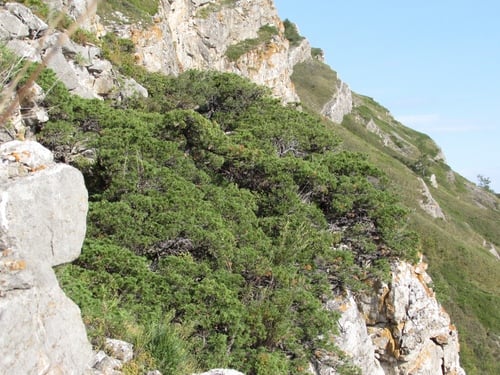
Juniperus sabina
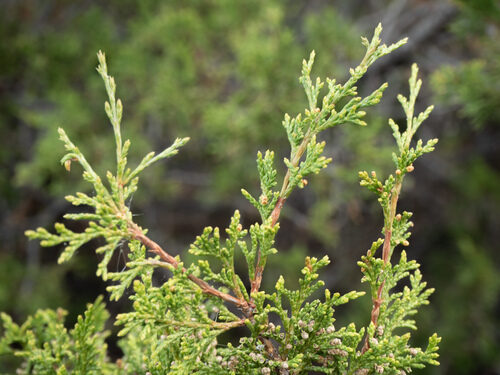
Juniperus scopulorum
Rocky Mountain Juniper, Weeping Rocky Mountian Juniper, Colorado Red Cedar
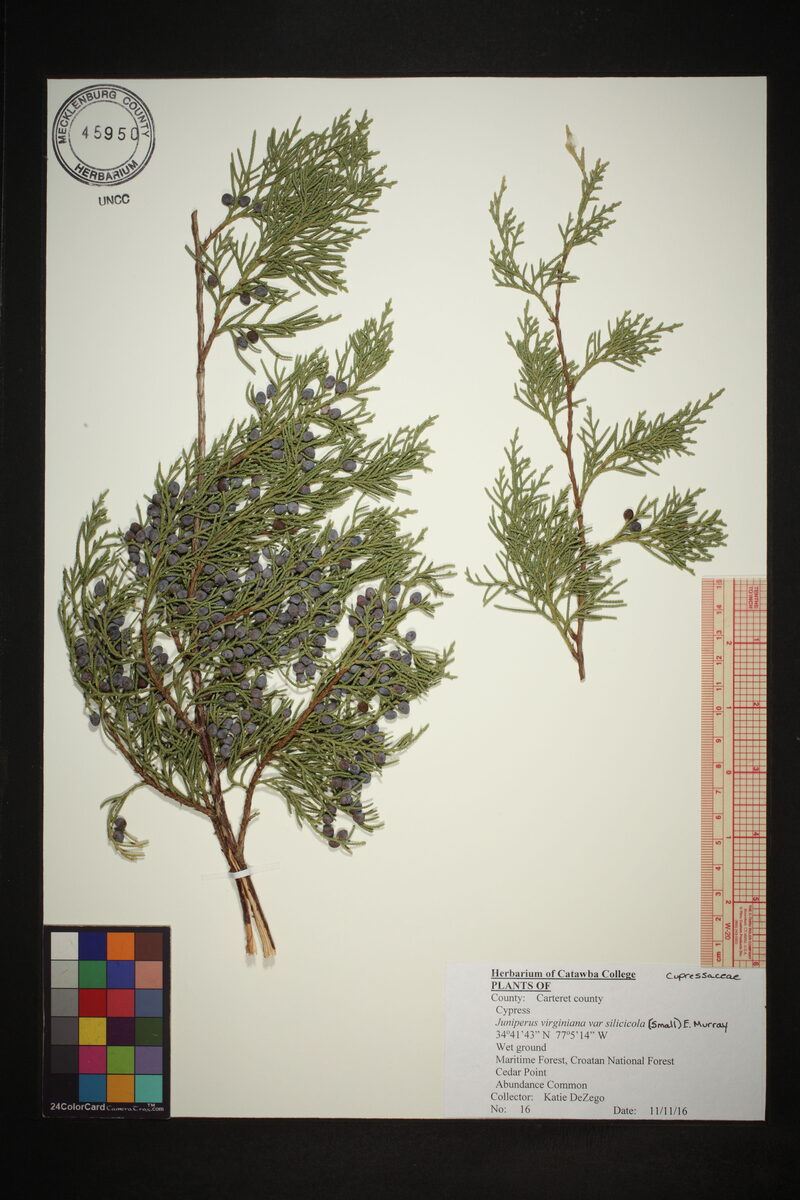
Juniperus silicicola - (Small.)L.H.Bailey.
Southern Redcedar, Juniper, Southern Red Cedar
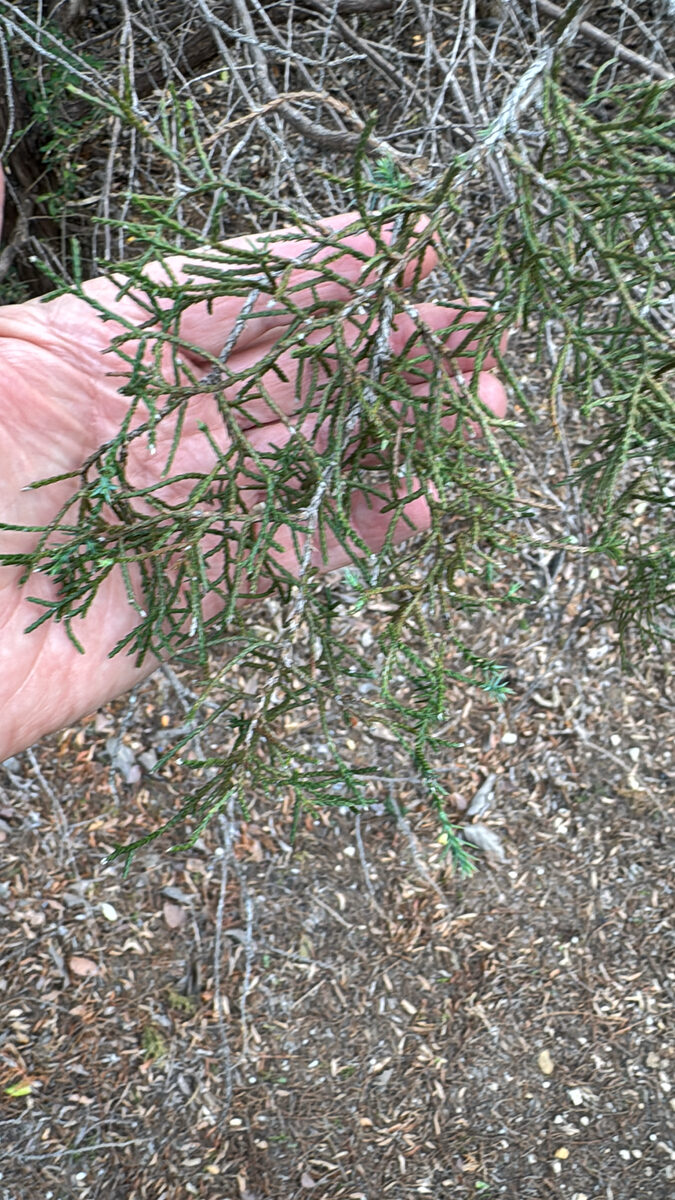
Juniperus tetragona
Juniperus virginiana
Pencil Cedar, Eastern redcedar, Southern redcedar, Silver Cedar, Burk Eastern Red Cedar, Silver East
Papuacedrus papuana