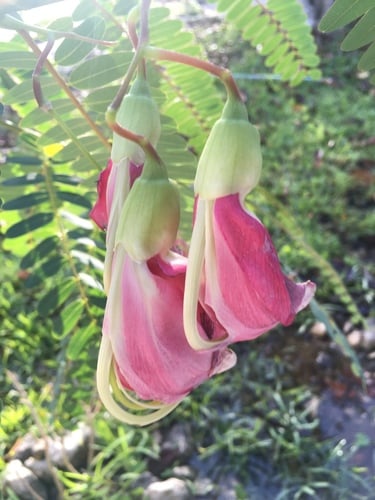
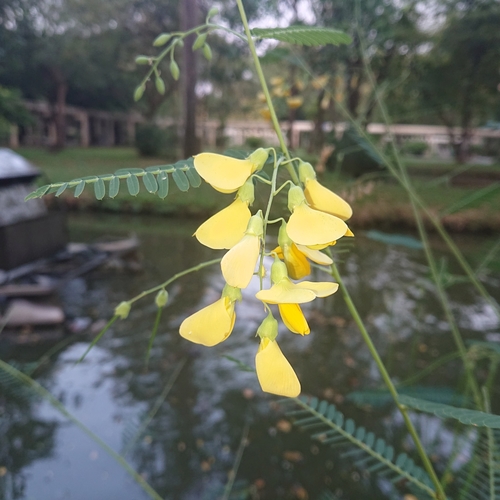
Cathormion umbellatum subsp. moniliforme
(DC.) Brummitt
Cathormion
gbif· cc-by
Mark Clarke
gbif· cc-by
Mark Clarke
gbif· cc-by
Mark Clarke
Description
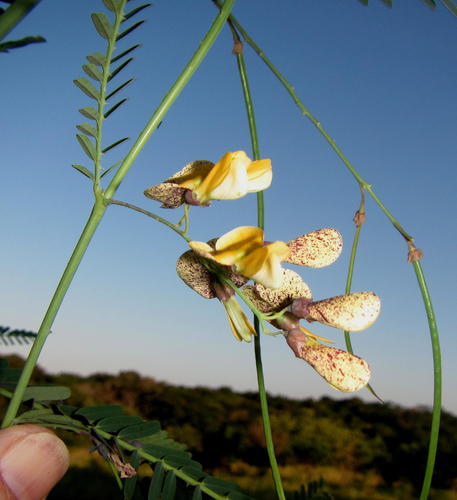
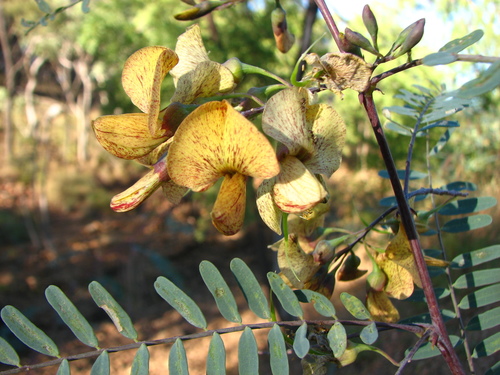
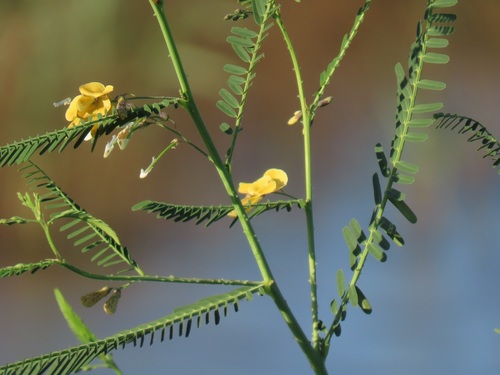
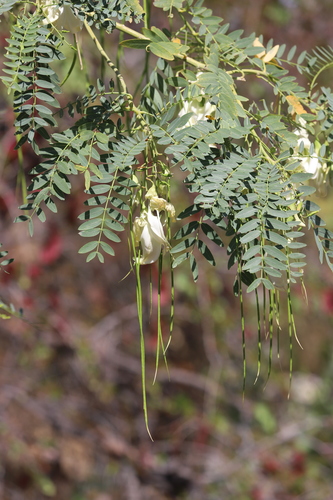
A tree. Small trees have stems that are thorny. Larger trees have flaky bark. The leaves have leaflets without stalks. The leaflets are 2-4 cm long by 1-3 cm wide. Flower stalks are 3-4 mm long. The fruit is a flat pod 10-20 cm long. It is constricted between the seeds and it breaks into one seeded segments when mature.
Edible Uses
The pods are roasted and eaten.
Traditional Uses
The pods are roasted and eaten.
This uses section is brief — help expand it
Distribution
It is a tropical plant. It grows in forests near mangroves and is often on land that is periodically flooded. It grows up to 100 m above sea level.
Where It Grows
Asia, Australia*, Malesia,
Notes
There are 145-150 Albizia species. They grow in the tropics and subtropics. Also as Mimosaceae.
Synonyms
Also Known As
Mullar
References (3)
- Bailey, F. M., 1913, Comprehensive Catalogue of Queensland Plants. Queensland Government. p 164 (As Pithecellobium moniliferum)
- Bircher, A. G. & Bircher, W. H., 2000, Encyclopedia of Fruit Trees and Edible Flowering Plants in Egypt and the Subtropics. AUC Press. p 17 (As Albizia monilifera F. Muell.)
- Hedrick, U.P., 1919, (Ed.), Sturtevant's edible plants of the world. p 31(As Albizia moniliforme)