Sesbania sesban
(L.) Merrill
Egyptian sesban, River-bean
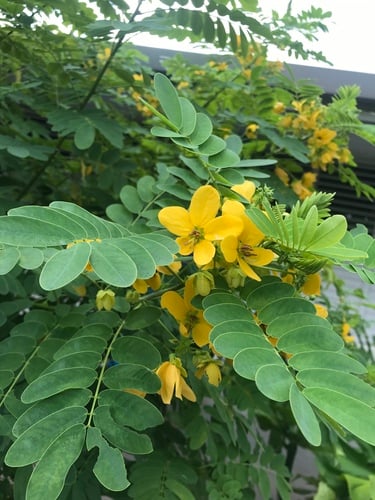
iNaturalist· cc-by-nc
(c) lucapassalacqua, some rights reserved (CC BY-NC)
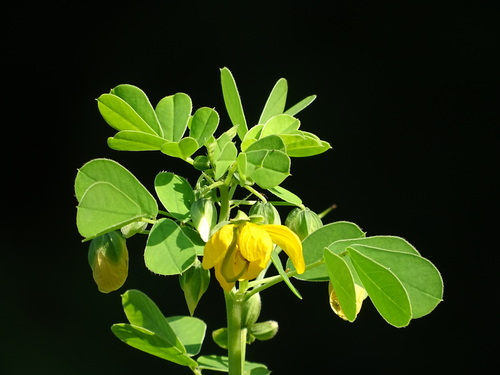
iNaturalist· cc-by-nc
(c) Hong, some rights reserved (CC BY-NC)
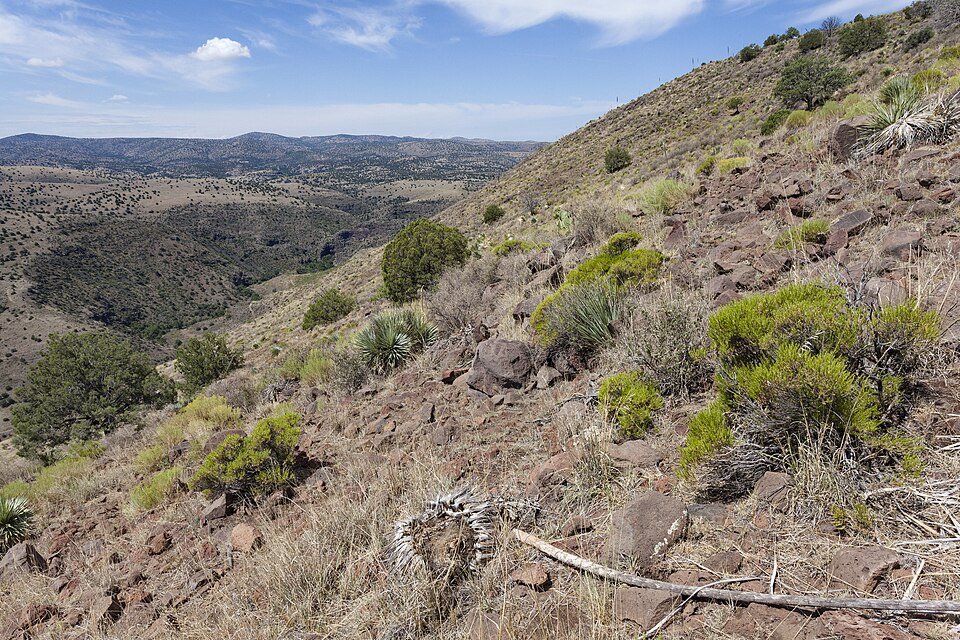
iNaturalist· cc-by-nc
(c) Kate Braun, some rights reserved (CC BY-NC)
Summary
Source: WikipediaSesbania sesban, the Egyptian riverhemp, is a species of plant in the legume family, a fast growing species, it has four varieties that are currently recognized. Synonyms include: Aeschynomene aegyptiaca (Pers.) Steud. Aeschynomene sesban L. Emerus sesban (L.) Kuntze Sesbania aegyptiaca Poir.
Description
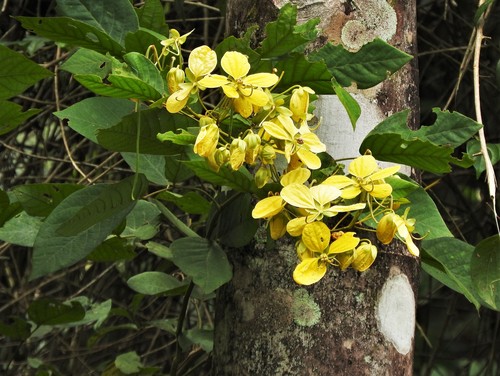
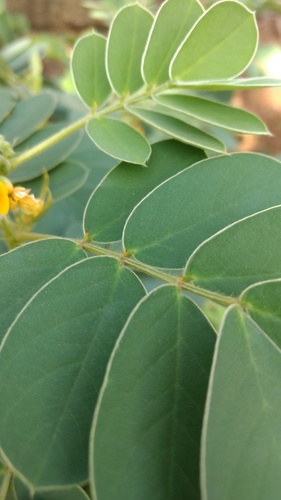
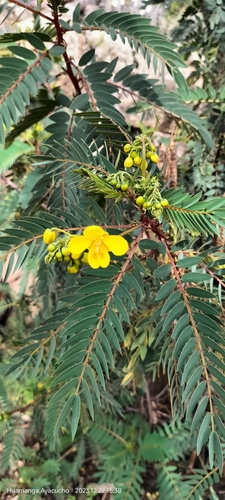
A shrub. It grows to 6 m high. The bark is reddish-brown. The leaves are made up of 10-25 pairs of opposite leaflets. The leaflets are oblong. They can be 15 mm long by 3 mm wide. The flowers are yellow and pea shaped. The standard petal is often speckled with finely veined dark maroon. They occur in many flowered sprays. These are up to 15 cm long. The fruit are long slender pods. They are 30 cm long by 0.3 cm wide. They are often slightly curved.
Edible Uses
The flowers are cooked and included in foods such as omelettes, perhaps as a decorative or festive ingredient. Both leaves and flowers are eaten as a vegetable. The seeds are ground into a powder and fermented into a paste known as 'soumbara', which is used as a flavouring. Fresh seeds are poisonous to humans but can be eaten after soaking for 3 days followed by cooking.
Traditional Uses
The leaves and young flowers are eaten. They are often fried or pounded with rice and beans. The seeds are used for food in times of scarcity. (They have a protein inhibitor preventing the protein being well used.) The seeds are also fermented into a flavouring paste. The young tender pods are cooked or used in chutneys and salads.
Medicinal Uses
Fresh roots and leaves are used to treat scorpion stings, boils and abscesses. The leaves are considered to have antibiotic, anthelmintic, antitumor and contraceptive properties. A decoction is used to treat sore throat, gonorrhoea, syphilis, spasmodic fits in children and jaundice during pregnancy. An oil obtained from the seeds is used in ayurvedic medicine and is reported to have antibacterial, cardiac depressant and hypoglycaemic actions. The saponin stigmasta-galactopyranoside, isolated from the seeds, shows spermicidal and haemolytic activity.
Known Hazards
Fresh seeds are poisonous to humans and must be soaked for 3 days and then cooked before eating.
Distribution
A tropical plant. It occurs in low lying areas usually near water. It can survive water-logging and salty soils. It grows in areas with an annual rainfall between 350-1,500 m above sea level. It grows in savannah woodland. It can grow in arid places. In Yunnan.
Where It Grows
Afghanistan, Africa, Andaman Is., Angola, Asia, Australia, Bahrain, Benin, Botswana, Brazil, Burkina Faso, Burundi, Cambodia, Cameroon, Cape Verde, Central Africa, Central African Republic, CAR, Chad, China, Congo R, Congo DR, Cook Islands, Côte d'Ivoire, Cuba, Cyprus, Djibouti, East Africa, Egypt, Equatorial Guinea, Eritrea, Eswatini, Ethiopia, Fiji, French Polynesia, Gabon, Gambia, Ghana, Guianas, Guinea, Guinée, Guinea-Bissau, Hawaii, Himalayas, India, Indochina, Indonesia, Iran, Iraq, Ivory Coast, Jamaica, Kenya, Kiribati, Laos, Lesotho, Liberia, Madagascar, Malawi, Malaysia, Mali, Marshall Islands, Mauritania, Mauritius, Mediterranean, Middle East, Mozambique, Myanmar, Namibia, Nepal, New Caledonia, Nicobar Is.,Niger, Nigeria, Norfolk Island, North Africa, North America, Northeastern India, Oman, Pacific, Pakistan, Palestine, Papua New Guinea, PNG, Paraguay, Philippines, Puerto Rico, Qatar, Rodriques, Reunion, Rwanda, Samoa, Sao Tome and Principe, Saudi Arabia, SE Asia, Senegal, Seychelles, Sierra Leone, Sinai, Solomon Islands, Somalia, South Africa, Southern Africa, Sri Lanka, Sudan, Suriname, Swaziland, Taiwan, Tanzania, Thailand, Togo, Tonga, Trinidad-Tobago, Tunisia, Uganda, USA, Vanuatu, Vietnam, West Africa, Yemen, Zambia, Zimbabwe,
Cultivation
It can be grown as a hedge. It can be cut back and will re-grow.
Propagation
Soak the seed in a small amount of nearly boiling water (which cools quickly without cooking the seed), then soak in warm water for 12–24 hours to soften the hard seedcoat. Alternatively, carefully abrade a small area of the seedcoat without damaging the embryo. Treated seed achieves a germination rate of approximately 65% in around 16 days. Seed storage behaviour is orthodox, with viability maintainable for 2 years in open storage at room temperature.
Other Uses
Sesbania species are excellent for green manure, soil improvement and erosion control, and can serve as shade trees and livestock fodder. This species is a fast-growing, short-lived pioneer well suited to establishing native woodland gardens; it fixes atmospheric nitrogen and produces a large bulk of material for revitalising soil. It has been used to shade coffee, tea and cocoa plantations, and as a windbreak for bananas, citrus and coffee. Growing plants raise soil nitrogen through symbiotic bacterial interaction, and in Asia the species has been used as a green manure for rice. Branches have been used as mulch and leaves as green manure, improving soil fertility in short-term rotation fallows. The plant is also useful for combating the parasitic weed Striga hermonthica: it stimulates Striga germination but is an unsuitable host, causing the weed to die. Studies indicate that a one-year fallow with this species can increase maize yields from 2 to 4 tonnes per hectare without nitrogen fertilizer. It is a promising shrub for alley cropping, being easy to establish, fast-growing, readily coppiced and high in nutrient content — particularly nitrogen. In some climates, such as the highlands of Kenya, the canopy can be sparse and weed competition may be a problem. The trees can also serve as live trellises for growing pepper plants. Bark fibres are used for making ropes and nets, and the species has potential for pulpwood production. The saponin stigmasta-galactopyranoside has glucuronide derivatives of oleanolic acid with molluscicidal activity against Biomphalaria glabrata, a snail vector of schistosomiasis. Seeds and bark produce a gum. The wood is used traditionally for making arrows, pipes and toys. The species is a popular fuelwood and charcoal crop, producing high woody biomass in a short time; the wood is soft but relatively smokeless, quick to kindle and hot-burning. The calorific yield for a 3-year-old tree is approximately 4,350 kcal/kg.
Production
It is fast growing. It only lives for short time.
Other Information
It is sold in local markets.
Nutrition
| Part | Moisture | kJ | kcal | Protein | Vit A | Vit C | Iron | Zinc |
|---|---|---|---|---|---|---|---|---|
| Seeds | 9.2 | 1446 | 346 | 32 | — | — | — | — |
| Flowers | — | — | — | — | — | — | — | — |
| Fruit | — | — | — | — | — | — | — | — |
Synonyms
Also Known As
Alambu, Arisina jeenangi, Barya-jantis, Champai, Checheko, Chithagathi, Chuchurangmei, Diendien, Ekad, Jaint, Jainti, Jait, Jarjan, Jayant, Jayanti, Jayantika, Jayantri, Jayat, Jayati, Jayatiphul, Jintri, Joyontri, Karijeenangimara, Karunchembai, Kedangu, Leihoihsing, Leiphagah, Mbondo, Muzimbandeya, Mwethia, Nellithalai, Raishingin, Rawasan, River bean, Samintha, Sassadenha, Sempa, Shevri, Shewarie, Suiminta, Thaitimul, Tingkwanga, Torero, Ye-thagyi, Zamarke
References (44)
- Abbiw, D.K., 1990, Useful Plants of Ghana. West African uses of wild and cultivated plants. Intermediate Technology Publications and the Royal Botanic Gardens, Kew. p 42
- Ambasta, S.P. (Ed.), 2000, The Useful Plants of India. CSIR India. p 569
- Bekele-Tesemma A., Birnie, A., & Tengnas, B., 1993, Useful Trees and Shrubs for Ethiopia. Regional Soil Conservation Unit. Technical Handbook No 5. p 410
- Bodkin, F., 1991, Encyclopedia Botanica. Cornstalk publishing, p 928
- Bunderson, W. T. et al, 2002, Common Agroforestry Species in Malawi. Malawi Agroforestry Extension Project, Pubication No. 46, Lilongwe. p 31
Show all 44 references Hide references
- Burkill, H. M., 1985, The useful plants of west tropical Africa, Vol. 3. Kew.
- Burkill, I.H., 1966, A Dictionary of the Economic Products of the Malay Peninsula. Ministry of Agriculture and Cooperatives, Kuala Lumpur, Malaysia. Vol 2 (I-Z) p 2032 (As Sesbania aegyptiaca)
- CRÉAC'H, (As Sesbania aegyptiaca)
- Devi, O.S., P. Komor & D. Das, 2010, A checklist of traditional edible bio-resources from Ima markets of Imphal Valley, Manipur, India. Journal of Threatened Taxa 2(11): 1291-1296
- Dharani, N., 2002, Field Guide to common Trees & Shrubs of East Africa. Struik. p 270
- Facciola, S., 1998, Cornucopia 2: a Source Book of Edible Plants. Kampong Publications, p 111
- Flora of Pakistan. www.eFloras.org
- Fowler, D. G., 2007, Zambian Plants: Their Vernacular Names and Uses. Kew. p 40
- Gangte, H. E., et al, 2013, Wild Edible Plants used by the Zou Tribe in Manipur, India. International Journal of Scientific and Research Publications, Volume 3, Issue 5
- GAMMIE, (As Sesbania aegyptiaca)
- Grivetti, L. E., 1980, Agricultural development: present and potential role of edible wild plants. Part 2: Sub-Saharan Africa, Report to the Department of State Agency for International Development. p 71
- Grubben, G. J. H. and Denton, O. A. (eds), 2004, Plant Resources of Tropical Africa 2. Vegetables. PROTA, Wageningen, Netherlands. p 565
- Guite, C., 2016, Study of wild edible plants associated with the Paite Tribe of Manipur, India. International Journal of Current Research. Vol. 8, Issue 11, pp. 40927-40932
- GUPTA & KANODIA, (As Sesbania aegyptiaca)
- IRVINE, (As Sesbania aegyptiaca)
- Jardin, C., 1970, List of Foods Used In Africa, FAO Nutrition Information Document Series No 2.p 19, 29, 101
- Jardin, C., 1970, List of Foods Used In Africa, FAO Nutrition Information Document Series No 2.p 29 (As Sesbania pachycarpa)
- Kew Plants of the World Online
- Konsam, S., et al, 2016, Assessment of wild leafy vegetables traditionally consumed by the ethnic communities of Manipur, northeast India. Journal of Ethnobiology and Ethnomedicine, 12:9
- Kuhnlein, H. V., et al, 2009, Indigenous Peoples' food systems. FAO Rome p 193 (As Sesbania aegyptiaca)
- Latham, P & Mbuta, A., 2017, Useful Plants of Central Province, Democratic Republic of Congo. Volume 2. Salvation Army p 171
- Lazarides, M. & Hince, B., 1993, Handbook of Economic Plants of Australia, CSIRO. p 217
- Martin, F.W. & Ruberte, R.M., 1979, Edible Leaves of the Tropics. Antillian College Press, Mayaguez, Puerto Rico. p 200 (As Sesbania aegyptiaca)
- Mbuya, L.P., Msanga, H.P., Ruffo, C.K., Birnie, A & Tengnas, B., 1994, Useful Trees and Shrubs for Tanzania. Regional Soil Conservation Unit. Technical Handbook No 6. p 442
- MORTIMORE,
- Ogle, B. M., et al, 2003, Food, Feed or Medicine: The Multiple Functions of Edible Wild Plants in Vietnam. Economic Botany 57(1): 103-117
- Okigbo, B.N., Vegetables in Tropical Africa, in Opena, R.T. & Kyomo, M.L., 1990, Vegetable Research and development in SADCC countries. Asian Vegetable Research and development Centre. Taiwan. p 42 (As Sesbania aegyptiaca)
- Palgrave, K.C., 1996, Trees of Southern Africa. Struik Publishers. p 314
- Patiri, B. & Borah, A., 2007, Wild Edible Plants of Assam. Geethaki Publishers. p 41
- Peters, C. R., O'Brien, E. M., and Drummond, R.B., 1992, Edible Wild plants of Sub-saharan Africa. Kew. p 137
- Pham-Hoang Ho, 1999, An Illustrated Flora of Vietnam. Nha Xuat Ban Tre. p 908
- Philipp. J. Sci., C 7:235. 1912
- Roodt, V., 1998, Trees & Shrubs of the Okavango Delta. Medicinal Uses and Nutritional value. The Shell Field Guide Series: Part 1. Shell Botswana. p 155
- Royal Botanic Gardens, Kew (1999). Survey of Economic Plants for Arid and Semi-Arid Lands (SEPASAL) database. Published on the Internet; http://www.rbgkew.org.uk/ceb/sepasal/internet [Accessed 29th April 2011] (var. nubica)
- SHANKARNARAYAN & SAXENA, (As Sesbania aegyptiaca)
- Swaziland's Flora Database http://www.sntc.org.sz/flora
- Terra, G.J.A., 1973, Tropical Vegetables. Communication 54e Royal Tropical Institute, Amsterdam, p 73 (As Sesbania aegyptiaca)
- UPHOF, (As Sesbania aegyptiaca)
- www.worldagroforestrycentre.org/treedb/