Sesbania tetraptera
Hochst. ex Baker
gbif· cc-by
Meise Botanic Garden
gbif· cc-by
Royal Botanic Gardens, Kew
gbif· cc-by
Royal Botanic Gardens, Kew
Description
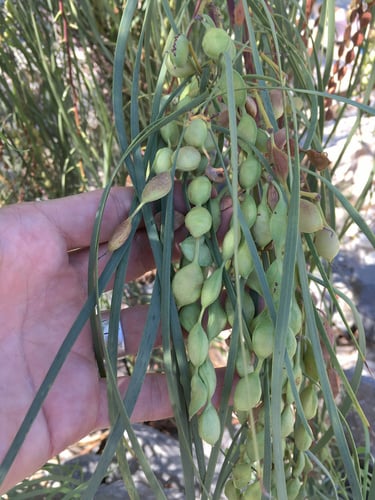
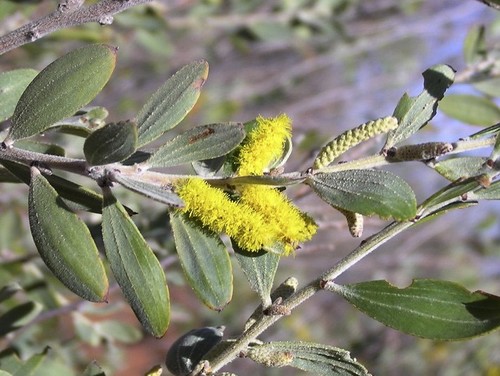
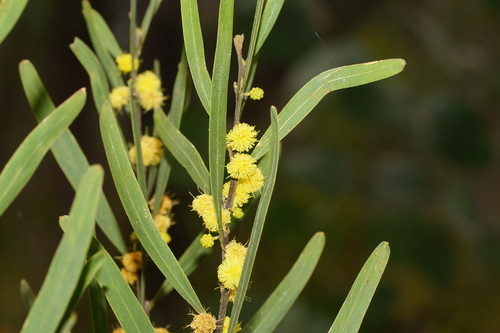
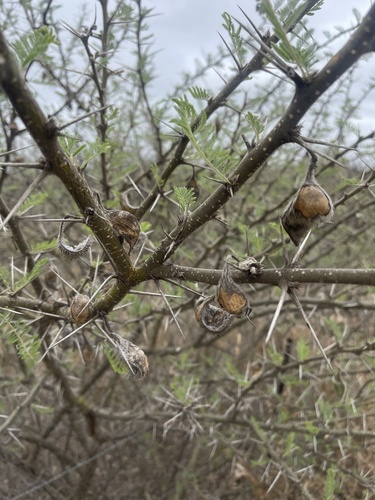
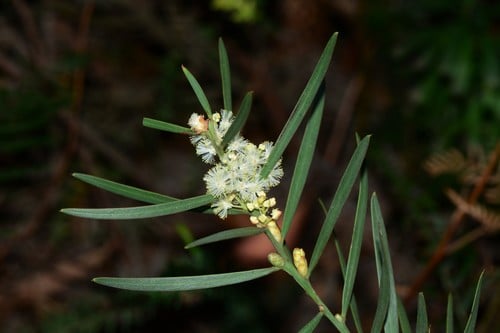
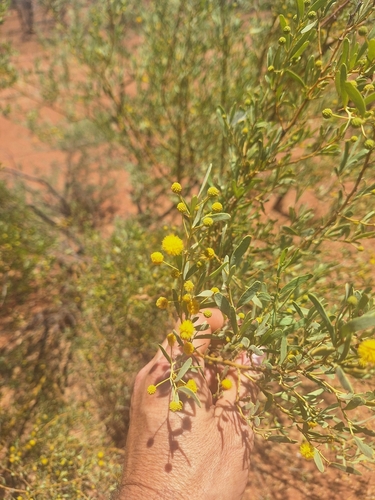
An annual herb. It grows 1-2 m tall. The young stems have a few hairs. The leaves are 7-38 cm long and 16-42 pairs. The flowers are in groups with 2-12 flowers. The pods are 12-16 cm long and slightly curved. The seeds are yellow. They are 4.5 mm long by 3 mm wide and 2 mm thick.
Edible Uses
The leaves are eaten.
Distribution
A tropical plant.
Where It Grows
Africa, Botswana, East Africa, Mozambique, Sudan,
Cultivation
Requires a sunny position. Plants can withstand seasonal inundation of the soil. This species has a symbiotic relationship with certain soil bacteria, these bacteria form nodules on the roots and fix atmospheric nitrogen. Some of this nitrogen is utilized by the growing plant but some can also be used by other plants growing nearby
Propagation
Seed - it has a hard seedcoat and may benefit from scarification before sowing to speed up germination. This can usually be done by pouring a small amount of nearly boiling water on the seeds (being careful not to cook them!) and then soaking them for 12 - 24 hours in warm water. By this time they should have imbibed moisture and swollen - if they have not, then carefully make a nick in the seedcoat (being careful not to damage the embryo) and soak for a further 12 hours before sowing.
Other Uses
All species in this genus have potential for use as soil-improving ground cover plants that can greatly reduce soil erosion.
Synonyms
Also Known As
Geregere
References (4)
- Jardin, C., 1970, List of Foods Used In Africa, FAO Nutrition Information Document Series No 2.p 101
- Martin, F.W. & Ruberte, R.M., 1979, Edible Leaves of the Tropics. Antillian College Press, Mayaguez, Puerto Rico. p 200
- D. Oliver, Fl. trop. Afr. 2:136. 1871
- Terra, G.J.A., 1973, Tropical Vegetables. Communication 54e Royal Tropical Institute, Amsterdam, p 73