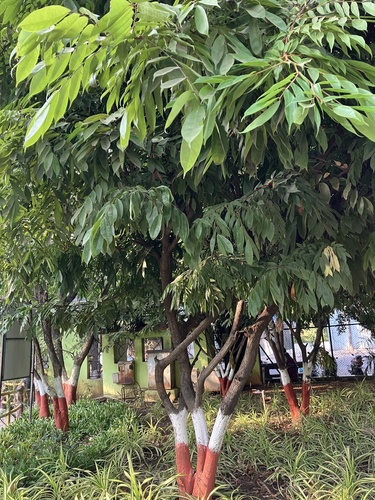
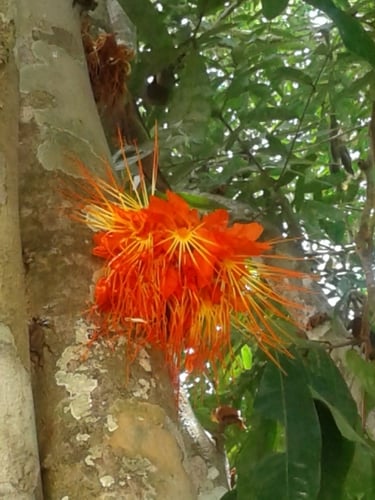
Acacia horrida
(L.) Willd.
Cape-gum tree
iNaturalist· cc0
no rights reserved
iNaturalist· cc0
no rights reserved
iNaturalist· cc0
no rights reserved
Description
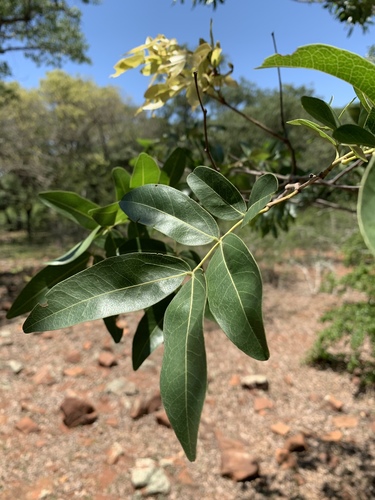
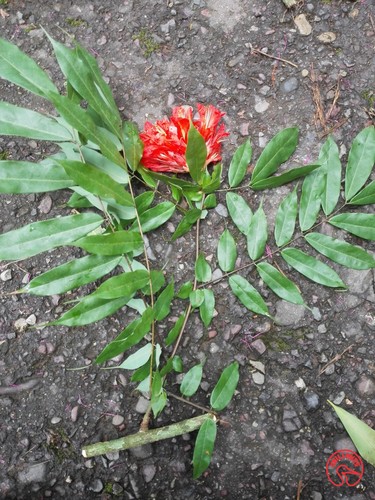
A shrub or small tree. It grows 5 m tall. There are prickles along the stem. The leaves are twice divided and there are 8-18 pairs of pinnae. There are up to 50 pairs of pinnules on each pinnae. The flowers are yellow. They are in large clusters at the ends of branches. The pods are flattened.
Edible Uses
Vachellia horrida is used as forage for livestock, for its wood and for fuel. Because of its huge thorns, it makes an excellent protective hedge. It used to be the most important tree for the tanning industry in South Africa, but extract from its bark leaves the leather with a rather bad smell. The tree produces good gum, but it is yellowish in color.
Distribution
It is a tropical plant. It will grow on most soils. It needs an open, sunny position. It is resistant to drought and frost.
Where It Grows
Africa, Argentina, Asia, Australia, Chile, East Africa, Ethiopia, India, Kenya, Myanmar, SE Asia, Somalia, South Africa, Southern Africa, Sudan, Uganda,
Notes
There are about 1,350 Acacia species. Over 1,000 occur in Australia. Also as Mimosaceae.
Synonyms
Also Known As
Dornboom, Imarti, Sarmaan
References (5)
- Bircher, A. G. & Bircher, W. H., 2000, Encyclopedia of Fruit Trees and Edible Flowering Plants in Egypt and the Subtropics. AUC Press. p 4
- Hedrick, U.P., 1919, (Ed.), Sturtevant's edible plants of the world. p 20
- Ichikawa, M., 1980, The Utilization of Wild Food Plants by the Suiei Dorobo in Northern Kenya. J. Anthrop. Soc. Nippon. 88(1): 25-48
- Omer, M., 2011, Diversity of Woody Species, Local Knowledge and Management Practices in Different Land Use Systems of Awbare Wereda, Jig-Jiga Zone of Somali Region, Ethiopia. M. Sc. these Addis Abba University p 47
- Sp. pl. 4(2):1082. 1806