Prockia crucis
P. Browne ex L.
iNaturalist· cc-by-nc
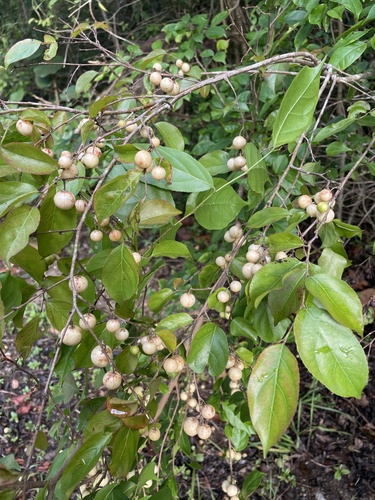
(c) aliciacerchiai, some rights reserved (CC BY-NC), uploaded by aliciacerchiai
iNaturalist· cc-by-nc
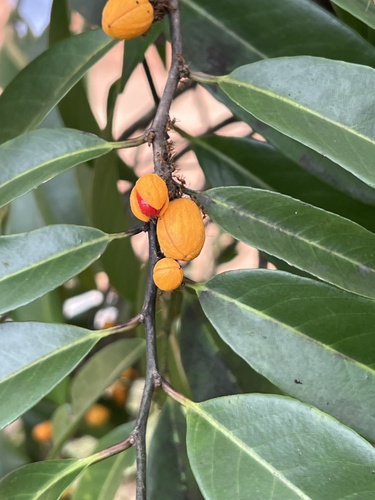
(c) Lucas C. Marinho, some rights reserved (CC BY-NC), uploaded by Lucas C. Marinho
iNaturalist· cc-by-nc
(c) aliciacerchiai, some rights reserved (CC BY-NC), uploaded by aliciacerchiai
Summary
Source: WikipediaProckia crucis, commonly known as guasimilla, is a species of flowering plant in the family Salicaceae, distributed across the Americas. As the type species of its genus, it was first named by Carl Linnaeus in 1759, but described by Patrick Browne earlier. The plant is used in medicine, food, and gardening, with a conservation status of least concern on the IUCN Red List.
Description
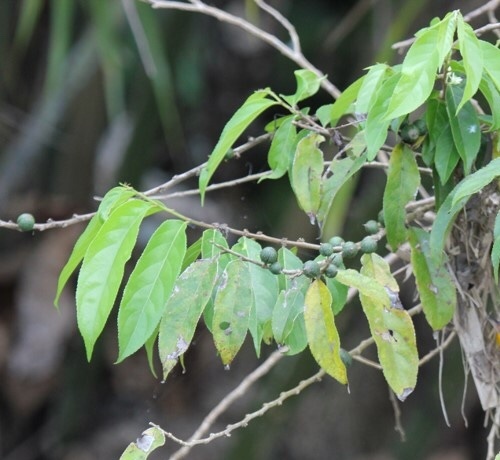
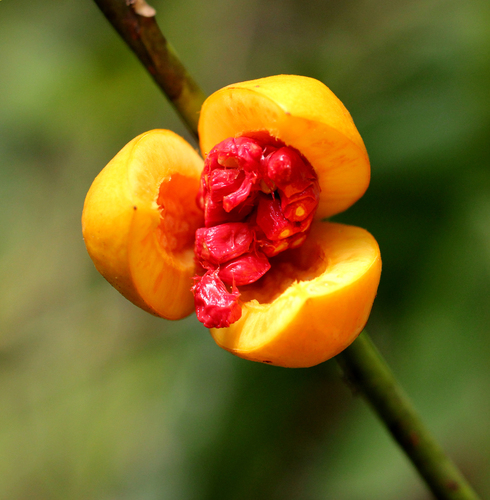
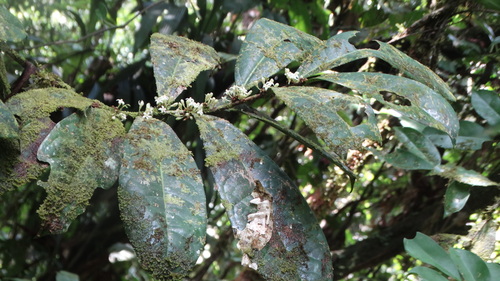
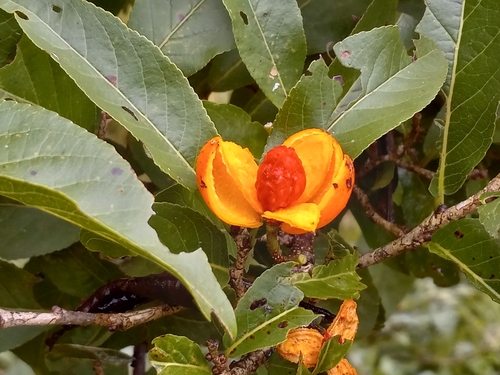
A shrub or small tree. The crown is round. It can grow 5 m tall. The trunk is crooked and 15-25 cm across. The fruit are purple and 1 cm across. It has several small seeds.
Edible Uses
The fruit has a sweet, succulent pulp. This report does not say that the fruit is edible, but several other species within this family produce edible fruits, so this could also be edible. The purple, globose fruit is about 10mm in diameter, containing several small seeds.
Medicinal Uses
Prockia crucis shows notable medicinal potential through its ethanol leaf and bark extracts, which exhibit strong antioxidant activity and acetylcholinesterase inhibition, indicating relevance for Alzheimer’s treatment. HPLC analysis revealed key phenolics such as gallic acid, luteolin, kaempferol, and coumarin. Though direct antifungal effects were limited, the extracts enhanced fluconazole efficacy against resistant Candida tropicalis, highlighting their role as antifungal modulators. Outside of testing, the leaves are said to have medicinal qualities, although they are not specified. The plant is consumed for food, but the edibility of its fruits is rather dubious; however, several species within Salicaceae produce fruits that are safe to eat, indicating that the fruits of Prockia crucis may be consumable. The exact uses of Prockia crucis in gardening are not given, but it is grown in nurseries, and is capable of being sown; it is best to do so when it ripens, where it must be done in a partially shaded nursery seedbed. The seeds must be gently sown on the soil surface due to their small size; a low germination rate is typical, with sprouting occurring within 40–60 days.
Distribution
A tropical plant. It is an understorey tree in the rainforests. It grows up to 2,400 m above sea level.
Where It Grows
Argentina, Bolivia, Brazil*, Caribbean, Central America, Costa Rica, Dominican Republic, Guatemala, Honduras, Mexico, Nicaragua, North America, Panama, Paraguay, Peru, South America, Uruguay, West Indies,
Cultivation
Plants can be grown from fresh seed.
Propagation
Seed - best sown as soon as it is ripe in a partially shaded position in a nursery seedbed. The seeds are very small and are best sown on the surface of the soil - press them gently into the surface and be careful not to wash them away when watering. A low germination rate can be expected, with the seed sprouting within 40 - 60 days.
Other Uses
The white wood is coarse-textured, straight-grained, light in weight, easy to cut, brittle, not very durable. It has no known uses.
Notes
Also put in the Flacourtiaceae family.
Also Known As
Guai, Uai
References (4)
- Brack, P., et al, 2020, Frutas nativas do Rio Grande do Sul, Brasil: riqueza e potencial alimentício. Native fruits of Rio Grande do Sul, Brazil: richness and potential as food. Rodriguésia 71: e03102018
- Fern, K., 2012, Tropical Species Database http://theferns.info/tropical/
- Smith, N., Mori, S.A., et al, 2004, Flowering Plants of the Neotropics. Princeton. p 160
- www.colecionandofrutas.org