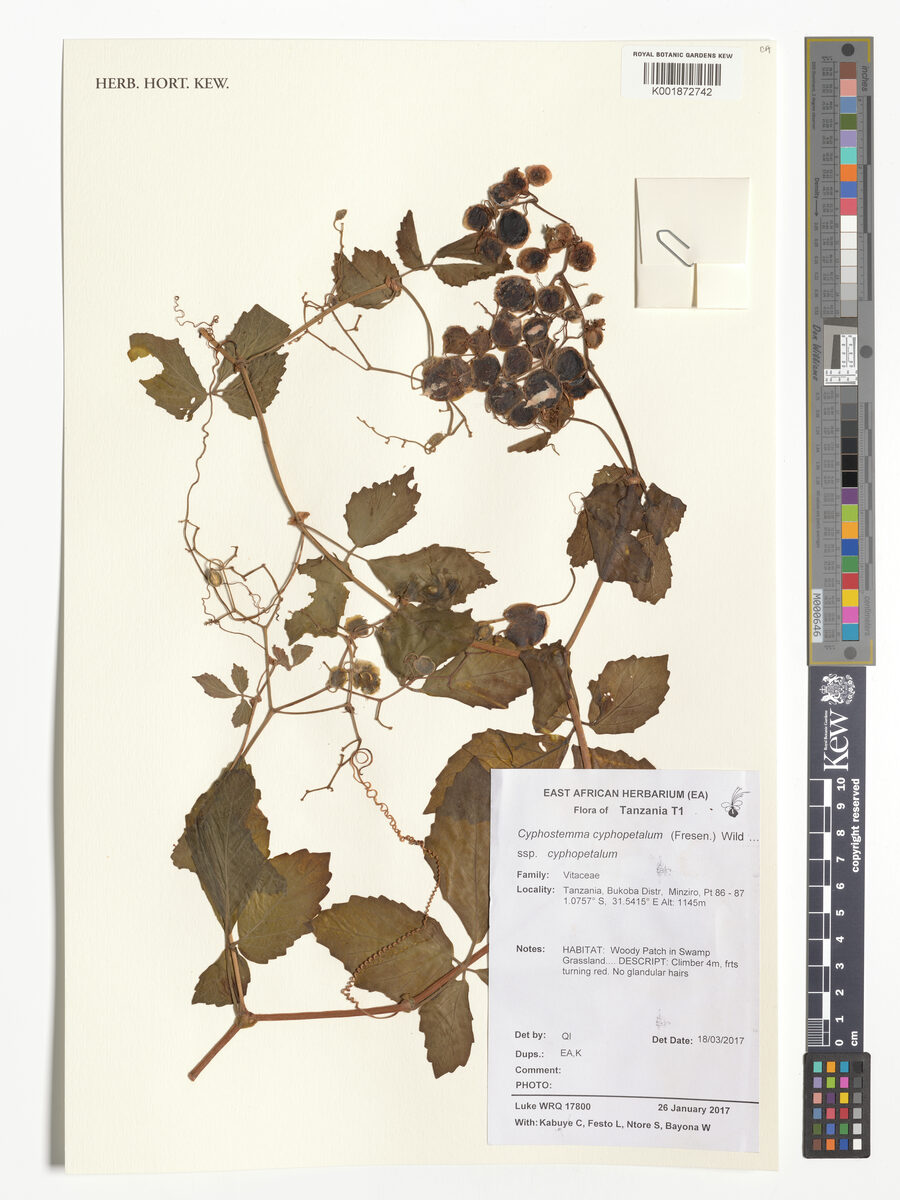
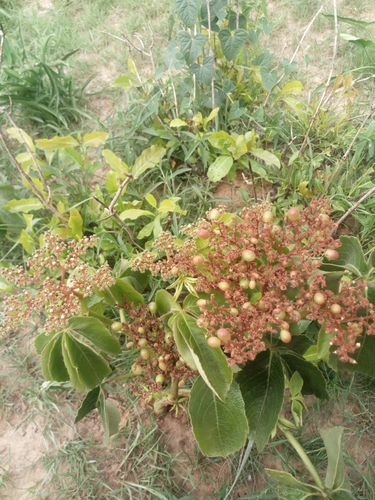
Tetrastigma thomsonianum
Planch.
gbif· cc-by
Royal Botanic Gardens, Kew
gbif· cc-by
Royal Botanic Gardens, Kew
gbif· cc-by
Royal Botanic Gardens, Kew
Description
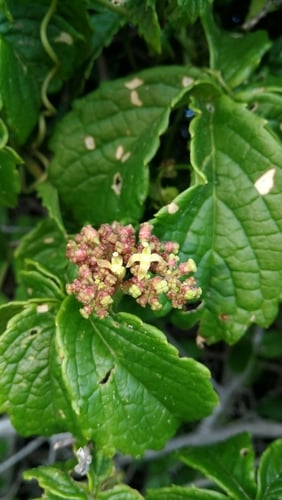
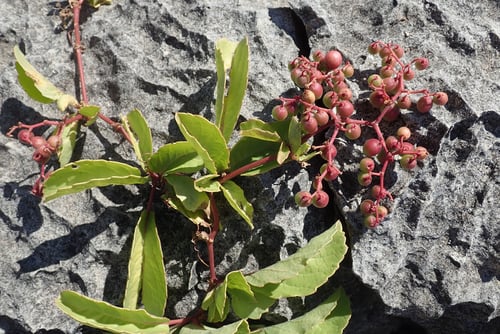
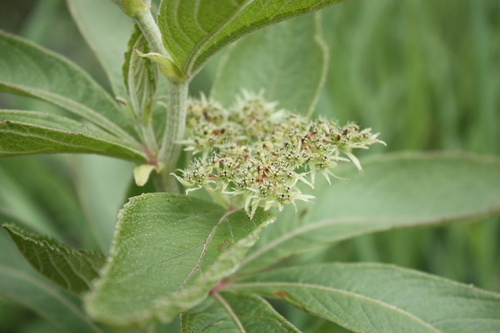
A herb and a climber. The stem is dark and flattened. It can trail and form roots at the nodes. The leaves have 3 leaflets. It has simple tendrils. The flowers are light green. The fruit is a round berry. It is 0.6 cm across. It is reddish-brown and has 1-3 seeds.
Edible Uses
The tender stems and leaves are cooked and eaten with fish, having an acidic taste. Harvested leaves can be stored for 7 days.
Traditional Uses
The tender stems and leaves are cooked and eaten with fish. They have an acidic taste. The harvested leaves can be stored for 7 days.
This uses section is brief — help expand it
Distribution
It is a subtropical plant. It is often near the banks of rivers.
Where It Grows
Asia, India, Northeastern India,
Synonyms
Also Known As
Demshri, Nal tenga, Nekung
References (5)
- Ambasta, S.P. (Ed.), 2000, The Useful Plants of India. CSIR India. p 631
- Dobriyal, M. J. R. & Dobriyal, R., 2014, Non Wood Forest Produce an Option for Ethnic Food and Nutritional Security in India. Int. J. of Usuf. Mngt. 15(1):17-37
- Dutta, U., 2012, Wild Vegetables collected by the local communities from the Churang reserve of BTD, Assam. International Journal of Science and Advanced Technology. Vol. 2(4) p 124
- Patiri, B. & Borah, A., 2007, Wild Edible Plants of Assam. Geethaki Publishers. p 28
- Wild edible plants of Himachal Pradesh