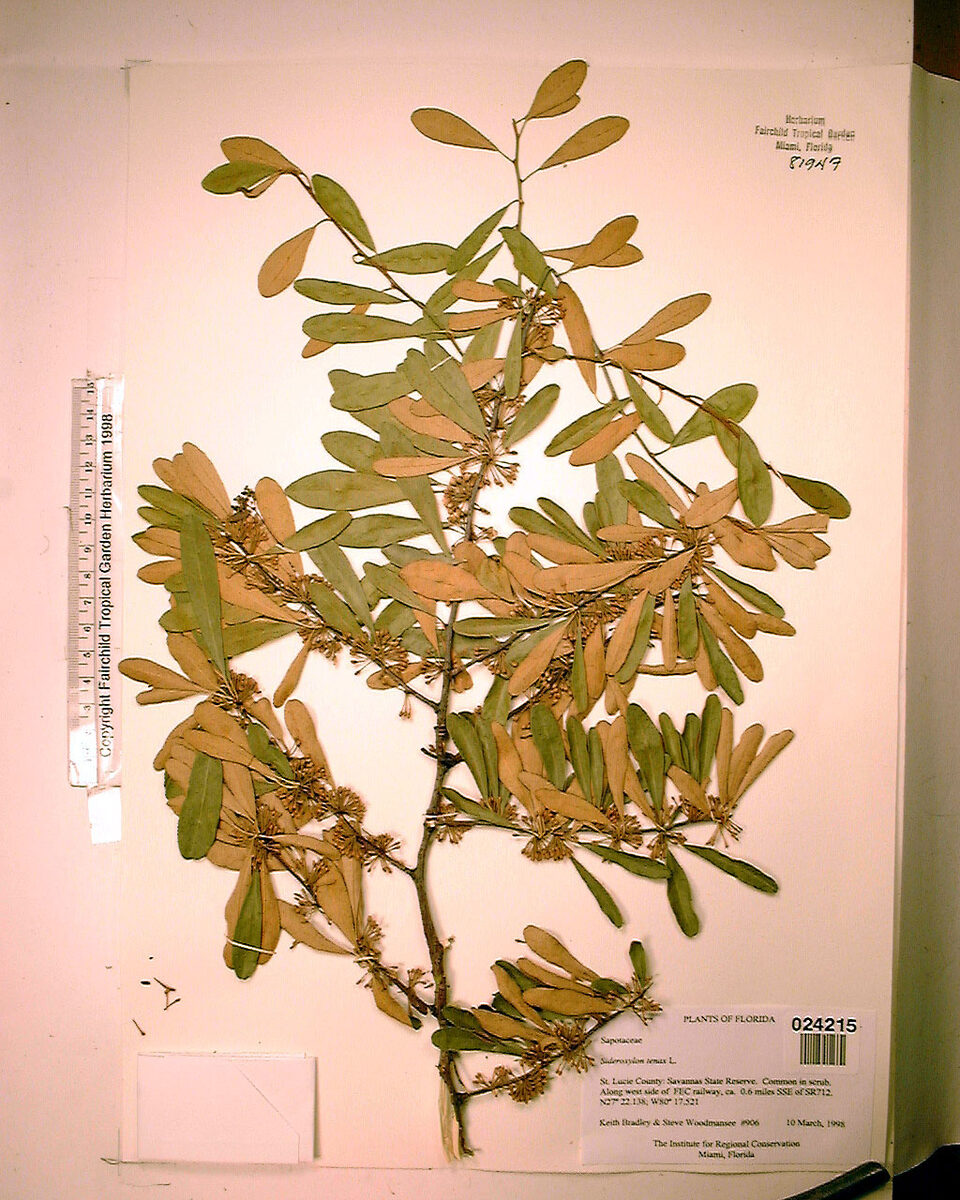
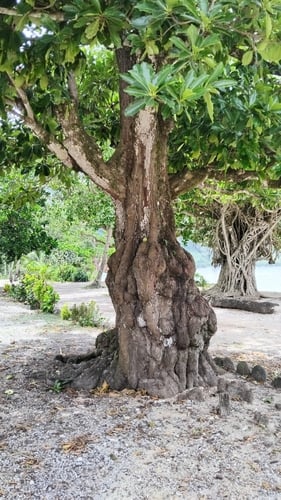
Englerophytum natalense
(Sond.) T. D. Penn.
Natal milk plum, Natal sweet plum, Forest stem-fruit
iNaturalist· cc-by-nc
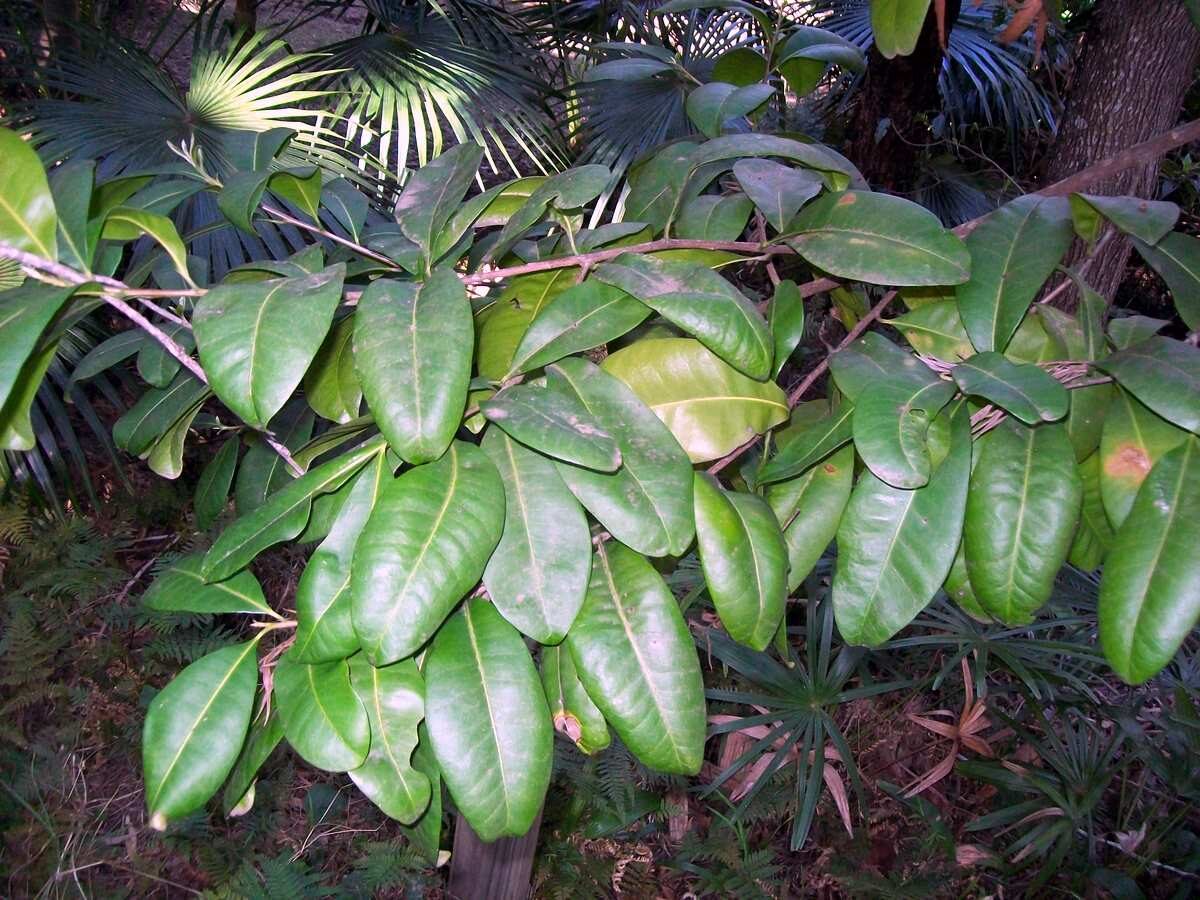
(c) Sharon Louw, some rights reserved (CC BY-NC), uploaded by Sharon Louw
iNaturalist· cc-by-nc
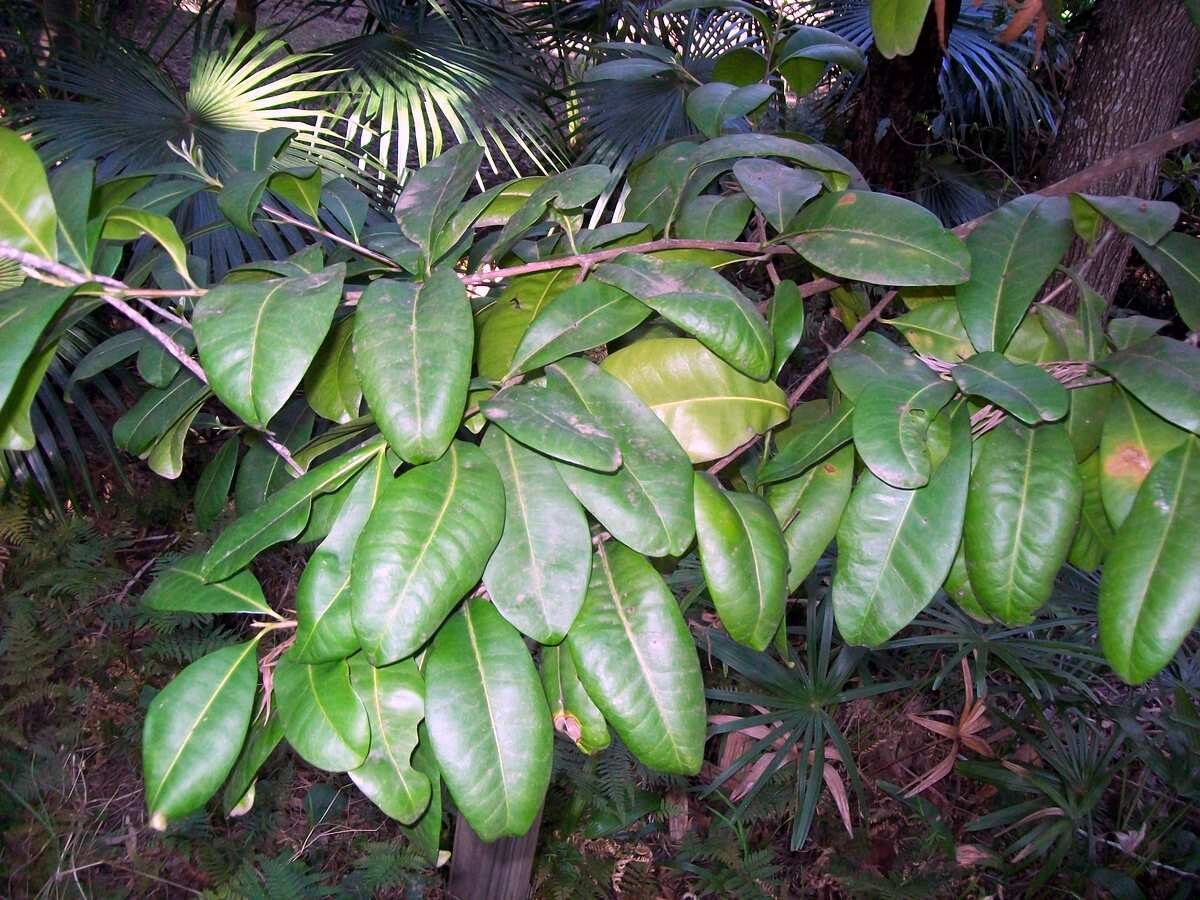
(c) Craig Peter, some rights reserved (CC BY-NC)
Summary
Source: WikipediaEnglerophytum natalense, the silver-leaf milkplum, is a medium-sized, evergreen tree that occurs along forested escarpments from East Africa to South Africa. The leaves are alternately arranged or spiralled, and to some extent crowded near the ends of branches. They are glossy green to greyish green above and covered in silvery hairs below. The stem is straight and the bark smooth. Young branches are covered with dense brownish hairs. The plant contains a milky latex. It is a larval food plant of the butterflies Euptera pluto kinugnana, Pseudacraea boisduvalii trimeni, P. eurytus imitator and P. lucretia.
Description
A medium sized tree. It can grow to 15 m tall. The branches are horizontal. The trunk can be 50 cm across. The trunk is often fluted. The twigs are smooth, grey and slender. The leaves are sword shaped and slender and taper at both ends. They are 5.5-15 cm long by 1.8-5 cm wide. They are green, smooth and shiny above and silvery grey and finely hairy underneath. There midrib is sunken above and raised below. The twigs and young growth is reddish. The flowers are small and without stalks. They are white or yellow. They occur singly or in two's or three's in the axils of leaves. The fruit are berries. They are 2.5-3.8 cm long. They are red when ripe. The seed is large and oblong. The fruit is edible.
Edible Uses
The red berries are eaten fresh and are pleasant-tasting, especially favored by children. The fruit is also used to make wine, syrup, and jelly.
Traditional Uses
The fruit is eaten and is pleasant. It is also used for wine, syrup and jelly.
This uses section is brief — help expand it
Medicinal Uses
The fruit is noted to be high in Vitamin C.
Distribution
A tropical plant. It is damaged by frost. It occurs in mixed evergreen forest. It grows below 1,800 m above sea level. It can grow in arid places.
Where It Grows
Africa, East Africa, Eswatini, Kenya, Malawi, Mozambique, South Africa, Southern Africa, Swaziland, Tanzania, Uganda, Zimbabwe,
Cultivation
Plants can be grown from seed.
Propagation
Seed - best sown when fresh.
Other Uses
The wood is used for poles, tool handles, milk pots and spoons. The wood is used for fuel.
Production
In Tanzania fruit are collected from April to June.
Other Information
The fruit are eaten especially by children.
Notes
It is high in Vitamin C.
Synonyms
Also Known As
Emanumbela, Manumbela, Mdulu, duyuyu, Msolo, Muchanja, Muchanzwa, Mutshwanzwa, Mwamba, Tungwane, Umtjongane, Umtomgwami, Umtshongane, Umtungagazane, Umtungwane
References (21)
- Dale, I. R. and Greenway, P. J., 1961, Kenya Trees and Shrubs. Nairobi. p 523 (As Bequaertiodendron natalense)
- Fox, F. W. & Young, M. E. N., 1982, Food from the Veld. Delta Books. p 335 (As Bequaertiodendron natalense)
- Jardin, C., 1970, List of Foods Used In Africa, FAO Nutrition Information Document Series No 2.p 122
- Long, C., 2005, Swaziland's Flora - siSwati names and Uses http://www.sntc.org.sz/flora/
- Lovett, J. C. et al, Field Guide to the Moist Forest Trees of Tanzania. p 161
Show all 21 references Hide references
- Mpasiwakomu, R. A., 2017, The Diversity and Utilization of Wild Edible and Medicinal Plant Species found in Uvinza Miombo Woodlands, Tanzania. M. Sc. thesis University of Tanzania.
- Msuya, T. S., et al, 2010, Availability, Preference and Consumption of Indigenous Foods in the Eastern Arc Mountains, Tanzania, Ecology of Food and Nutrition, 49:3, 208-227
- Mutie, F. M., et al, 2023, Important Medicinal and Food Taxa (Orders and Families) in Kenya, Based on Three Quantitative Approaches. Plants 2023, 12, 1145
- Palgrave, K.C., 1996, Trees of Southern Africa. Struik Publishers. p 727
- Palmer, E and Pitman, N., 1972, Trees of Southern Africa. Vol. 3. A.A. Balkema, Cape Town p 1742
- Peters, C. R., O'Brien, E. M., and Drummond, R.B., 1992, Edible Wild plants of Sub-saharan Africa. Kew. p 182
- Plowes, N. J. & Taylor, F. W., 1997, The Processing of Indigenous Fruits and other Wildfoods of Southern Africa. in Smartt, L. & Haq. (Eds) Domestication, Production and Utilization of New Crops. ICUC p 186 (As Berchquardtiodendron natalens)
- Royal Botanic Gardens, Kew (1999). Survey of Economic Plants for Arid and Semi-Arid Lands (SEPASAL) database. Published on the Internet; http://www.rbgkew.org.uk/ceb/sepasal/internet [Accessed 10th June 2011]
- Ruffo, C. K., Birnie, A. & Tengnas, B., 2002, Edible Wild Plants of Tanzania. RELMA p 304
- Ruiters-Welcome, A. K., 2019, Food plants of southern Africa. Ph.D. thesis. Univ. of Johannesburg p 101
- Schmidt, E., Lotter, M., & McCleland, W., 2007, Trees and shrubs of Mpumalanga and Kruger National Park. Jacana Media p 502
- Tredgold, M.H., 1986, Food Plants of Zimbabwe. Mambo Press. p 88
- van Wyk, Be., & Gericke, N., 2007, People's plants. A Guide to Useful Plants of Southern Africa. Briza. p 42
- Van Wyk, Br. and van Wyk P., 2009, Field Guide to Trees of Southern Africa. Struik Nature. p 92
- Welcome, A. K. & Van Wyk, B.-E., 2019, An inventory and analysis of the food plants of southern Africa. South African Journal of Botany 122 (2019) 136–179
- World Checklist of Useful Plant Species 2020. Royal Botanic Gardens, Kew