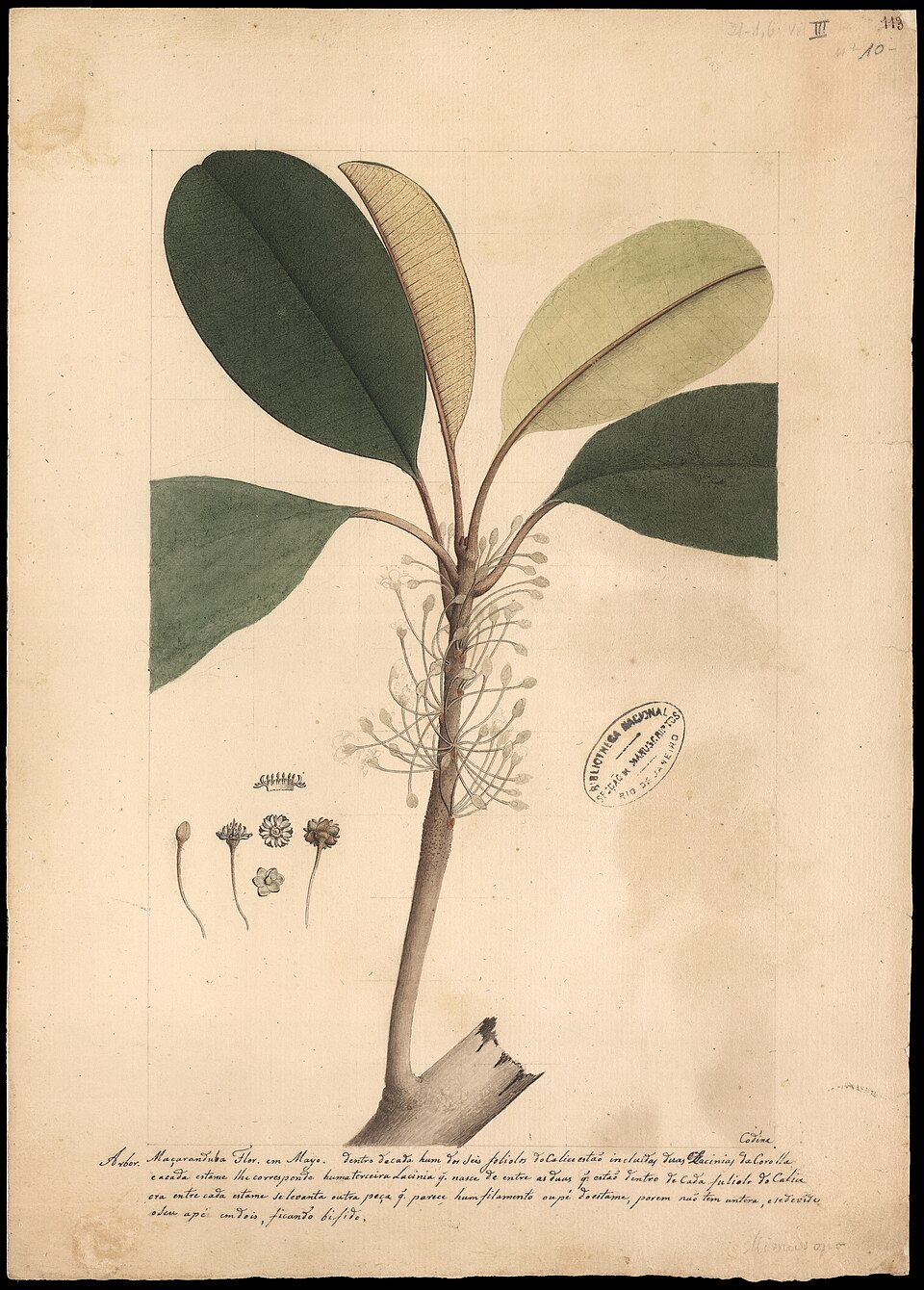
Mimusops laurifolia
(Forsskal) I. Friis
Geza
iNaturalist· cc-by-nc
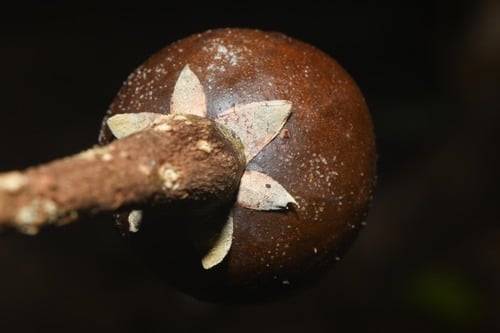
(c) Richard Gill, some rights reserved (CC BY-NC)
iNaturalist· cc-by-nc
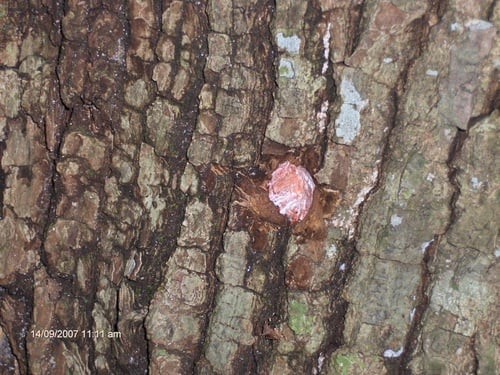
(c) Tony Benn, some rights reserved (CC BY-NC)
iNaturalist· cc-by-nc
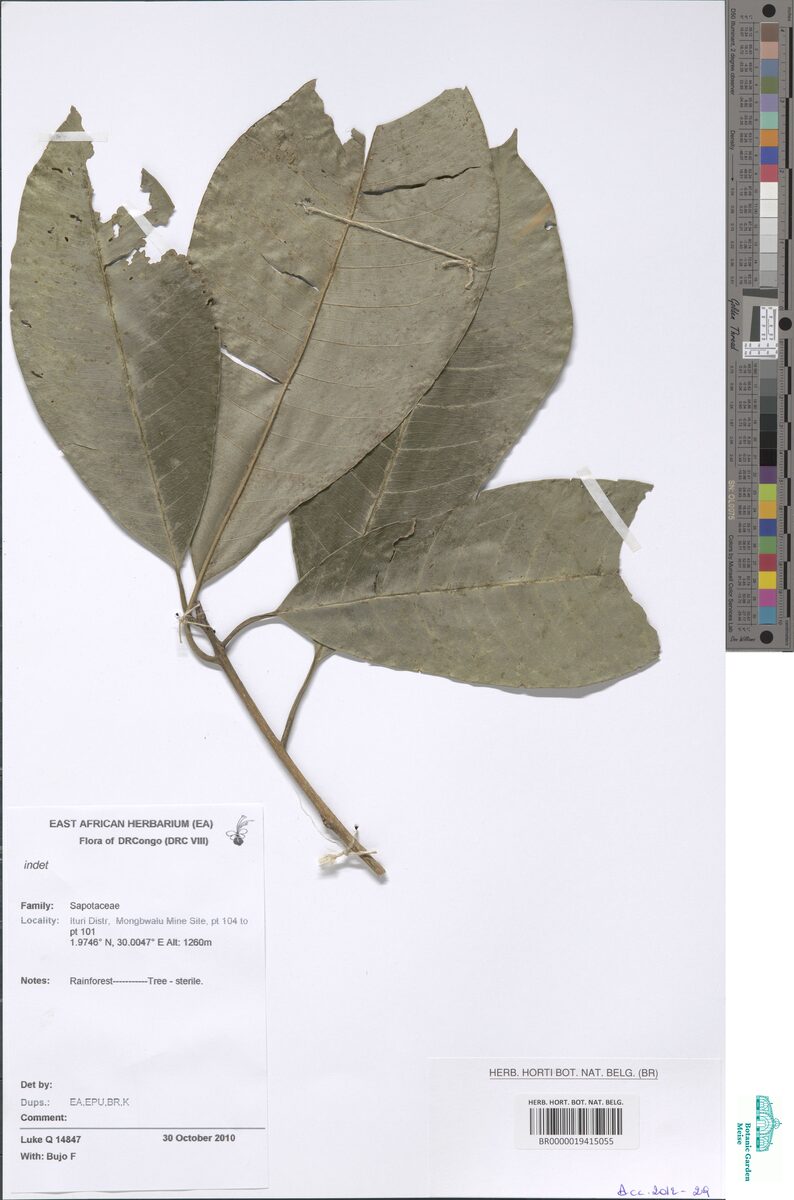
(c) Tony Benn, some rights reserved (CC BY-NC)
Summary
Source: WikipediaMimusops laurifolia is a large evergreen tree, native to the Ethiopian Highlands and the highlands of southeastern Arabian Peninsula.
Description
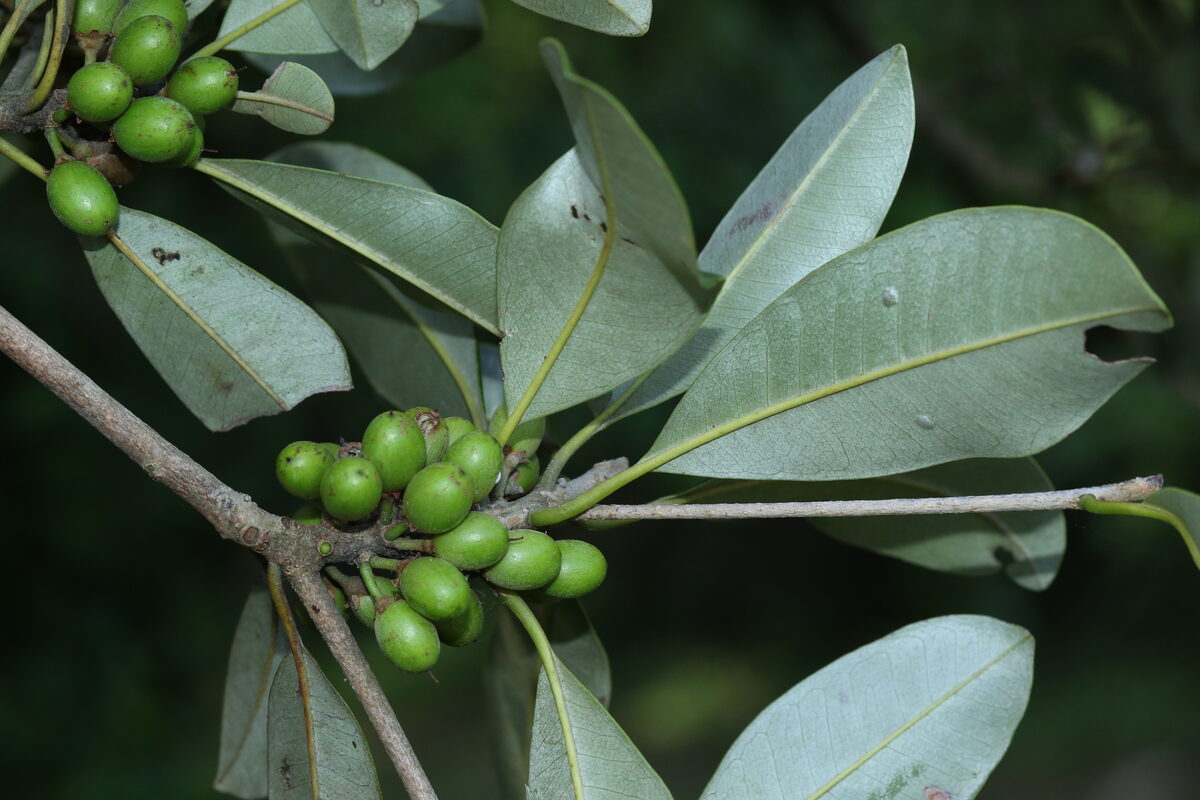
An erect tree. It grows 10-35 m high. The bark is grey and has fine cracks along and across it. The leaves are crowded towards the end of branches. The leaf stalks are 2-3 cm long. The leaves are narrowly oval and 6-10 cm long by 3-5 cm wide. They are dark green and leathery. The fruit is an oval berry. They are greenish-yellow. The fruit are edible.
Edible Uses
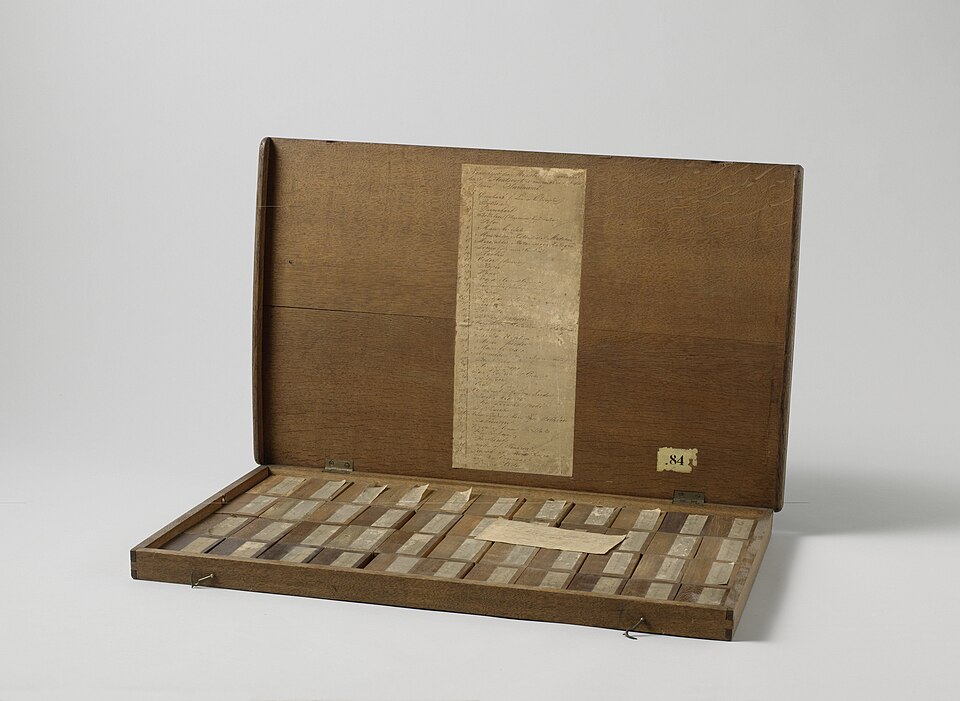
Local communities gather the edible fruit from wild trees, and occasionally use the timber for fuel, construction, and carpentry. The wood is light brown to pale yellow. The tree was probably cultivated in ancient Egypt. Twigs and leaves have been found in tombs from the Twelfth Dynasty to Greco-Roman times, and it was mentioned in texts from the 18th Dynasty onwards. The wood was used for making statues, beds, tables, and other objects.
Traditional Uses
The fruit are eaten raw.
This uses section is brief — help expand it
Distribution
It is a Mediterranean climate plant. It grows in forest between 500-1,800 m above sea level. It grows in areas with an annual rainfall between 600-1,100 mm. It can grow in arid places.
Where It Grows
Africa, East Africa, Egypt, Eritrea, Ethiopia, Middle East, North Africa, Saudi Arabia, Somalia, Uganda, Yemen,
Other Uses
The wood is pale brown to yellowish white. It is occasionally used for construction, carpentry and joinery. The wood is used for fuel.
Other Information
The fruit are eaten especially by children.
Synonyms
Also Known As
Geza, Kadadi
References (7)
- Addis, G., et al, 2005, Ethnobotanical Study of Edible Wild Plants in Some Selected Districts of Ethiopia. Human Ecology, Vol. 33, No. 1, pp. 83-118
- Alfarhan, A. H., 2005, Flora of Jizan Region. AR 17-7. King Abdulaziz City for Science and Technology (KACST). p 166
- Burkill, I.H., 1966, A Dictionary of the Economic Products of the Malay Peninsula. Ministry of Agriculture and Cooperatives, Kuala Lumpur, Malaysia. Vol 2 (I-Z) p 1500 (As Mimusops schimperi)
- Lemmens, R.H.M.J., 2005. Mimusops kummel Bruce ex A.DC. [Internet] Record from Protabase. Louppe, D., Oteng-Amoako, A.A. & Brink, M. (Editors). PROTA (Plant Resources of Tropical Africa), Wageningen, Netherlands. < http://database.prota.org/search.htm>. Accessed 19 October 2009.
- Lulekal, E., et al, 2011, Wild edible plants in Ethiopia: a review on their potential to combat food insecurity. Afrika Focus - Vol. 24, No 2. pp 71-121
Show all 7 references Hide references
- Royal Botanic Gardens, Kew (1999). Survey of Economic Plants for Arid and Semi-Arid Lands (SEPASAL) database. Published on the Internet; http://www.rbgkew.org.uk/ceb/sepasal/internet [Accessed 11th June 2011]
- World Checklist of Useful Plant Species 2020. Royal Botanic Gardens, Kew