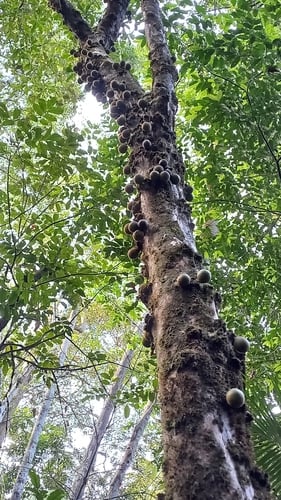
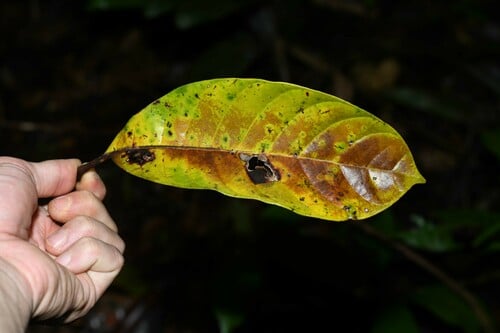
Sideroxylon capiri
(A. de Candolle) Pittier
Capiri, Capire
iNaturalist· cc-by-nc
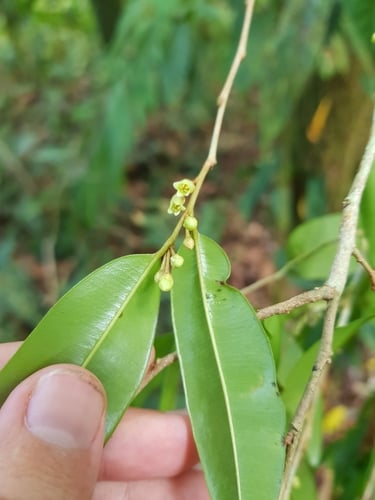
(c) Laüra, some rights reserved (CC BY-NC)
iNaturalist· cc-by-nc
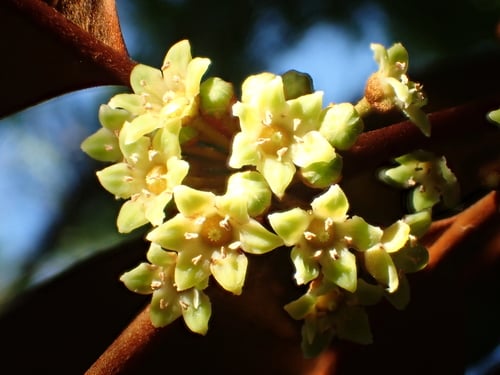
(c) Gualberto Perez, some rights reserved (CC BY-NC), uploaded by Gualberto Perez
Description
A tree. It grows 18 m tall. The trunk is 75 cm across. The bark is grey and peels off. The young shoots and leaves are hairy. The flowers are yellow or greenish-white. The fruit are 2.5-4 cm long. The fruit ripens yellow. There is one seed inside. The seed is 1.6-2.5 cm long. It has a hard, smooth shiny coat. The fruit are edible.
Edible Uses
The fruit is eaten and sold in local markets.
Distribution
It is a tropical plant. It grows in tropical deciduous forest from sea level to 1,600 m altitude.
Where It Grows
Belize, Central America, Costa Rica, El Salvador, Grenada, Guatemala, Honduras, Mexico, Nicaragua, North America, Panama, Peru, South America, Trinidad & Tobago,
Other Uses
The wood is lemon to orange, its lustre medium; taste somewhat bitter; very hard, heavy, tough, and strong; specific gravity about 1.05, the weight about 66 pounds per cubic foot; texture medium, the grain straight to variable; not easy to work but finishes smoothly; durability fair. The wood is valued for fuel because it burns for a long time
Other Information
The fruit are sold in local markets.
Synonyms
Also Known As
Capire, Cosaguite, Tempisque
References (7)
- Casas, A., et al, 1996, Plant Management Among the Nahua and the Mixtec in the Balsas River Basin, Mexico: An Ethnobotanical Approach to the Study of Plant Domestication. Human Ecology, Vol. 24, No. 4 pp. 455-478
- Cruz, I. M., et al, 2015, Edible fruits and seeds in the State of Mexico. Revista Mexicana de Ciencias Agricolas. Vol. 6. Num. 2 pp 331-346
- Grandtner, M. M., 2008, World Dictionary of Trees. Wood and Forest Science Department. Laval University, Quebec, Qc Canada. (Internet database http://www.wdt.qc.ca)
- Grandtner, M. M. & Chevrette, J., 2013, Dictionary of Trees, Volume 2: South America: Nomenclature, Taxonomy and Ecology. Academic Press p 603
- Kermath, B. M., et al, 2014, Food Plants in the Americas: A survey of the domesticated, cultivated and wild plants used for Human food in North, Central and South America and the Caribbean. On line draft. p 801
Show all 7 references Hide references
- Pennington, T.D., 1990, Sapotaceae in Flora Neotropica Monograph 52. New York Botanical Gardens. p 157
- Segura, S., et al, 2018, The edible fruit species in Mexico. Genet Resour Crop Evol (2018) 65:1767–1793