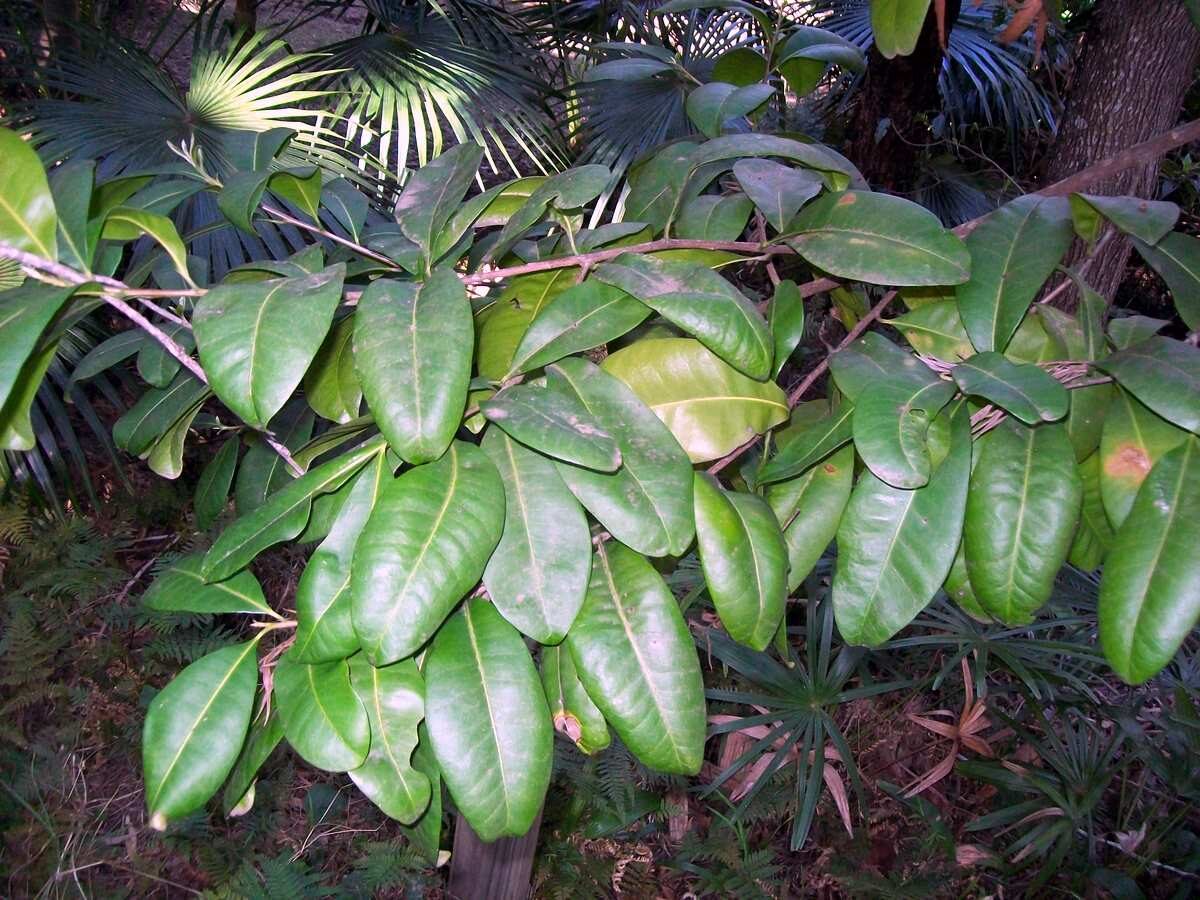
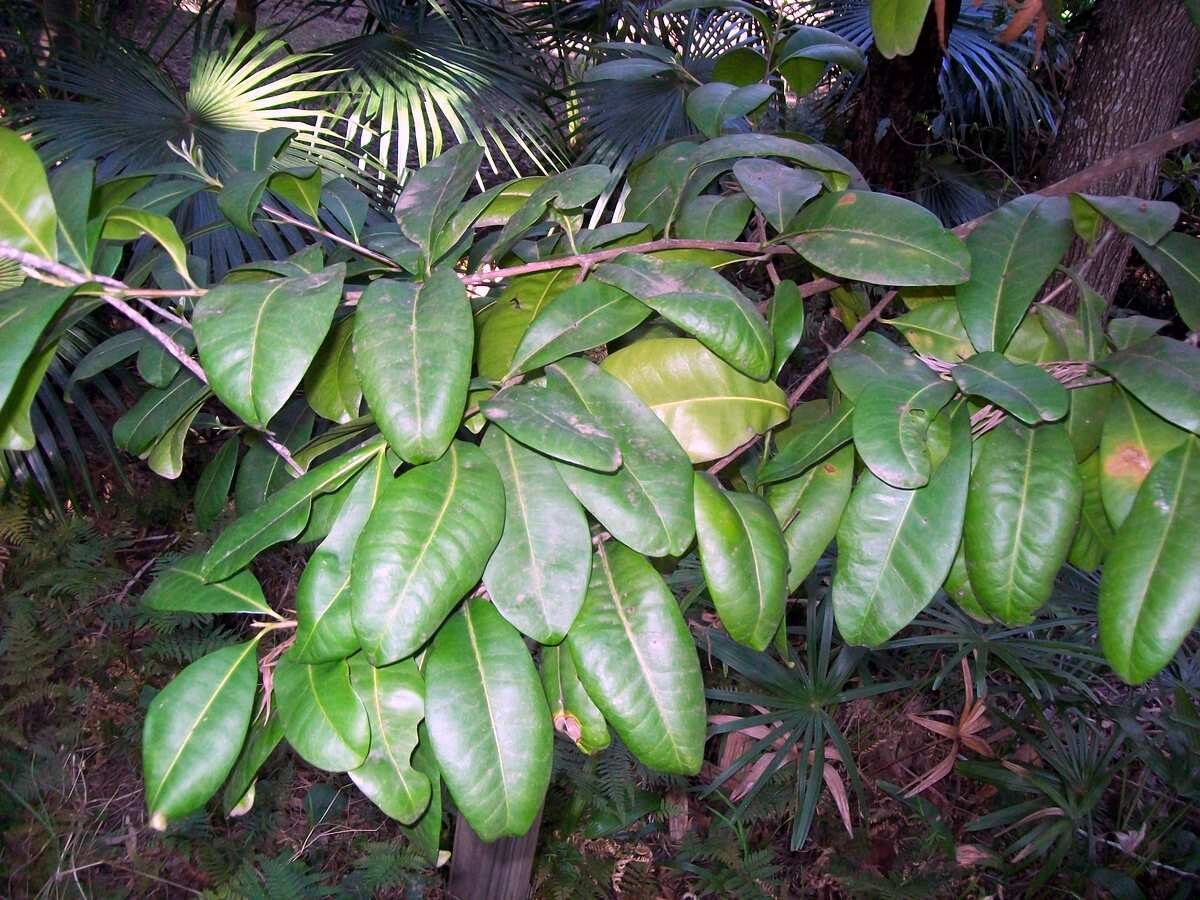
Sideroxylon celastrinum
(Kunth) T. D. Pennington
Brownward plum, Camiche, Coma, Guamachito
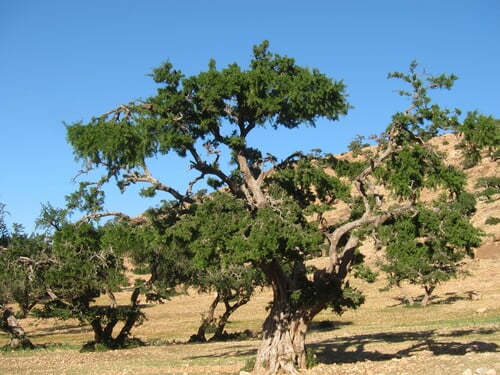
iNaturalist· cc-by-nc
(c) chobuck, some rights reserved (CC BY-NC), uploaded by chobuck
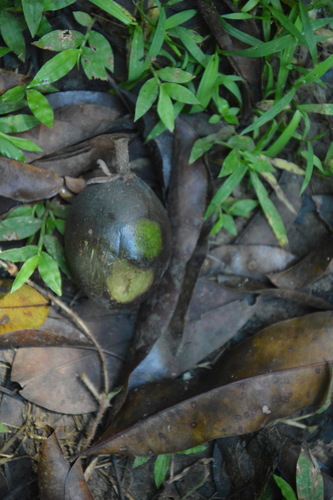
iNaturalist· cc-by-nc
(c) Gibrán García, some rights reserved (CC BY-NC), uploaded by Gibrán García
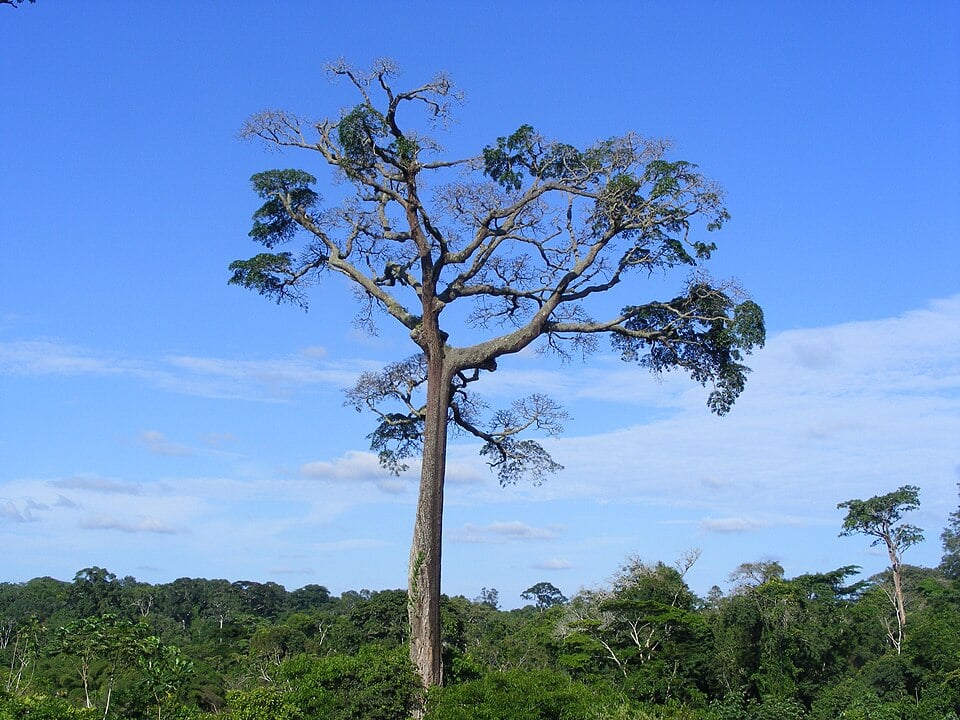
iNaturalist· cc-by-nc
(c) Cody Limber, some rights reserved (CC BY-NC)
Summary
Source: WikipediaSideroxylon celastrinum is a species of flowering plant in the family Sapotaceae, that is native to Texas and Florida in the United States south through Central America to northern Venezuela and Colombia in South America. Common names include saffron plum and coma. It is a spiny shrub or small tree that reaches a height of 2–9 m (6.6–29.5 ft). The dark green leaves are alternate or fascicled at the nodes and oblanceolate to obovate. Greenish-white flowers are present from May to November and are followed by single-seeded, blue-black drupes.
Description
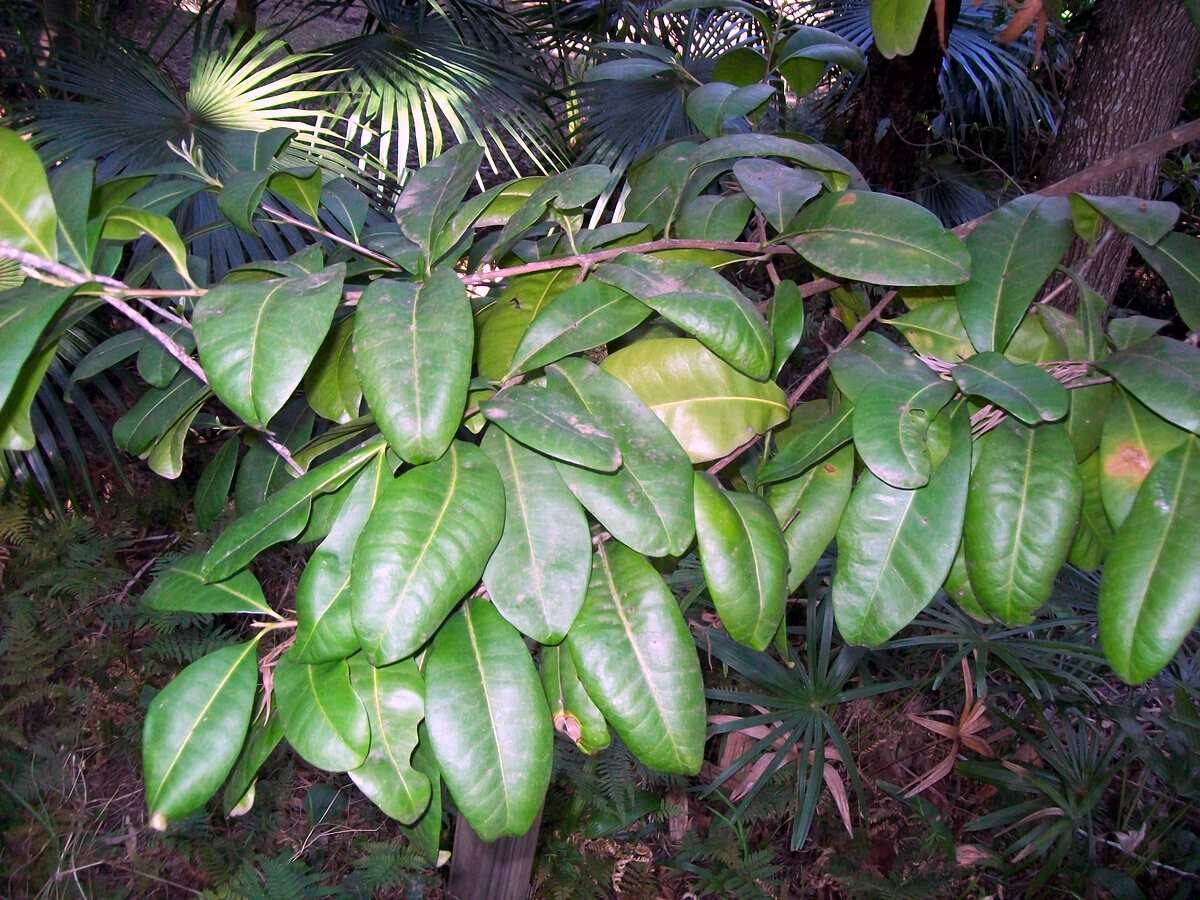
A dense shrub or small tree. It can be 12 m high with a trunk 30 cm across. The bark is dark grey to black. The young branches have soft white hairs. There are often stout spines present. The leaves are arranged in spirals at first. They later form tufts. The leaves are 0.7-5 cm long by 0.3-2.5 cm wide. There are 5-8 pairs of secondary veins. The leaf stalk is 0.5-4 mm long. The flowers have both sexes. There are 2-5 or more flowers in a group. The fruit are 0.9-1.5 cm long. They are narrow and oval. The mature fruit is purple or black. There is one seed 0.7-1.3 cm long. The seed coat is hard and shiny. The fruit are edible.
Edible Uses
Fruit - raw. Fleshy. The fruit, especially when immature, contains a copious milky juice. The purple to black, narrowly ellipsoid to cylindrical fruit is 9 - 15mm long, containing a single, large seed.
Distribution
A tropical plant. It grows in dry thorn forest. It also grows in tropical deciduous forest. It grows in coastal areas on salt marshes and in mangroves that are occasionally flooded. It grows from sea level to 900 m.
Where It Grows
Bahamas, Central America, Colombia, Costa Rica, Cuba, El Salvador, Guatemala, Honduras, Mexico, Nicaragua, North America, Panama, South America, USA, Venezuela, West Indies,
Cultivation
The yellowish or white flowers are sometimes sweetly scented.
Other Uses
The wood is used for firewood and making charcoal.
Synonyms
Also Known As
Camiche, Coma, Coma resinera, Comas, Guamachito, Hormigo, Hormiguillo, Huesito, Luchumche, Quintana, Pasita, Pasito, Pionche, Saj, Uvita negra, Zalamera
References (12)
- Bircher, A. G. & Bircher, W. H., 2000, Encyclopedia of Fruit Trees and Edible Flowering Plants in Egypt and the Subtropics. AUC Press. p 68 (As Bumelia spiniflora)
- Condit, R., et al, 2011, Trees of Panama and Costa Rica. Princeton Field Guides. p 440
- Grandtner, M. M., 2008, World Dictionary of Trees. Wood and Forest Science Department. Laval University, Quebec, Qc Canada. (Internet database http://www.wdt.qc.ca)
- Grandtner, M. M. & Chevrette, J., 2013, Dictionary of Trees, Volume 2: South America: Nomenclature, Taxonomy and Ecology. Academic Press p 603
- JSTOR Global Plants edible
Show all 12 references Hide references
- Kermath, B. M., et al, 2014, Food Plants in the Americas: A survey of the domesticated, cultivated and wild plants used for Human food in North, Central and South America and the Caribbean. On line draft. p 802
- NYBG herbarium "edible" (As Bumelia schottii)
- Pennington, T.D., 1990, Sapotaceae in Flora Neotropica Monograph 52. New York Botanical Gardens. p 123
- Piedra-Malagón, E. M., et al, 2022, Edible native plants of the Gulf of Mexico Province. Biodiversity Data Journal 10: e80565 p 29
- Fl. neotrop. 52:123. 1990
- Roa, J. A. G. & Boada, D. S. G., 2018, Fundación para el Fortalecimiento de la Fruticultura y Plantas Alimenticias no Convencionales en Colombia.
- Segura, S., et al, 2018, The edible fruit species in Mexico. Genet Resour Crop Evol (2018) 65:1767–1793 (Also as Bumelia celastrina)