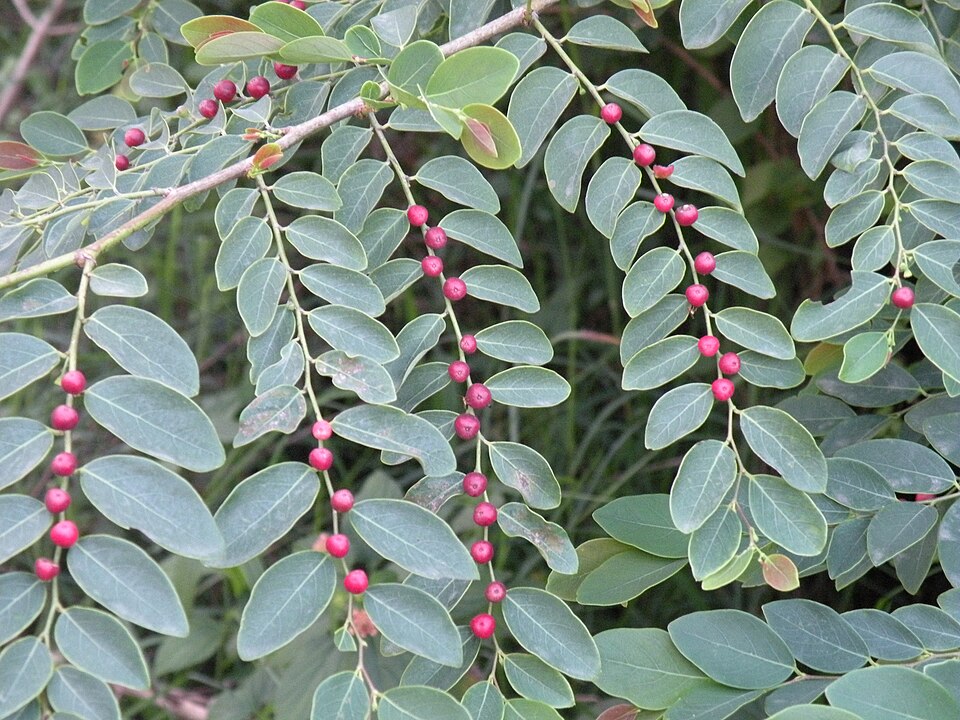
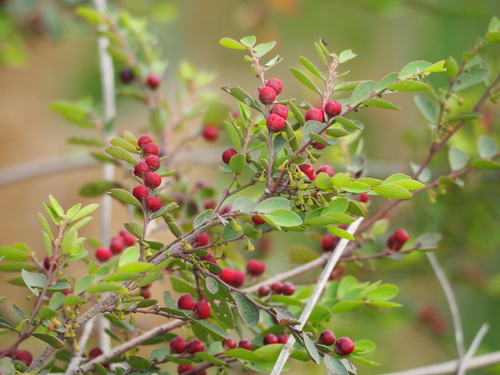
Antidesma stipulare
Blume
Sulaketan
iNaturalist· cc-by-nc
(c) Hani Ristiawan, some rights reserved (CC BY-NC), uploaded by Hani Ristiawan
iNaturalist· cc-by-nc
(c) Hani Ristiawan, some rights reserved (CC BY-NC)
Description
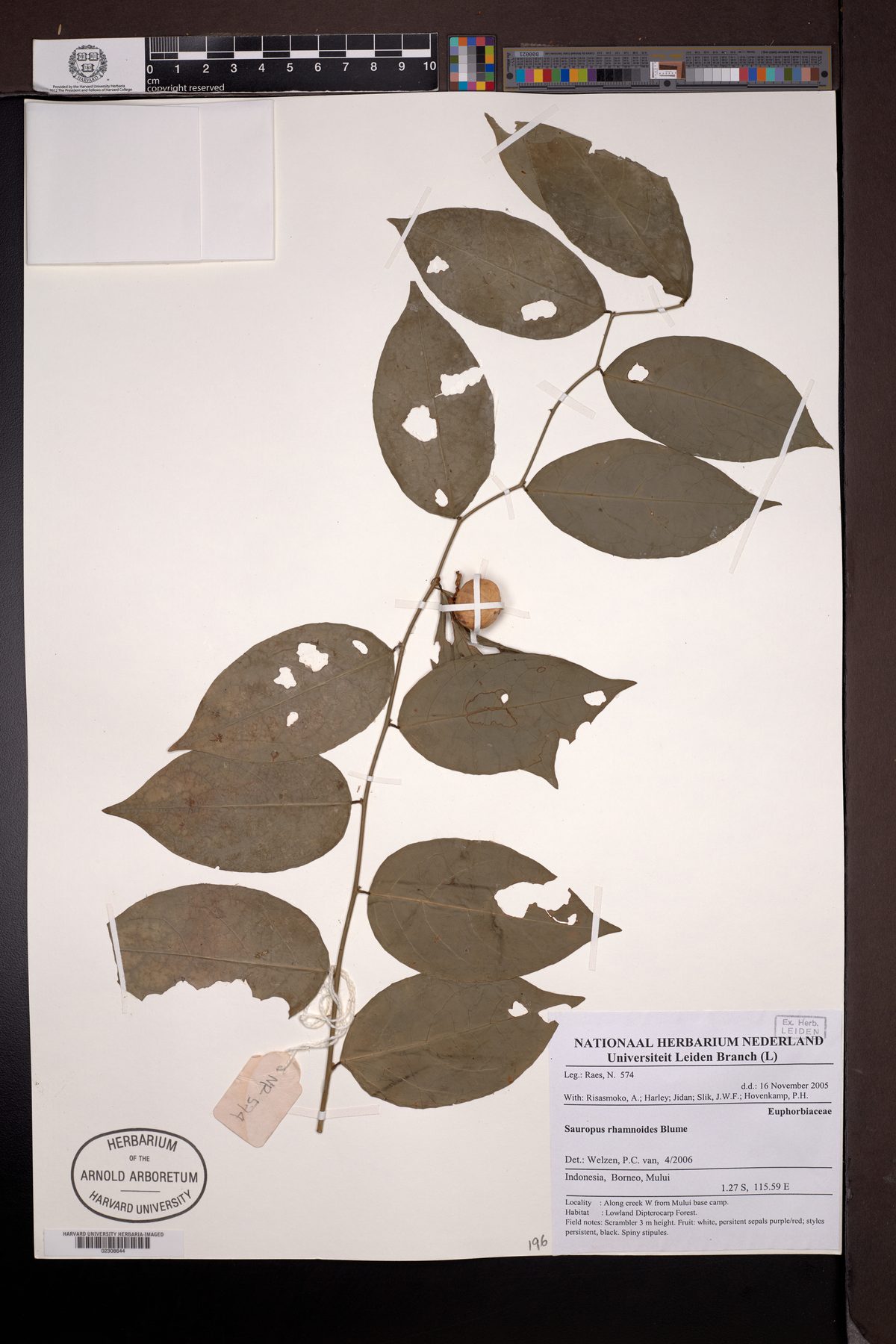
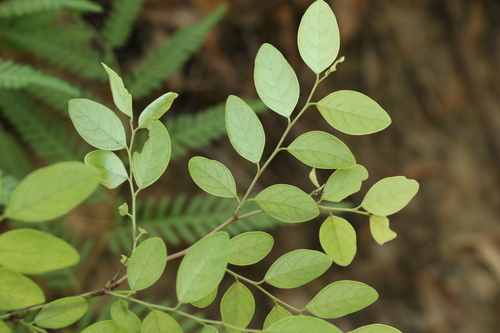
A shrub. It grows 2-5 m tall. The leaves are alternate and narrowly oval to oblong or sword shaped. They are 15-27 cm long by 4-9 cm wide. They are pointed at the tip. The midrib is hairy underneath. The male and female flowers are separate. Male flowers are in spikes 6-15 cm long. The fruit is fleshy and purple to black. There is one seed in each fruit.
Edible Uses
The fruit are edible and are also used to provide a red color to food.
Traditional Uses
The fruit are edible and also used to provide a red colour to food.
This uses section is brief — help expand it
Distribution
A tropical plant. It grows in mixed forests and on the edges of forests between 5-1,000 m above sea level.
Where It Grows
Asia, Indonesia, Malaysia, Philippines, SE Asia, Singapore,
Cultivation
Plants can be grown from seeds. They can also be grown by grafting or cuttings.
Other Uses
The sapwood is white to yellowish. The wood is strong and resistant to termites. It is used for household and construction purposes.
Notes
There are about 100-170 Antidesma species.
Synonyms
Also Known As
Buah tahi kambing, Katakuti kambing, Sulaketan
References (7)
- Bircher, A. G. & Bircher, W. H., 2000, Encyclopedia of Fruit Trees and Edible Flowering Plants in Egypt and the Subtropics. AUC Press. p 35
- Burkill, I.H., 1966, A Dictionary of the Economic Products of the Malay Peninsula. Ministry of Agriculture and Cooperatives, Kuala Lumpur, Malaysia. Vol 1 (A-H) p 188
- Milow, P., et al, 2013, Malaysian species of plants with edible fruits or seeds and their evaluation. International Journal of Fruit Science. 14:1, 1-27
- Ridley, 1924, Flora Mal. Penins. 3 p 226
- Sosef, M. S. M., Hong, L. T., & Prawirohatmodjo, S., (Eds.), 1998, Timber tree: Lesser-known timbers. Plant Resources of South-East Asia, 5(3), p
Show all 7 references Hide references
- Sukarya, D. G., (Ed.) 2013, 3,500 Plant Species of the Botanic Gardens of Indonesia. LIPI p 580
- World Checklist of Useful Plant Species 2020. Royal Botanic Gardens, Kew