Breynia vitis-idaea
(Burm.f.) C. Fischer
Indian snowberry
iNaturalist· cc0
no rights reserved, uploaded by 葉子
iNaturalist· cc0
no rights reserved, uploaded by 葉子
iNaturalist· cc-by-nc
(c) RENJITH RV, some rights reserved (CC BY-NC), uploaded by RENJITH RV
Summary
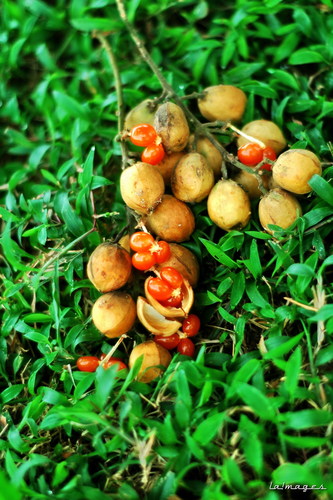
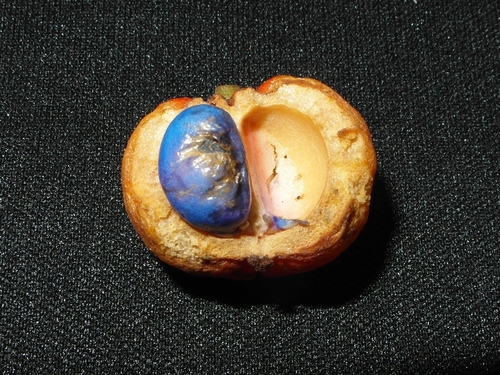
Source: WikipediaBreynia vitis-idaea, the officinal breynia, is a perennial tree-like species of Phyllanthaceae (Euphorbiaceae s.l.), found from India east to Taiwan and Okinawa and south to Indonesia. It is a shrub or treelet with egg-shaped leaves that can reach up to 3 m tall. It has staminate flowers and spherical, red fruit. Breynia vitis-idaea is pollinated by the leafflower moth Epicephala vitisidaea in Fujian, China and the Ryukyu Archipelago, Japan. The moth actively pollinates the flowers, but lays an egg into the space between the external carpel wall and the tepals. The moth caterpillars consume a subset of the tree's seeds, receiving nourishment in return. It contains the saponin breynin and terpenic and phenolic glycosides. It is marketed in Taiwan as Chi R Yun.
Description
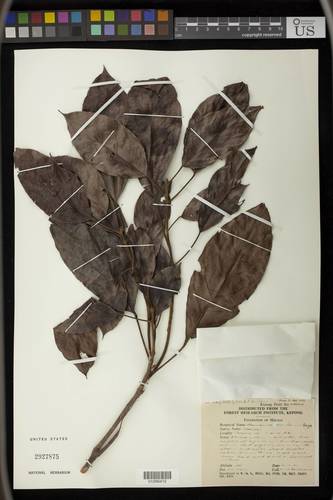
A creeping shrub. It grows 3 m tall. The leaves are narrowly oval and 2-5 cm long by 2-3 cm wide. They are a frosty green underneath. Male and female flowers are separate. The flowers are small and green.
Edible Uses
Leaves are cooked and eaten as a vegetable.
Traditional Uses
The leave are cooked and eaten as a vegetable.
This uses section is brief — help expand it
Medicinal Uses
The bark is astringent, it is used to prevent haemorrhage. The leaf juice is given to a mother after giving birth.
Known Hazards
Breynia vitis-idaea poisoning causes hepatocellular liver injury.
Distribution
It is a tropical plant. It grows on mountain slopes between 100-1,000 m above sea level in southern China. In Yunnan.
Where It Grows
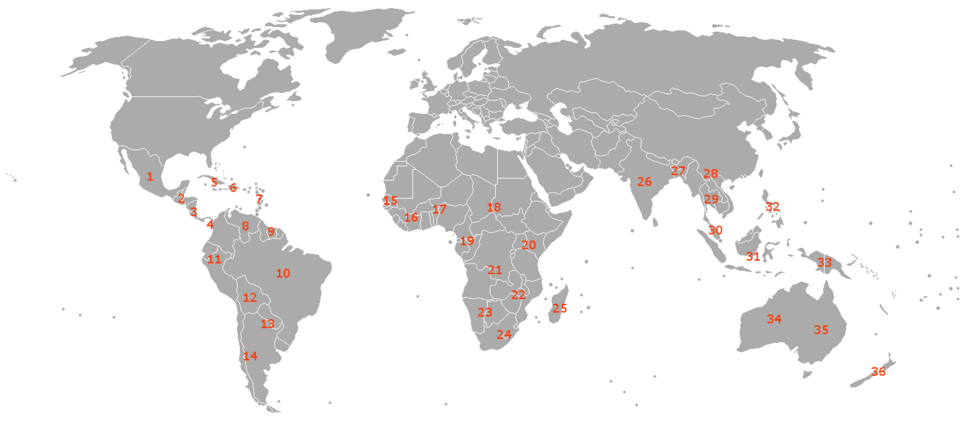
Asia, Bangladesh, Cambodia, China, Himalayas, India, Indochina, Indonesia, Laos, Malaysia, Myanmar, Nepal, Pakistan, Philippines, SE Asia, Sri Lanka, Thailand, Vietnam,
Notes
Also put in the family Euphorbiaceae.
Synonyms
Also Known As
Jajan, Jhagangi, Matang-ulang, Miat kar, Muntrei, Pisangi
References (5)
- Alegado, A. M. & De Guzman, R. B., 2014, Indigenous food crops of the Aetas tribe in the Philippines and their traditional methods of food preparation. in Promotion of Underutilized Indigenous Food Resources for Food Security and Nutrition in Asia and Pacific. FAO. Bangkok p 160 (As Phyllanthus rhamnoides Retz.;)
- Misra, S., 2020, Survey of edible plants for human consumption in south Odisha, India. Journal of Emerging Technologies and Innovative Research (JETIR) Vol. 7, Issue 12 p 278
- Reddy, K. N. et al, 2007, Traditional knowledge on wild food plants in Andhra Pradesh. Indian Journal of Traditional Knowledge. Vol. 6(1): 223-229
- Turreira Garcia, N., et al, 2017, Ethnobotanical knowledgeof the Kuy and Khmer people in Prey Lang, Cambodia. Cambodian Journal of Natural History 2017 (1): 76-101
- World Checklist of Useful Plant Species 2020. Royal Botanic Gardens, Kew