Thermopsis barbata
Benth.
Bearded thermopsis
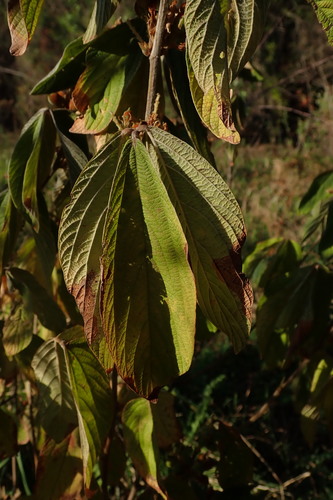
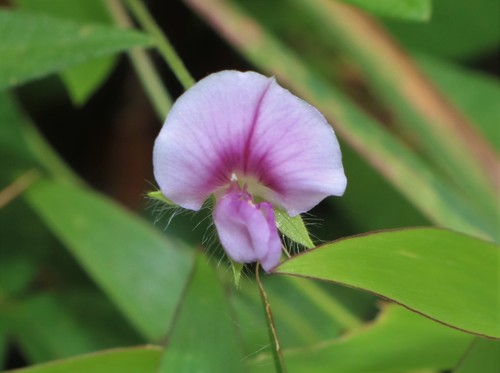
iNaturalist· cc-by
(c) Siddarth Machado, some rights reserved (CC BY), uploaded by Siddarth Machado
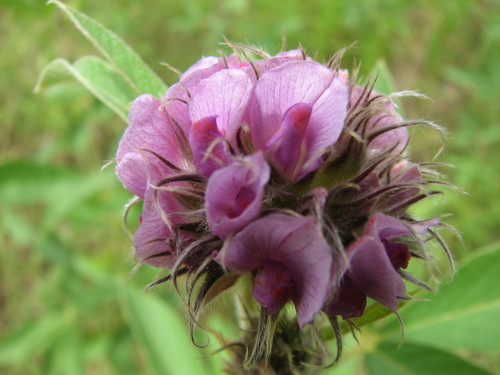
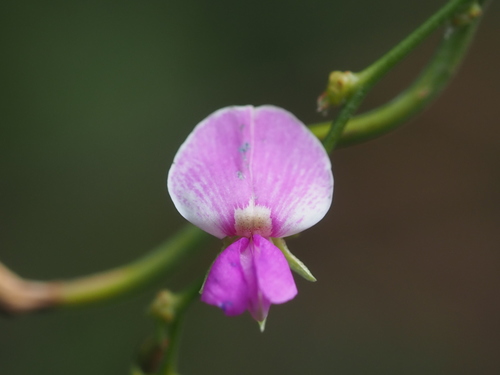
iNaturalist· cc-by
(c) Siddarth Machado, some rights reserved (CC BY), uploaded by Siddarth Machado
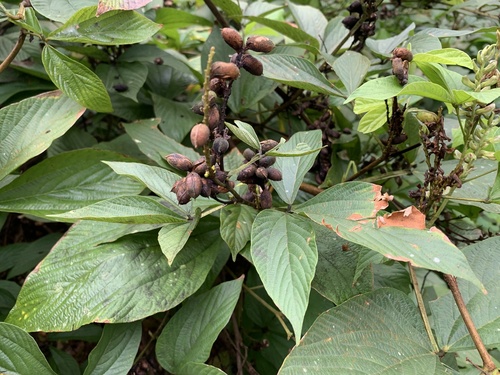
iNaturalist· cc-by-nc
(c) Jasmine Star Outdoor Photography, some rights reserved (CC BY-NC), uploaded by Jasmine Star Outdoor Photography
Description
A tufted herb. It keeps growing from year to year. The root is woody. The stem is 30-50 cm tall. The leaf has 3 leaflets. These are 1.5-3.8 cm long by 0.5-1.5 cm wide. They are sword shaped. The flower arrangement has 1-3 flower at each node. The flowers are dark violet-purple. The fruit is 3-3.5 cm long by 10 mm wide. There are 1-6 seeds.
Edible Uses
The branches and young rootstocks are cooked as a vegetable.
Traditional Uses
The branches and young rootstocks are cooked as a vegetable.
This uses section is brief — help expand it
Known Hazards
The toxicity of T. rhombifolia and T. montana has been the subject of research. The toxicity is known to come from a series of alpha-pyridone quinolizidine alkaloids, including (in decreasing order of relative abundance in plant tissues) anagyrine, thermposine, 5,6-dehydrolupanine, cytisine, N-methylcystisine, lupanine, and 17-oxysparteine. Their concentration is highest in young plants, flowers, and legumes, though otherwise generally alkaloid concentrations are equal throughout the plant. Alkaloid dosage from plant ingestion is in the range of 1.1–11.3 mg/kg. A 1997 review found 23 cases. 18 patients developed symptoms within a few hours and symptoms lasted up to 12 hours, including vomiting, dizziness, abdominal pain, drowsiness, nausea, headache, oral irritation, tachycardia, tremors, and other general signs. Only 2 required admission to a health care facility, one of which involved elevated CK levels. Purified alkaloids cause the same signs of intoxication as the whole plant.
Distribution
It is a temperate plant. It grows between 3500-4500 m altitude in Uttar Pradesh in India. In Sichuan.
Where It Grows
Asia, Bhutan, China, Himalayas, India, Nepal, Pakistan, Tibet,
Notes
There are 23 Thermopsis species.
Also Known As
Kailashi Chunchuni
References (4)
- Ambasta, S.P. (Ed.), 2000, The Useful Plants of India. CSIR India. p 635
- Flora of Pakistan. www.eFloras.org
- Negi, K.S., 1988, Some little known wild edible plants of U.P. Hills. J. Econ. Tax. Bot. Vol. 12 No. 2 pp 345-360
- J. F. Royle, Ill. bot. Himal. Mts. 1(6):196. 1835