Hylodesmum podocarpum subsp. fallax
(Schindl.) H. Ohashi & R. R. Mill
Tick trefoil
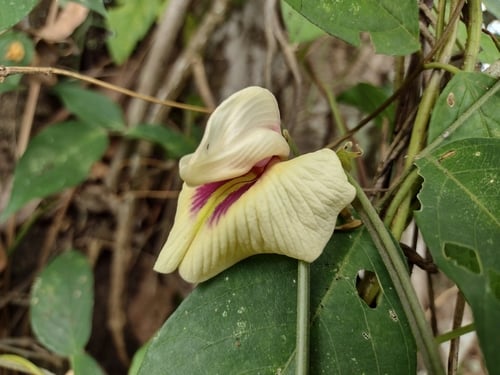
iNaturalist· cc-by-sa
(c) harum.koh, some rights reserved (CC BY-SA), uploaded by harum.koh
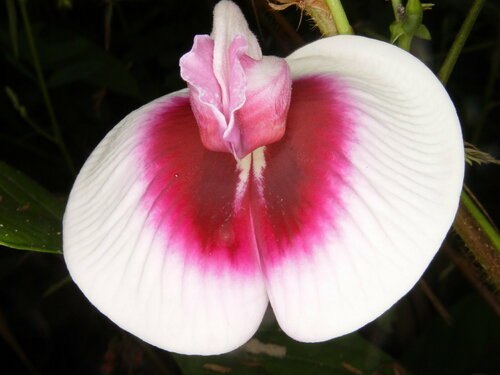
iNaturalist· cc-by-nc
(c) onidiras-iNaturalist, some rights reserved (CC BY-NC), uploaded by onidiras-iNaturalist
iNaturalist· cc-by
(c) WATANABE Hitoshi 渡辺仁, some rights reserved (CC BY)
Description
A herb. It grows 70-100 cm tall. The stems are hairy. The end leaflet is broadly oval and 4-12 cm long by 3-8 cm wide.
This description is brief — help expand it
Edible Uses
The seeds are eaten.
Distribution
It is a temperate plant. It grows on the edge of forests between 300-1,400 m above sea level.
Where It Grows
Asia, China, Japan, Korea,
Notes
There are about 350 Desmodium species. They are mostly in the tropics.
Synonyms
Desmodium fallax Schindl.Desmodium fallax var. mandshuricum (Maxim.) NakaiDesmodium japonicum Miq.Desmodium mandshuricum (Maxim.) Schindl.Desmodium oxyphyllum DC.Desmodium oxyphyllum var. japonicum Matsum.Desmodium oxyphyllum var. mandshuricum (Maxim.) H.OhashiDesmodium podocarpum var. japonicum Matsum.Desmodium podocarpum var. mandshuricum Maxim.Desmodium podocarpum subsp. oxyphyllum (DC.) H.OhashiDesmodium podocarpum var. oxyphyllum (DC.) H.OhashiDesmodium podocarpum var. polyphyllum Maxim.Desmodium podocarpum var. typicum Maxim.Desmodium racemosum (Thunb.) DC.Desmodium racemosum var. mandshuricum (Maxim.) OhwiDesmodium racemosum var. pubescens F.P.MetcalfHedysarum racemosum MurrayHedysarum racemosum Thunb.Meibomia japonica (Miq.) KuntzePodocarpium podocarpum var. japonicum (Matsum.) P.H.HuangPodocarpium podocarpum var. oxyphyllum (DC.) Y.C.Yang & P.H.Huang
References (4)
- Ann. Mus. Bot. Lugduno-Batavum 3:46; Prolus. fl. jap. 254. 1867
- Bot. Jahrb. Syst. 54:55. 1916 (As Desmodium fallax)
- Plants for a Future database, The Field, Penpol, Lostwithiel, Cornwall, PL22 0NG, UK. http://www.scs.leeds.ac.uk/pfaf/ (As Desmodium fallax)
- READ,