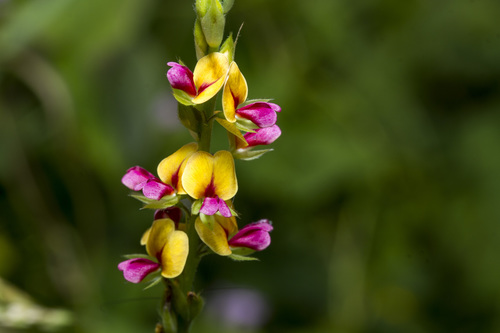
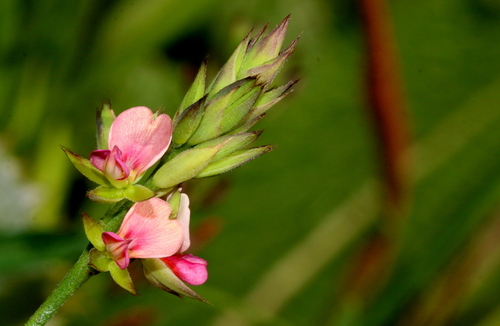
Hylodesmum repandum
(Vahl) H. Ohashi & R. R. Mill.
Orange desmodium
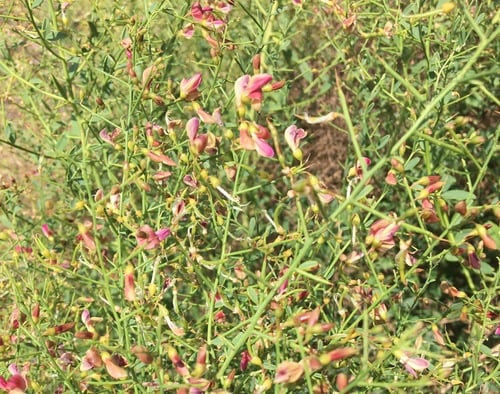
iNaturalist· cc-by-sa
(c) Tony Rebelo, some rights reserved (CC BY-SA), uploaded by Tony Rebelo
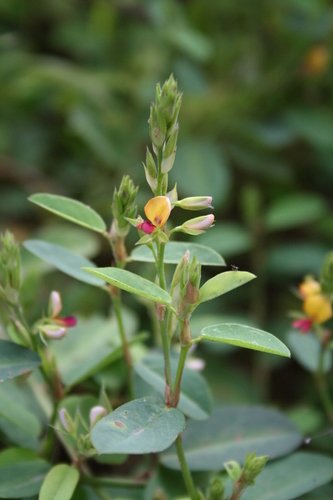
iNaturalist· cc-by-nc
(c) juddkirkel, some rights reserved (CC BY-NC)
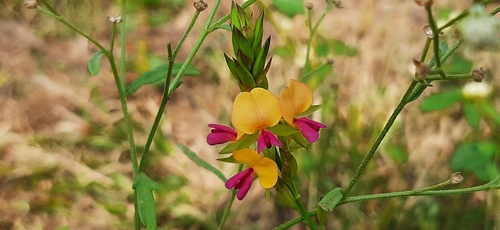
iNaturalist· cc-by-nc
(c) Craig Peter, some rights reserved (CC BY-NC), uploaded by Craig Peter
Description
A bean family herb. It is woody at the base and grows 30-150 cm tall. It can be climbing or scrambling.
This description is brief — help expand it
Edible Uses
The leaves and seeds are eaten, though the plant is primarily used medicinally.
Medicinal Uses
The plant is used as medicine, particularly the leaves and seeds.
Distribution
It is a tropical plant.
Where It Grows
Africa, Asia, Bhutan, China, East Africa, India, Indonesia, Laos, Malaysia, Papua New Guinea, PNG, Philippines, SE Asia,
Cultivation
A plant of the moist tropics, almost always in areas of year-round rainfall in Asia, but also commonly in areas of seasonal rainfall in Africa. This species has a symbiotic relationship with certain soil bacteria; these bacteria form nodules on the roots and fix atmospheric nitrogen. Some of this nitrogen is utilized by the growing plant but some can also be used by other plants growing nearby.
Other Uses
The plant has been used as a green manure and ground cover. The plant grows well in shade and would appear suitable as a cover-crop for coffee and other plantation crops.
Notes
Probably medicine.
Synonyms
References (3)
- Useful Tropical Plants
- von Katja Rembold, 2011, Conservation status of the vascular plants in East African rain forests. Dissertation Universitat Koblenz-Landau p 169
- World Checklist of Useful Plant Species 2020. Royal Botanic Gardens, Kew